Thread #5101996

File: ThisWillBeSagan4In2036.jpg (116.1 KB)

116.1 KB JPG
2036 edition
Previous Thread: >>5040573
WHAT IS SPECULATIVE EVOLUTION?
Speculative evolution is the exploration and imagining of how life might evolve in the future or could have evolved in alternate pasts. It's a multimedia sci-fi genre that harnesses scientific principles to create detailed and plausible hypothetical creatures, ecosystems, and evolutionary histories.
RESOURCES:
https://speculativeevolution.fandom.com/wiki/Category:Tutorial
>One-stop shop for relevant background information for starting a project
http://planetfuraha.blogspot.com/
>Fantastic blog covering all sorts of spec evo topics in-depth
https://specevo.jcink.net/
>The Speculative Evolution forums, full of resources and ongoing projects
RECOMMENDED PROJECTS:
https://pastebin.com/zhBbaNTB
>Link to a PDF of Wayne Barlowe’s “Expedition”, a seminal work of speculative evolution full of incredible paintings and illustrations
https://youtu.be/Rbi8Jgx1CNE
>”The Future is Wild”, a CGI documentary following the evolution of life on Earth in the far future
https://pastebin.com/esdFrSEZ
>Dougal Dixon, arguably the father of speculative evolution. These are links to PDF’s of his books “After Man”, “The New Dinosaurs”, and “Man After Man”
https://www.youtube.com/watch?v=egzZv8tqT_k&list=PL6xPxnYMQpquNuaEffJz jGjMsr6VktCYl&ab_channel=Biblaridio n
https://sites.google.com/site/worldofserina/
https://sunriseonilion.wordpress.com/
http://www.cmkosemen.com/snaiad_web/snduterus.html
https://www.deviantart.com/sanrou/gallery/56844005/nau
http://www.planetfuraha.nl/
https://multituberculateearth.wordpress.com/
https://sites.google.com/view/lokiworldofrats/home
https://specevo.jcink.net/index.php?showtopic=4578&st=15
https://www.deviantart.com/bicyclefrog
https://hardeshur.blogspot.com/p/main-page.html
https://rylmadolisland.blogspot.com/p/main-page.html?zx=bba41f9d602b6b 9a
https://lemuriaspeculative.wordpress.com
https://alpha.sagan4.org/wiki/Main_Page
93 RepliesView Thread
 Showing all 93 replies.
>>
RECOMMENDED READING LIST ON EVOLUTION:
> The Selfish Gene - Richard Dawkins
> The Extended Phenotype - Richard Dawkins
> The Revolutionary Phenotype - J.F. Gariepy
> Evolution and the Theory of Games - John Maynard Smith
> Animal Signals - John Maynard Smith
> The Red Queen - Matt Ridley
> Mendel's Principles of Heredity - Bateson & Mendel
> Population Genetics: A Concise Guide - John H. Guillespie
> The Largest Avian Radiation: The Evolution of Perching Birds, or the Order Passeriformes by Jon Fjeldså, Les Christidis, and Per G. P. Ericson
>The Cambrian Explosion: The Construction of Animal Biodiversity by Douglas Erwin
>Carboniferous Giants and Mass Extinction: The Late Paleozoic Ice Age World by George McGhee Jr.
>Triassic Life on Land: The Great Transition by Hans-Dieter Sues
>On the Prowl: In Search of Big Cat Origins by Mark Hallett and John Harris
>>
>>
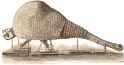
File: Doedicurus_png.png (215 KB)
215 KB PNG
>>5101999
armadillos
its already happened before, it can happen again
>>
>>
>>
>>
>>
>>
>>
>>
File: INEVITABLE.png (3.2 MB)

3.2 MB PNG
>>5102164
oh wouldn't you like to know
>>
File: Beach2036.png (2.6 MB)

2.6 MB PNG
>>
File: Canyons2036.png (3.5 MB)

3.5 MB PNG
>>
File: Vents2036.png (2.2 MB)

2.2 MB PNG
>>
>>
>>
>>
>>
>>
>>
File: ShitAndCryAboutIt2036.png (3.2 MB)
3.2 MB PNG
>>5102313
>>5102325
cope
>>
>>
>>
>>
>>
>>
>>
>>
>>
>>
>>
>>
>>
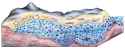
File: Diorama008.jpg (211.5 KB)
211.5 KB JPG
>>5102776
Not even gonna bump the thread with an example?
>>
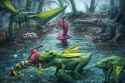
File: Swamp2036.png (2.9 MB)
2.9 MB PNG
future
>>
>>
>>
>>
>>5103558
I was hoping there actually was some thought behind it or justification like maybe a concept of earth undergoing a cataclysm that wiped out every vertebrate and evolution having to start over or so
like I get it's AI, but in theory you could use AI to make a sort of "good enough" sketch of ideas you had
always a shame when AI images turn out to have just no thought behind them
>>
File: Diorama018.jpg (662.6 KB)
662.6 KB JPG
>>5103558
>>5103682
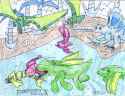
you do realize those are classic sagan 4 dioramas """remastered""" with AI right
>>
>>
File: Diorama040.jpg (261.5 KB)

261.5 KB JPG
>>5103824
idk "future" or smth here's another one
>>
>>5103822
Putting an existing work through a slop filter and then not discussing it at all is not suitable for these threads. It's just regurgitating things, especially considering the filenames most likely in a malicious manner. It's just trolling.
>>
New Noterra video on not!cryogenian microorganisms
https://youtu.be/uuhW4BwN90A
New Kaimere videos
https://youtu.be/qT1EL5niQ9k
https://youtu.be/yTutXAv4IQA
>>
File: disgust.jpg (56.8 KB)

56.8 KB JPG
>>5104196
>kaimere
speaking of things that aren't spec evo...
>>
>>
File: swift.jpg (161.5 KB)

161.5 KB JPG
could animals ever transition to live in space, the same way aquatic species moved onto land?
>swifts already spend 10 months in the air without needing to land
>suddenly a predator appears that mostly hunts swifts at lower elevation
>selective pressure for swifts that fly higher and land less often
>eventually you reach the first bird that gives live birth, with the offspring remaining in a pouch to avoid falling before their wings are ready, finally enabling them to keep airborne for their entire lives
>when attacked by predators, they ascend to where the air is too thin for them to follow, holding its breath for over 30 minutes like an emperor penguin
and you could call them martlets because https://en.wikipedia.org/wiki/Martlet
>>
>>5104470
the air being thin doesn't just make it harder to breathe, it also makes it harder to avoid stalling, requiring increasingly more energy to maintain the necessary velocity to stay at that altitude or increasingly massive wingspan
then there's the issue that it gets cold fast at higher altitudes again requiring more energy expended to stay warm
all while your ability to generate energy is reduced significantly by your lower oxygen intake
and you still need to descend to get food because there's no possible ecosystem that high since it completely lacks autotrophs to form the baseline, which means exposing yourself to predators, while being hamstrung at lower altitude by the requirements to survive at extreme altitude, and you are not capable of ascending fast enough to escape danger and you're also not big enough to simply avoid predators entirely due to the requirement of being extremely light weight to be even capable of remaining airborne
there's simply no good way to achieve this
>>
>>
>>
File: sexy flying platypus.png (415.9 KB)

415.9 KB PNG
>tits
>lays eggs
harpies are fucking monotremes
>>
>>
>>
>>
>>
>>
>>
>>
>>5106751
>no living beings can survive in outer space,let alone thrive
In theory it would be possible through genetic manipulation create some kind of microorganism capable of withstanding vacuum and use special pigments to withstand the radiation and gain energy from it
but even if you could do that they still completely and utterly lack nutrients, so you pretty much need them anchored to a comet for them to have any chance, and it needs to be a comet or waterbearing asteroid rich in carbon and other necessary minerals
you could in theory simplify a creature to use as little elements as possible but even then extracting those from an asteroid or comet rich in them is exceedingly hard constrained by a simplified bodyplan
>>
>>
>>
>>
>>5107815
oh sure I knew about that one but I was just wondering if some bird convergently evolved true milk
which is not entirely unlikely considering that siphonops annulatus actually went and evolved proper milk despite being a caecilian
>>
>>5101996
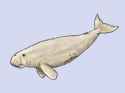
New entry in Lemuria https://lemuriaspeculative.wordpress.com/2026/03/12/freshwater-dugong/
>>
I'm hoping to make a litrpg about a Zerg like alien and I'd like your guys thoughts in regards to this stat sheet.
#Specimen Profile: Hybrid Tyrsect Drone
Classification:
- Taxonomic Species Designation: Tyrsecta (Drone Caste, Young Adult Phase)
- Specimen ID: TDR-047-HYB
- Observation Date: Cycle 47.892
Morphological Analysis:
- Body Plan: Hexapod (six-limbed) ambulatory structure, approximately human-scale (1.8m length, 1.2m height at shoulder).
- Cranial Features: Raptor-like skull with; ant-derived mandibles at the corner for grabbing and pinning in place (lancing edges, tensile strength ~350 MPa).
- Exoskeletal Armor: Sparse chitinous plating, covering vitals and sitting well away from joints.
- Unique Morphology: Abdomen gaster acid gland reservoir (capacity: 1 L corrosive fluid, pH <2).
- Locomotion: Agile, predatory gait; capable of bursts up to 60 Km/h.
- Sensory Apparatus: Compound eyes (360° field), 20/190 vision; chemoreceptors on antennae for pheromone detection.
- Vital Signs: Metabolic rate elevated (energy expenditure: 2.5x baseline drone); regenerative capacity moderate (minor wounds heal in ~48 hours).
- Genetic Integration: Rodent cerebrum xenograft stable; hybrid vigor noted (enhanced neural plasticity).
- Acid gland ejection range: 6-8m; toxin profile: Hydrofluoric-based, tissue dissolution rate: 10cm3/min.
- Synaptic Relay Cluster: Range 12 meters; Low frequency; Baseline drone hive-mind relay organ.
Behavioral Assessment:
- Cognitive Status: Independent Thought unlocked; no longer hive-dependent.
Quantitative Stats Overview:
| Attribute | Value | Notes |
| Strength | Mandible crush force: 1,500N; lift capacity: 300kg. |
| Agility | 16 m/s; jump height of 2 meters. |
| Durability | Chitinous armor rating of ~350 MPa. |
| Intelligence quotient | 25; Post-mutation; basic problem-solving emergent. |
| Kill Count | 19 tyrsect drones. |
| Malleable Biomass Accumulated 16 liters of tyrsecta flesh. |
>>
>>
File: Gemini_Generated_Image_ypd9v2ypd9v2ypd9.png (2.8 MB)

2.8 MB PNG
Rhinoailurus amurensis, a newly discovered Early Oligocene felid from the Russian Far East that may reshape understanding of early cat evolution. Unearthed in 2023 from the Bureya River formation, the fossil includes a well-preserved skull and partial skeleton. While similar in size to a modern bobcat, the animal’s most striking feature is its highly developed nasal structure, unlike anything previously seen in related carnivores, immediately drawing scientific attention.
Anatomically, Rhinoailurus was a capable carnivore with strong jaws, sharp teeth, and a body suited for agile movement, but its defining trait was its extraordinary sense of smell. Its nasal cavity was vastly enlarged and complex, suggesting an olfactory ability far surpassing that of modern animals—even exceeding that of a bloodhound. This implies it was a scent-specialist predator, likely relying on smell rather than speed or vision to locate prey and navigate its environment.
Its evolutionary position remains debated. Some analyses place it as a sister taxon to Proailurus, an ancestor of modern cats, while others argue it belongs to a farther separate, extinct feliform lineage. Regardless, Rhinoailurus lived in a mixed woodland-savanna ecosystem during a time of climatic change, where its advanced olfactory abilities would have been advantageous. Ongoing research aims to clarify its classification and further explore its sensory adaptations, with hopes that additional fossils will shed more light on this unusual predator’s place in evolutionary history.
>>
>>
Biogeographically, the current continents do not allow for as much variation as would be possible; Eurasia is very vast and located at relatively high latitudes. Imagine if the continents were more fragmented, with more islands, and if most of it were concentrated in the tropics. We would have an even richer global flora and fauna.
>>
>>
>>

>>5101996
New entry on Multituberculate Earth: https://multituberculateearth.wordpress.com/2022/03/31/gondwanatheria- world-domination/
>>
>>
>>
>>
>>
>>
>>
>>

>>
File: delete.png (2.5 MB)

2.5 MB PNG
>>5114553
>>
>>
>>
File: 121957.png (125.2 KB)
125.2 KB PNG
Wanna design an oceanic mustelid that doesn't look like seals or whales. I figure going for max eyesight works best here, to achieve a unique look. I don't know about the rest of the body though.
>>
My apologies for making a thread without realising there was already a spec evo thread.
Thought about a very intelligent Amphibious Cetacean that lives in an alternate Antarctica where Aegicetus descendant survived there by hybridising with a Stem Simocetid and a Stem Aetiocetid roughly 34 million years ago therefore gaining the ability to echolocate, produce wax esters and develop a melon and baleen to hunt Krill and Squid in the Southern Ocean while crawling on land/ice to breed and establish mating rights. Lobodont Seals therefore didn't evolve since Mixocetid Whales took the niche already by the Oligocene.
>>
File: Simocetus, Aetiocetus & Aegicetus.png (895.8 KB)

895.8 KB PNG
>>5116476
The species that contributed to the genome.
>>
>>5101996
New Alien Biospheres - Alien Anthropology video
https://youtu.be/lgtuefqQs1s
https://youtu.be/4FGQefqIRxw
>>
>>
>>
>>