Thread #65066017

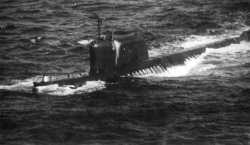
File: K-19.jpg (30.7 KB)
30.7 KB JPG
The 7th general nuclear thread on /k/ since 2024. Discuss military and civilian nuclear design and fuckups alike, or read translations of such
115 RepliesView Thread
 Showing all 115 replies.
>>
>>
>>
>>
>>65066830
The what?
>The Seascale cancer cluster refers to a confirmed, roughly tenfold excess of childhood leukemia cases in Seascale, Cumbria, between 1955 and 1992. Located near the Sellafield nuclear reprocessing site, the cluster sparked intense scrutiny, but expert committees concluded radiation doses from the plant were too low to cause the cancer, pointing instead toward infectious causes linked to population mixing.
Population mixing? Infectious causes? lol what?
>>
File: 1758339780920.jpg (63.2 KB)

63.2 KB JPG
The Six Million Sievert Man is still the craziest story to come out of these
>Chechen thieves in 1999 break into a facility in Grozny to steal cobalt
>6 Colbalt-60 rods measuring 27,000 curies each are taken. (So 162 thousand curies, like 6 PBQ)
>One of the thieves holds onto them against his body for a while, one report says he was shirtless not sure
>He dies within 30 minutes after seizures
>Other thieves die within 48 hours
The main perp likely died of something that would have internally looked closer to cyanide or nerve gas poisoning rather than traditional radiation poisoning as so many cells would have died his entire nervous system and ATP system would have collapsed.
The other guys in the room not handling the stuff probably just got a couple thousand rads. Like 200-300 sieverts. Main guy's is literally incalculable as all models collapse at those levels
>>
>>
>>65066886
>QRD
Russia has always been hilariously incompetent when it comes to nuclear power and holds the record for most known accidents and fatalities
>Highlights
my favourite is the sub reactor that went supercritical when they fucked up putting the lid back on
think Demon Core but the screwdriver is a giant dockyard crane
>>
>>65066895
I left my PDF translation project half finished and don't have the energy to pick that back up tonight(but I will at some point this thread), maybe I'll repost my K-431 translation from last time to get this thread going
>>
>>
>The Pacific Fleet command staff was momentarily stunned. Just then, the duty officer rushed into the room where they were waiting for a concert by singer Edita Piekha , who had just arrived in Vladivostok , and reported a nuclear reactor explosion.
>Within a few minutes, the Deputy Commander of the Pacific Fleet, Vice-Admiral Nikolai Yasakov, the head of the political department, Vice-Admiral Alexander Slavsky , and those accompanying them were on board the Typhoon boat, which was racing at full speed toward Chazhma Bay.
>The shipyard they landed at was completely deserted. The commanding officers didn't believe the information they'd received, and in response to the local officer's rambling report, clearly in a state of shock, Yasakov launched into an angry tirade.
>"What do you think you're saying?" he raged. "If there had been a nuclear explosion, this place would be a desert! Take us to the scene!"
>Soon, the admirals were faced with a horrific reality. A huge, jagged crater gaped where the K-431 nuclear submarine's reactor compartment had once been. Torn metal fragments and human remains littered the pier and shore. No one knew then that one of the largest radiation disasters in human history had occurred in Chazhma Bay. Chernobyl was just eight months away.
>>
>>
>>65066902
>The development of peaceful nuclear energy began in the USSR in the second half of the 1950s. Nuclear power plants sprang up like mushrooms after rain across the country. Following the first power units of the Beloyarsk and Novovoronezh Nuclear Power Plants, facilities were built in Ukraine , the central part of the RSFSR, the Transcaucasus, and even the Arctic Circle.
>The first radiation accident on a nuclear submarine occurred on July 4, 1961. On that day, the crew of the SSBN-19, the first in the USSR, was on combat duty in the North Atlantic and encountered problems with the reactor's primary cooling circuit. Disaster was averted, but most of the sailors were exposed to radiation while responding to the accident. Nine died, and the rest were hospitalized and received various disabilities.
>The authorities kept the incident a closely guarded secret. All survivors were required to sign non-disclosure agreements. The relatives of the victims were outright lied to. For example, the parents of one of the sailors were told their son had been electrocuted.
>According to retired Captain First Rank Eduard Platonov, the weak point of all early submarine nuclear power plants was the steam generators. Almost every sea mission went by without a "Radiation Hazard" signal triggered by a malfunction in one of them. This meant a leak, spreading radiation to other compartments.
>The failed steam generator was shut down, the consequences of the deteriorating radiation situation were addressed, and the nuclear-powered submarine continued its missions. Submarines arrived at the shipyard with half of their steam generators shut down.
>>
>>65066904
>This exact story happened to the K-11 nuclear submarine, which spent over a year at the Zvezdochka shipyard in Severodvinsk . After repairs were completed, on February 12, 1965, the submarine's reactor core was being refuelled there. Due to personnel negligence, an unauthorized reactor start-up occurred, resulting in a steam and gas release and a fire.
>Once again, the Soviet Navy lost sailors. Officer Platonov was extremely lucky: a few hours before the tragedy, he was offered an extra ticket to a concert performed by artists from Leningrad at the local Palace of Culture, and he swapped shifts with a comrade.
>"Upon arrival on the ship, a horrific scene met my gaze," Platonov recalled. "Through the opening of the removable sheet, I could see the charred and half-flooded reactor compartment, over which either smoke or steam, or perhaps both, were still billowing. I descended through the hatch of the eighth compartment into the aft compartments. There I saw an equally depressing scene."
>The sixth, seventh, and eighth compartments were half-submerged in water contaminated with extremely high concentrations of radioactive substances. The plant grounds, piers, and port waters were contaminated—the reactor compartment was flooded while extinguishing the fire, producing 350 tons of highly radioactive water. Another 150 tons leaked into the turbine compartment. To prevent the submarine from sinking, the radioactive water was pumped overboard—right in the plant waters. The submarine remained afloat, but the reactor compartment had to be cut out. It was later sunk near Novaya Zemlya.
>>
>>65066905
>Another 20 years passed. In April 1985, the nuclear submarine K-431 sailed from Vladimir Bay in the Sea of Japan (southeast of Primorsky Krai) to Chazhma Bay to replace its spent nuclear fuel and moored to the north side of Pier 2 of Ship Repair Yard No. 30. Nearby were the monitoring and dosimetry vessel (MDV), the K-42 nuclear submarine, and a non-self-propelled floating technical base (FTB), while on the other side of the pier were two more nuclear submarines undergoing repairs and the MK-16 cutter.
>The K-431's nuclear fuel reloading operation was to be handled by personnel from the Coastal Technical Base (CTB). Shortly after the submarine's arrival, CTB specialists inspected the submarine's condition and issued a readiness report. From that moment on, they became responsible for the safety of all operations. The reloading operation was supervised by Captain 3rd Rank Vyacheslav Tkachenko , who, as was later reported, was going through a rough patch.
>The lightweight, durable hull was removed from the K-431 reactor compartment and special technological equipment was installed—a silumin (aluminum-silicon alloy) handling house called "Winter," which prevented precipitation from entering the compartment and maintained the temperature regime.
>On August 9, 1985, the refueling crew successfully replaced the core of one reactor. However, an emergency occurred during the refueling of the second (aft) reactor. It began leaking, failing hydraulic tests, and a leak was discovered in the mating joint of the aft reactor's lid. This was caused by a foreign object lodged in the copper sealing ring.
>>
>>65066908
>This meant an increase in the nuclear fuel reloading period, as adjustments had to be made to the technological process.
>In violation of instructions, the reloading team officers failed to report the incident. They decided to return to the submarine the next day and quietly fix the problem, so no one would know. The sailors were confident everything would go smoothly: they decided to lift the reactor lid, clean the ring, replace the lid, and conduct a hydraulic test.
>"Shortly before 12:00 PM on August 10, they began lifting the reactor lid," notes Captain 1st Rank Alexander Gruzdev in his article "The Nuclear Disaster of the K-431 Submarine ." "On the K-431 and PTB-16, crews were stationed at their combat posts. At the submarine's control room, the main power plant operators monitored the reactor's performance using instruments. However, gross violations of nuclear safety regulations were committed during the work."
>The "Atom" command, as is required for such an operation, was not issued to the ship. During installation of the dry detonation device, the retaining lock for the compensating grid was not secured.
>So, on Saturday, August 10th, the reloaders set to work, calculating the distance the crane could lift the lid without starting a chain reaction. However, they were unaware that the compensating grate and the remaining absorbers were also being lifted along with the lid. A critical situation had arisen, and the further course of events depended on the slightest chance.
>>
>>65066909
>And it happened,” Vice-Admiral Viktor Khramtsov, one of the investigators of the emergency, later wrote. “The cover with the compensating grid and absorbers was hanging on a crane, and the crane was on a floating workshop, which could swing in one direction or another, that is, raise the cover even further to the launch level or lower it.”
>"Events developed according to the worst-case scenario"
>Then, a fateful accident intervened: precisely at midday, a small torpedo boat, designed to retrieve training torpedoes after firing, unexpectedly burst into the bay from the sea. Despite warning signals from the watchtower, it passed through Chazhma at high speed, raising a large wave. It rocked the floating workshop with its crane, the reactor lid was ripped upward along with the entire absorber system, and the reactor itself entered the launch mode.
>"A chain reaction occurred," Khramtsov described the moment of the disaster. "An enormous amount of energy was released, and everything in, above, and around the reactor was ejected. The refuelling house burned and vaporized, the refuelling officers were incinerated in the flash, and the crane on the floating workshop was torn loose and thrown into the bay."
>>
>>
>>
>>
>>
>>
>>
File: nothing to worry about.png (29.9 KB)

29.9 KB PNG
>>65066830
I'm sure it's entirely a coincidence.
>>
>>
>>
>>
>>
>>
>>
Contributing this video but assume most of you have seen it:
https://www.youtube.com/watch?v=iHbiGWlQUGE
Same channel has a good video on Vela incident.
>>65066904
These steam generator leaks, was it from primary loop leaking into secondary? or some other defect
>>65066910
>Not only did we fuckup and somehow get FOD on the copper gasket for the lid
>We also decided to lift it with a floating crane
Fascinatingly dumb. One thing I don't understand from the story is what is meant by "compensating grid and absorbers", is this some kind of unusual translation somebody could enlighten me on? is it the arrangement of control rods (Which I assume is attached to the lid based on "calculating the distance the crane could lift the lid without starting a chain reaction"?)
>>65068334
How did it go?
>>
>>
>>65068433
>was it from primary loop leaking into secondary?
Most likely. The Russians have a long and storied history of shitty welds in critical applications. There really shouldn't be very much crap floating around in the primary loop of a properly maintained plant, but again, this is Russia that we're talking about here. Once the primary and secondary loops start swapping water, some of that nastiness will eventually make its way out into the atmosphere via any number of pathways, airborne alarms start going off, and your boring deterrent patrol suddenly becomes rather exciting. The cleanup is not pleasant.
>t. has done a few cleanups after primary leaks
>shit gets into the paint, don't ask me how
>>

>>65067558
K-219. Many exist in an image search.
>>
File: DpYVaOOW0AITmgF.jpg (122.6 KB)

122.6 KB JPG
>>65067558
>>65069558
The best shots are the ones taken by the crew on-board.
https://x.com/RSS_40/status/1051051116253863936
>>
>>
>>65069928
An anon in one of the threads said that the water in your cells turns into hydrogen peroxide because the cell break down is that bad.
Then there's that story about the chernobyl firefighter who dodged serious radiation sickness because he was drunk on the job, and a cursory google search *seems* to bear that out, from my understanding (an ignorant anon who has never worked a day in related scientific or medical fields), it can't heal radiation damage but it can reduce its effect on cells, somehow. Obviously no human trials lol.
>>
File: 1eb340d5.jpg (6.8 KB)

6.8 KB JPG
>>65067477
>Organ removal inquiry
>>
>>
File: 1741577709296101.jpg (14 KB)

14 KB JPG
>>65070340
>Workers at Sellafield, the nuclear plant at the centre of the missing body parts scandal, were subjected to secret Cold War experiments in which they were exposed to radiation, The Observer can reveal.
>One experiment, described in a confidential memo, involved volunteers drinking doses of caesium 134, a radioactive isotope that was released in fatal quantities following the Chernobyl disaster. Other experiments involved exposing volunteers to uranium, strontium 85, iodine 132 and plutonium.
>One memo from the government's Medical Research Council Radiobiological Unit, written in 1962, describes the need to experiment on three types of volunteer: 'pregnant women and all persons under 18'; 'patients with non-fatal illnesses and volunteers'; and 'patients in hospitals and volunteers who are undergoing tests under appropriate medical supervision with regard to any possible effects from radiation'.
>The document suggests that the recommended limit for a volunteer's exposure to radiation could be exceeded 'in exceptional cases, for example patients with fatal illnesses and research workers who are well informed about the risk from ionizing radiations'.
Holy shit and we thought the Russians were bad lmao.
>>
>>
>>
>>65070449
>we thought the Russians were bad lmao.
British engineering is this:
Bodging = smekalka, this is a huge thing in British engineering, trying to bodge solutions together rather than putting in the effort to do it right or report that something is fucked up and fixing it.
This is worsened by engineering in the UK being not particularly well paid compared to the rest of the world.
There is an institutional lack of desire to improve and people basically just go "well that is the way it is" when things go wrong. Work ethic is often lax because of demoralisation as a result of this. This then knocks on to anyone who does have a good work ethic because they have to deal with laziness, unresolved issues etc.
A lot of areas also have high levels of deprivation and are just a bit shit, Sellafield is a great example, which makes hiring good staff difficult. I mean just for fun google the number of sex scandals to do with British nuclear submarines if you really want to see all these things made manifest:
https://news.clearancejobs.com/2021/02/10/royal-navy-officer-shows-how -to-sink-cleared-careers-with-porn- filming-on-a-nuclear-base/
>>
>>
>>65070316
As I understand it, the Soviets were much more curious about the effects of various foods and drugs vs. radiation exposure. Supposedly there's a lot of documentation about it, although it doesn't seem to be available on the internet.
I'm familiar with the firefighter that you mention although I don't remember his name. Reportedly when medical staff noticed that he was in far better shape than his companions (who'd received similar doses), they immediately accused him of being drunk on duty, which he eventually admitted to. It might simply be Slavic superstition, but it's interesting nonetheless.
>no human trials
No official human trials anyway. The Soviets may have come to this conclusion as a result of numerous unofficial tests and pattern recognition.
>>
>>65066910
Must've been a Japanese torpedo boat.
>>65066913
>Translator anon was banned for unrelated other-board reasons.
I'm sure the reasons were completely unrelated to possibly implying the Soviet nuclear industry was anything less than great.
Translator anon simply had the misfortune of getting electrocuted, then returned to posting under his own power)))
>>
File: s-l1200.jpg (211.8 KB)

211.8 KB JPG
Was this accurate?
>>
>>65070656
Fuck no, far more dramatized than the real thing
If you want the real story there's several interviews with crew in this
https://www.cia.gov/readingroom/docs/DOC_0000078940.pdf
>>
>>65070611
>No official human trials anyway.
Yeah no. They used tens of thousands of gulag inmates as guinea pigs, from mining uranium ore to all the chemical fun that follows.
>>65070449
>Holy shit and we thought the Russians were bad lmao.
They were, even if it's just the scale of the tragedy.
>>
>>65066910
>The explosion was so powerful that the 12-ton lid, as if made of plywood, flew up to a height of two kilometers and crashed back onto the reactor, then fell onto the side of the submarine, rupturing the hull below the waterline. Survivors remember a single bright flash of light about six meters high, followed by orange-gray smoke rising above the reactor and a cloud forming, which began to move northwest.
>Water from the bay gushed into the reactor compartment. Everything ejected by the explosion rained down on the hulls of the K-431, K-42, the floating fuel tanks, the submarine control ship, the bay waters, the piers, the plant, and the hills. Within minutes, everything around the exploding nuclear-powered vessel, caught in the wake of the release, became radioactive. The reaction lasted 0.7 seconds, and the radiation intensity exceeded 50,000 roentgens.
>The explosion caused a massive fire in the reactor compartment, and a long, several-centimeter-wide crack appeared along the submarine's starboard side. Power cables from the shore were severed, plunging the compartments into darkness. Seawater began to leak through the cracks.
>How did the disaster happen? The reactor's power increased because they removed the compensating grids along with the lid. It went supercritical, and the sudden release of energy caused the water to heat up and boil, explains Andrey Ozharovsky, an engineer, physicist, and expert on the Radioactive Waste Safety program, to Lenta.ru. "Water is a coolant and a moderator. After it evaporated, the nuclear reaction stopped. To some extent, this design limited the consequences of the accident."
>>
>>65071034
>According to him, there was a very short energy release, a limited nuclear explosion.
>"It was somewhat fortunate that [the explosion] occurred during the final stage of refueling, not the initial one," the specialist emphasizes. "Nuclear fuel is essentially natural uranium. And the fuel that operates at the end of the reactor cycle contains all the known killer isotopes from Chernobyl—iodine, cesium, strontium, etc. That is, the release itself was significantly smaller in scale than if the sailors had messed up at the initial stage of this operation, especially as there had not yet been time to install the safety apparatus."
>Ozharovsky also notes that submarine bases in the future should be prepared for radiation accidents. This did not apply to Chazhma.
>What happened next followed a worst-case scenario: untrained people began putting out the fire, he continues. "They didn't use all the required personal protective equipment. They said the dirt was spread throughout the military settlement. According to the instructions, there should be a radiation monitoring station where people are washed and tested. Radioactive substances primarily stick to clothing, shoes, skin, and hair."
>>
>>65071040
>Eight officers and two sailors died as a direct result of the explosion. All the nuclear fuel that didn't burn during the chain reaction was released into the air as highly radioactive particles. A smoke plume containing radionuclide aerosols extended up to 30 kilometers and was five and a half kilometers wide, traveling from southeast to northwest. In addition to all the ships moored in Chazhma Bay, it enveloped villages scattered along the coastline.
>The K-431 crew, split in two by the explosion, found themselves in a critical situation. At first, many didn't realize the radiation hazard, and when they finally realized what had happened, not everyone was able to control themselves.
>Some of the crew simply fled the submarine. The political officer took refuge in his cabin on the floating barracks, drank alcohol to neutralize the radioactivity, and passed out. The remaining sailors began fighting for their ship and their lives.
>>
>>65071050
>>65071050
>The fire was eventually extinguished with foam, but people were exposed to severe radiation.
>The incident deeply shocked Captain 3rd Rank Tkachenko. He fell into a state of helplessness and could no longer perform his duties. Valery Storchak, who took command in his place, immediately assessed the situation and realized that the sailors near the exploded reactor would likely receive a lethal dose of radiation. The experienced submariner decided to reduce the number of casualties as much as possible, even at the cost of his own life.
>Storchak immediately dispatched over 20 reloaders and "green" sailors who had served less than a year aboard the floating base to shore. The rest were divided into shifts, which immediately began decontamination work. With the help of the rescue vessel Mashuk, the PTB-16 was towed from Chazhma Bay to Putyatin Island.
>Many sailors from K-431 and PTB-16 were hospitalized. Some were urgently transported to Leningrad.
>"Captain 3rd Rank Storchak refused to leave," Gruzdev concluded. "'It's better to die at home,'" he explained. No one recorded the radiation dose the sailors received while fighting to keep the K-431 safe and decontaminating the PTB-16: at the time, the navy lacked the means to monitor high doses.
>>
>>65071059
>Among the first to rush to the aid of those in distress were the sailors from the K-42 submarine—not all of them, of course, but some of the crew. The division's duty officer, Dmitry Lifinsky, then a Captain of the Third Rank, jumped onto the deck, sounded the emergency alarm, and blew the "Radiation Hazard" signal. Activating the pumps, they began extinguishing the fire with three nozzles.
>“There was no fear,” he admitted decades later.
>It is likely that thanks to the prompt actions of this officer and his fellow soldiers, even greater troubles were avoided, and residents of Vladivostok, a city of half a million at the time, were not caught in the disaster zone.
"The sailors' remains were encased in concrete."
>The nuclear disaster cleanup operation lasted over a month, involving approximately two thousand people—units from the Primorsky Flotilla, civil defense, chemical defense, marine engineering service, and military construction teams. An emergency effort was needed to prevent the sinking of the K-431, which, due to a crack formed by the explosion, was at risk of sinking to a depth of 15 meters. Ultimately, the submarine was grounded bow-first onto a coastal drainage dam. The reactor compartment was then filled with concrete, and the nuclear-powered vessel was towed to Strelets Bay.
>>
>>65071067
>The reactor debris and nuclear fuel elements scattered by the explosion were removed from the plant site, solid radioactive waste was buried, and repositories were constructed. Not only the irradiated asphalt but also the soil—up to a depth of a meter—was removed. Decontamination work was carried out throughout the entire area traversed by the radioactive plume. The spill site was cordoned off, but a significant portion of the contaminated water was simply swept away by ships.
>According to official data, 913 people were exposed to radiation, including 290 at elevated doses. However, Captain 1st Rank Gruzdev, a researcher on the issue, believes that these figures are at least twice as low.
>The expert supports his belief with an example: upon entering the contaminated area, each rescuer was given a Geiger counter to count the accumulated radiation dose. However, the next day, they were given a new Geiger counter, not the one they'd used the day before, which began counting radiation from scratch, and thus was done every day for the official calculations. Thus, the total radiation exposure remained unknown. The total number of people—both military and civilian—who were in the disaster zone remains a mystery.
>However, it is known that the most severe radioactive contamination occurred over an area of approximately two square kilometers. Radiation levels there exceeded background levels by hundreds and thousands of times. It was in this area that a repository was established, where contaminated soil layers, as well as equipment, structural elements, and buildings, were removed.
>In the early 1990s, those involved in the cleanup efforts and medical officers who served in the aftermath of the explosion nearly all died one after another. Those who survived developed cancer, nervous system disorders, and became disabled.
>>
File: IMG_7076.jpg (108 KB)

108 KB JPG
>>65071073
>Much less information is available about the fate of residents of coastal villages. Fortunately, the radiation plume from the accident passed mostly through uninhabited areas.
>"The radioactive trail spread across the peninsula and into the waters," Ozharovsky explains. "An important detail: a huge amount of cobalt-60 accumulated within the reactor structures themselves. It's an activation product. Apparently, this substance became one of the main contaminants. They say that in the first hours and days after the accident, the radiation levels and doses were absolutely catastrophic. I don't know if anyone has conducted research into the increasing cobalt concentrations in seafood caught there. After Fukushima, they've taken this seriously, and there's a whole monitoring system in place. But 40 years ago, since the accident was classified, I think the approach was more frivolous."
>As the expert notes, while in the case of Fukushima it is known that contaminated saury resulted from the accident, there is no such data for Chazhma—there were no measurements.
>It is known that in the village of Dunay (formerly Shkotovo-22), located on the shore of Strelok Bay, the growth of oncological diseases, compared to the early 1980s, has increased from two to eight people per year.
>>
>>65071080
>According to Valery Bulatov's classification , the emergency in Chazhma Bay is one of the five largest radiation disasters in the world.
>"The consequences were truly serious; there are more children with cancer in those parts of the region than in other areas," one Primorye resident told Lenta.ru.
>The remains of ten of the dead were collected literally piece by piece from various locations in the bay. Only the flagship engineer, Captain 2nd Rank Viktor Tseluyko, and the commander of the 3rd division of the BC-5, Captain 3rd Rank Anatoly Dedushkin, were identified. The remains were consigned to the flames in a furnace at one of the factories in Bolshoy Kamen.
>The sailors' families wanted to collect the urns containing their ashes, but the Pacific Fleet command was unable to do so due to the high radioactivity. The symbolic ashes were divided into ten metal capsules and buried deep beneath a thick layer of concrete at a radioactive waste disposal site.
>"Even as children, we were told that the sailors' remains were encased in concrete when they were buried—the radiation levels were through the roof," a local resident told Lenta.ru. "That made a strong impression on me back then. I also remember how new residents who came to the surrounding villages and towns were horrified when they heard stories about 1985. They knew nothing about it beforehand."
>>
>>65071085
>To investigate the causes of the disaster, a commission was formed, headed by the Deputy Commander-in-Chief of the Navy for Operations, Admiral Valery Novikov , which included naval specialists, prominent nuclear scientists, and representatives of a number of ministries and departments.
>They determined that the explosion occurred due to a gross violation of the technological process by the personnel responsible for refueling the nuclear power bases. According to the commission's findings, the officials responsible for refueling the reactors had lost their sense of caution and foresight when handling fissile materials.
>“All of us, the fleet’s leaders, were, to a greater or lesser extent, to blame for the disaster that occurred on the K-431,” Vice-Admiral Slavsky later admitted.
>But the court found Tkachenko to be the main culprit among the survivors. He was given a suspended sentence of three years. However, the captain himself had been exposed to a significant amount of radiation and was in very poor health. By order of the USSR Minister of Defense Sergei Sokolov , all the officials who were, in one way or another, involved in the disaster were subject to disciplinary action.
>The Chazhma accident demonstrated the dangers of small marine reactors and the dangers of nuclear fuel refueling, concludes Ozharovsky. The lessons of this accident are still relevant today, as nuclear submarines, surface ships—icebreakers, and the floating nuclear power plant—continue to operate. Refueling is still carried out regularly today.
>The nuclear engineer-physicist points out that the nuclear fuel reloading procedure itself is extremely dangerous.
>>
>>65071087
>The authorities, understandably, tried to keep the accident and its aftermath secret. Even as perestroika was gaining momentum, only bits of information leaked out, and all the liquidators signed non-disclosure agreements. For example, Lifinsky, an officer on the K-42 nuclear submarine, remained silent about what happened for over 20 years. His role in the cleanup was revealed almost by accident. Unlike some others, Lifinsky didn't chicken out and run away, but he paid for his heroic act with his health.
>The first detailed report of the nuclear disaster in Chazhma Bay was published only in 1991. According to Vice Admiral Khramtsov, if information about this accident had not been classified, Chernobyl could have been prevented.
>"The accident at K-431 was caused by the indiscipline and recklessness of the specialists who overloaded the reactor," said the former commander of the 4th Submarine Flotilla of the Soviet Navy. "At the Chernobyl Nuclear Power Plant, the same 'specialists' imagined they could do anything with the reactor, disabling all safety systems."
>Khramtsov believed that the truth about the disaster in Chazhma was needed not only by the Soviet Union and its armed forces, but by the entire world.
>"If they had provided information to all the specialists at Minatom, they probably would have thought three times before starting their tragic experiment at the Chernobyl Nuclear Power Plant," the vice admiral reasoned.
>>
>>65071091
>For his part, engineer and physicist Ozharovsky believes that the K-431 disaster is less related to Chernobyl than to other incidents. The same mistakes as the reloaders in Chazhma Bay were made during the construction of the K-302 nuclear submarine at the Krasnoye Sormovo shipyard in Gorky in 1970. As with the accident in Primorsky Krai, the spread of radioactive substances throughout the city was not stopped.
>"If the K-431 accident hadn't been shrouded in secrecy and the commission's findings had been publicly disclosed, nothing would have changed at the Chernobyl Nuclear Power Plant," Ozharovsky asserts. "It's a rhetorical ploy: the nuclear workers would have said that the people there were incompetent and violated all the rules, while everything is fine here."
>>
File: fry suspiccious.jpg (35 KB)

35 KB JPG
>>65071059
>Many sailors from K-431 and PTB-16 were hospitalized. Some were urgently transported to Leningrad.
Why does the USSR need multiple hospitals with facilities for acute radiation poisoning?
>>
>>65071860
>Why does the USSR need multiple hospitals with facilities for acute radiation poisoning?
Because they monopolized the ARS market kek
I think Mayak alone is responsible for like 90% of worldwide peacetime ARS deaths in history if i remember the previous threads right and their nuclear program probably outdoes the US double tap of Japan in terms of casualties
>>
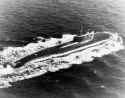
The Oscars were very cool boats. I've heard they were fairly good too, it's a shame there's not more public info on that kind of thing.
>>
File: 1769541680611324.jpg (108.3 KB)

108.3 KB JPG
Best threads on /k/, I'd love to see more info come out about the Russian attempts to make irl project pluto. Has it actually been tested, and if so wouldn't we all know immediately because of the isotope release during flight?https://en.wikipedia.org/wiki/9M730_Burevestnik
>>
>>65071860
Actually they only had a couple of hospitals with radiation specialists and small wings to treat extreme radiation poising cases at the time of the Chernobyl event. But no where near enough for a mass casualty event. Hospitals in regions near nuclear power plants were equipped with some treatment facilities and staff who had some more than basic knowledge of radiation exposure.
>>
File: Chazhma Bay Radiation Plume.jpg (128.7 KB)
128.7 KB JPG
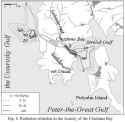
>>65071080
To add to anon's excellent narration of events, that pic shows the town of Dunay (former Shkotovo-22). The accident occurred to the right of the pic, about 1km away.
https://www.academia.edu/78437799/Radioecological_Gis_for_Computer_Map ping_Radionuclide_Contamination_of_ the_Areas_Under_the_Impact_of_the_M ilitary_Industrial_Complex_Faciliti es
>>
File: IMG_6948.gif (186.8 KB)

186.8 KB GIF
>>65071050
>The political officer took refuge in his cabin on the floating barracks, drank alcohol to neutralize the radioactivity, and passed out. The remaining sailors began fighting for their ship and their lives.
What. The. Fuck.
>>
File: Chazhma.jpg (183.3 KB)

183.3 KB JPG
K-431 location at time of accident. Piers removed and many nearby facilities have been razed by the time this sat imagery was taken. I couldn't find any declassified photos of the area.
>>
>>
>>
>>
>>
>>
>>
>>
>>
>>
File: Chazhma bay 1984.jpg (85.8 KB)

85.8 KB JPG
>>65072946
Here's some from 1984, the resolution sucks though
>>
>>65071034
> flew up to a height of two kilometers and crashed back onto the reactor, then fell onto the side of the submarine, rupturing the hull below the waterline.
That just feels like added insult to injury at that point.
>>
>>65071976
Wasn't that one uranium mine from last thread (or maybe the one before that) worse than Hiroshima and Nagasaki combined by itself?
>>65071080
>I think the approach was more frivolous.
You don't fucking say
>>
>>65074444
checked, nice quads anon
>Wasn't that one uranium mine from last thread (or maybe the one before that) worse than Hiroshima and Nagasaki combined by itself?
I wonder what the estimate for ARS death total for SovU/Russia must be. I honestly would not be surprised if it was approaching or even exceeding a million
>>
>>65072946
>>65074419
Yeah, teh Soviets actually decommissioned that yard, tehy even tore up the rail line leading into the place. . .but left the one right across the bay and the one a few meters to the south completely untouched.
And the city that is another few hundred meters to the south is also still there.
In the modern sat pic, are those rusty tank-like things in the area to the top right containment vessels for decommissioned reactors?
>>
>>65068334
Definitely on my to read list when I get back to the old Oppy ones.
Funnily enough, I did finish a book that featured an incident on an RN boat the author was on.
>>65070508
Bodging can be a factor in some cases (and occasionally admired even), but in the public sector it can be just as much driven by lack of funding to begin with.
Insert quote of choice about the Treasury being "penny wise" or "the value of nothing" here.
>>
>>
>>
>>65072911
>nuke sub that you're stationed on nearly gets ripped in half by the reactor cooking off and starts taking on water
I'd probably have a strong drink or ten as well, fuck that noise. The report to my commisar can wait.
>>

>>
>>
>>65072580
>Has it actually been tested, and if so wouldn't we all know immediately because of the isotope release during flight?
IIRC yes, in 2019 or 2020 they test ran the engine and killed a bunch of people when the traditional explosion followed by reactor fire and irradiation of a nearby town happened
>>
>>65074419
Thanks for this. I knew there had to be a pic. I spent some time searching the declassified Gambit database but couldn't find any.
>>65074761
Indeed it is. The Razboynik Bay long-term storage facility. Created in 2014 and largely funded by Japan. A Sept 2024 report states all used nuclear fuel has been removed from the area and sent to Mayak for reprocessing.
https://www.world-nuclear-news.org/articles/more-than-200-russian-nucl ear-submarines-have-been-dismantled
I wonder if they also cleaned up a solid waste dumping site in the ocean nearby. I was reading something last night and it mentioned the russians dumped radioactive solid waste in waters somewhere NE of Chazhma for decades.
>>
File: chazhma.jpg (70.9 KB)

70.9 KB JPG
зoнa aвapии = Accident Zone
>>
File: Aniva lighthouse.jpg (179.7 KB)

179.7 KB JPG
>>65073755
>>65073765
>Lighthouse
On topic of lighthouses, i've run into an interesting one on streetview, Aniva lighthouse on Sakhalin, note that white inscription meaning "beware of radioactivity" because soviets powered it with an Strontium 90 RTG
>>
>>
File: windscale.png (543.1 KB)

543.1 KB PNG
I'm back. Don't ask.
I didn't get a chance to finish this thought last thread, but I may as well bring it up here. I'm trying to get some decent offhand estimates for Windscale(which I'm convinced should be a INES 6, not 5). Due to the kit of the time and the general secrecy data on how spicy Seascale exactly was after the fire isn't well known, but I do have a handful of anecdotal accounts from one Leslie Thomas who was there.
>1. Hot particles every 10 feet or so in Seascale. Little specks of Uranium oxide visible to the naked eye. Leslie found multiple hot spots in his yard and eventually took one in to cut up until he found a particle
>2. The geiger counters at the time were from the electronics department/research and development department from his work and were a relatively new design at the time (mid 50s)
>3. Using presumably the same equipment above, on October 11th 1957 during the Windscale fire he wiped off the bottom of his sons shoes after he played outside, which measured at 3500 counts per minute(he also specifies this was 6 times the legal at the factory and 50s era limits were pretty high) No mention of distance or equipment specifically though.
>4. Using a newer piece of equipment(series-900 mini monitor) in 1989, the particle he grabbed in the 1950s was measuring about 80 counts a second at a distance of about an inch and while inside a glass slide. This was after over 30 years of decay.
Obviously you can't directly convert counts to actual units especially since we don't know what exactly the 1950s geigar counter was or what was on his sons shoes. Maybe we could calculate how much that particle was giving off in 1989 and then rough backcalculate how hot it was back in the 1950s, but that's not easy either.
But regardless none of it paints a pretty picture. Seascale probably should have been evacuated for a few weeks
>>
>>65077136
Something got screwed up here. One of those results is incorrect. Possibly both.
>Maybe we could calculate
We can't. By 1989, the polonium would be long gone. The best that you can do is compare the two results and make some assumptions about how much cesium and strontium were in there, but again, at least one of those two results was incorrect by a significant margin.
>>
>>
>>65077494
I see. The earlier post was a little hard to follow.
Looking back on it, if that particle was a tiny piece of fuel, I'd imagine that it could read somewhere around 4800 CPM fairly easily. I have a pack of tig welding rods downstairs that's hotter than that and they're only 2% thoriated. It's not uncommon to find pieces of Fiestaware that are hotter than this and people used to eat off of those. If this was a speck of uranium, you would not see any meaningful decay after 30,000 years, let alone 30. The only fission products from Windscale that are going to give significantly different levels after ~30 years (that will be around in amounts that can be measured) are the cesium and strontium, so any comparisons would have to be focused there.
As for what was on his kid's shoes, we'll never know exactly. Whatever it was in 1957, it's not that today.
>>
>>65077646
It was spicy enough in the 1950s that regular geiger counters could find them buried in the dirt every 10 feet or so, and yeah a little black spec of Uranium oxide from fuel. The polonium would have made it hot as hell when fresh. It was still giving 80 counts a second (4800 a minute) in 1989 so it must have been VERY radioactive fresh out the chimney when the polonium was still there. Probably wouldn't want to breathe that in.
As for his son's shoes, no detail other than it was wiped with a tissue and the tissue was what was measured, and he had been playing on grass outside in Seascale on October 11th. It couldn't have been hot particles though as even one hot particle would have been hotter than that, and I'm gonna trust the guys memory on this one given what a serious event it was. 3500 CPM would have had to be from other fission products not contained in the fuel itself, so I'm guessing free cesium and strontium and maybe I-131....albeit now that I'm typing this out a lot of 50s instruments couldn't detect alpha well unless made for that specifically so the 50s and 80s era numbers cannot be directly compared, I have zero clue what he would have gotten from the electronics department at Windscale Works in the 50s
>>
>>
>>65077843
India apparently runs a pretty tight ship when it comes to nuclear stuff.
Same as their space program which is surprisingly austere, but competent and focused.
Beyond that India suffers massively from third world 'not my fucking problem'-ism, especially when it comes to all kinds of public works.
China is doing a similar thing, except they absolutely did cover up some bad shit. Not'reactor explodes' level of bad, but still bad.
And China gets extra points for putting everyone who fucked up, got sick or was a witness into the Fun Rehabilitation Camp.
>>
>>65077658
>spicy enough in the 1950s that regular geiger counters could find them buried in the dirt every 10 feet or so
The problem that I have with this claim is that it would be very easy to even a hobbyist to find remnants of this today, but you don't hear anything about it. The government's claim is that most of the contamination was xenon and iodine, which would essentially be gone in less than a year. Existing conditions would seem to support the government's claim.
> polonium would have made it hot as hell when fresh
If you were reading alphas, which he may not have been. Did he record what instrument(s) he was using and how he was specifically operating them?
>3500 CPM would have had to be from other fission products not contained in the fuel itself
Why? The sample source on my old CD-V700 is a bit of depleted uranium, which in theory should have very little activity. It reads ~700 CPM. Any uranium ore vendor online will happily sell you a chunk of rock that reads up into the tens of thousands of counts per minute. It doesn't take much to get an interesting result.
> a lot of 50s instruments couldn't detect alpha well unless made for that specifically
That's true with modern instruments as well, not to mention dosimetry. And by "not well," I mean, "at all."
>>
>>
>>65078224
The 1989 measurement was taken using a series-900 mini monitor.
The tool in the 50s used to initially find the particle and then measure his kids shoes were from work (so from the Windscale Works) specifically the electronics department and were new for the era.
Also my logic for that is the 1980s hot particle would have already produced a higher number than his sons shoes in 1957 so (barring one being alpha and one not) hot particles couldn't be the cause of his son's shoes reading
>>
>>
>>65078543
I also found testimony from Marjorie Higham, site chemist, who was measuring the hair of local kids who had been playing by the sea on October 11th, and it was pegging whatever instrument she was using (though, again, no clue what instrument so not very helpful)
>>65078713
Yeah putting this in the same tier as Three Mile Island is dumb
>>
>>65078728
From what I remember, the only reason TMI is level 5 is because of the evacuation of pregnant women and toddlers, any sort of evacuation is an automatic level 5.
This is despite the fact that evacuation was largely done due to press rumors about a hydrogen bubble based on bad math and wasn’t needed at all in hindsight. It would be a Level 4 otherwise.
Effectively it cares more about actions and cleanup measures regardless of how needed they were, which also means a lot of Russian fuckups look less bad because they didn’t give a shit. It also means spraying a lot of slightly bad stuff that gets everything like Fukushima is seen as worse than utterly ruining a local area to FUBAR levels like Kyshtym. Kyshtym didn’t have any light elements that could travel hundreds of kilometers and wasn’t on an ocean, so it’s rated lower despite the fact you’d be way more screwed close by there than at Fukushima
>>
>>
>>65078543
>The tool in the 50s used to initially find the particle and then measure his kids shoes were from work
So that should be documented somewhere. That's potentially an important piece of information.
>my logic for that is the 1980s hot particle would have already produced a higher number than his sons shoes in 1957
Your logic is faulty. Assuming that both samples are comprised of the same contaminants isn't advisable, particularly if one was a speck of uranium oxide as you claim and the other was dust.
To return to what I said earlier, if so much contamination ended up on the ground that one person was reportedly finding another hotspot every ten feet, where is the rest of it? If you're convinced that Windscale was significantly worse than reported (and by extension, the UK covered it up), you're going to have to explain this. You're also going to have to explain why the net result on the surrounding population (in terms of lung cancer) was essentially a rounding error, and this during an era when nearly everyone smoked. While the UK didn't handle it as elegantly as it could have (and I understand why, and that "why" is both ironic and tragic) I'd argue that they handled it appropriately. The single most important thing that would have protected the public around Windscale without unnecessarily alarming them (or the US) was to get rid of all the milk, which they did. (And they even got rid of it correctly!)
There's a saying in the business: dilution is the solution to pollution. A curie of po-210 is horrifically deadly as a point source, but spread it out over a few hundred square miles and you're going to have a hard time detecting it, never mind be hurt by it. The only thing that was released in large amounts was the xenon, and you deal with xenon basically by not worrying about xenon.
So was Windscale a disaster? Yeah, wrecking that plant cost a lot of money. Did it harm the public? Not measurably.
>>
>>65077136
I had to re-watch that excellent documentary "Our Reactor Is On Fire" last night. They show the guy who found the radioactive particles on his sons shoes, hair, etc and they show the equipment used and samples he saved for decades. It's a segment between the 6 minute & 12 minute mark.
>>
>>65079171
https://www.youtube.com/watch?v=vcsyMvQtlKs
other anon found the primary source for that
>>
>>65079523
>>65079348
>>65079171
Well the hot particle claim is definitely real, there it is on camera. Rest of it is just witness testimony
26:20 to 28:30 is the shoe and hair stuff
>>
File: newspaper s.png (307.2 KB)

307.2 KB PNG
There we go. Blink and you miss it(and I haven't found a scan of the original online), but there's the letter Leslie wrote to MG on his measurements, and it has some actually usable numbers.
His garden had an average of 20 micro-curies per square meter of Beta and Gamma radiation right after the fire. Now that I can work with.
>>
>>
>>
>>65071087
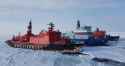
>>The Chazhma accident demonstrated the dangers of small marine reactors and the dangers of nuclear fuel refueling, concludes Ozharovsky. The lessons of this accident are still relevant today, as nuclear submarines, surface ships—icebreakers, and the floating nuclear power plant—continue to operate.
>ynr that 3 russian nuclear icebreakers have their already extended service life ending this year with nothing to get replaced with
>>
>>65080299
>ynr that 3 russian nuclear icebreakers have their already extended service life ending this year with nothing to get replaced with
Is all right, comrade, they are floating RTGs whose radiation helps melt the ice. Is feature, not bug)))