Thread #16942772

File: DoorsMonty.png (44.7 KB)

44.7 KB PNG
I don't understand the Monty Hall problem, it makes no sense.
After one of the wrong choices gets eliminated there's only 2 options left, either one of which could or could not be the correct one.
It's 50% regardless of if you switch.
274 RepliesView Thread
 Showing all 274 replies.
>>
File: scimonty.jpg (1.7 MB)

1.7 MB JPG
Oh boy it's this thread again.
>>
>>

>>
>>
>>
>>16942790
Well it has to be wrong, the entire problem is just semantics.
The odds of the two doors i didn't initially choose don't combine into the remaining door, that is complete nonsense.
When a door gets eliminated I am being a fresh choice between two doors that both could or could not be the correct door, that is a 50/50 choice.
>>
>>
>>
>>16942772
The key is the host knows what’s behind the doors.
By opening one of the doors, some of the information the host has becomes part of the system and you can gain that information. Which is why switching improves your odds.
>>
File: brnbzil7nvjb1 (1).jpg (44.9 KB)
44.9 KB JPG
>>16942778
>>
>>
>>
>>
>>
File: 1759299600986232[1].jpg (51 KB)

51 KB JPG
>>16942772
There's already a Monty Hall thread up, can this one be about Bertrand's Box?
>>
>>
>>16942772
Here is a simple/intuitive way to realize that the host opening doors changes the probability
>There are 100 doors, 99 have goats behind them, 1 has a car
>You pick 1
>The host then opens 98 other doors that all have goats behind them
Do you switch?
Either door could be correct right?
It's easy to see that it isn't a 50/50 in this case
so the host opening doors does give you some information, it increases the odds of the unopened doors having a car behind them.
>>
>>16943179
2/3
There are three balls you could have grabbed first, g1, g2, and g3. If you grabbed either of g1 or g2 first, then when you draw from that box again you will get either g2 or g1, which is also gold.
If you grabbed g3, then the second ball will be S1. That's silver.
For two of the possible draws you've made, the next draw is gold. For one, the next draw is silver.
Therefore 2/3
Was so annoyed at the idea of someone not understanding this one I verified my email
>>
File: 1633359836382.jpg (20.4 KB)

20.4 KB JPG
>2 fucking monty hall threads
>>
>>
>>
>>
>>16942808
>The odds of the two doors i didn't initially choose don't combine into the remaining door
Indeed. More properly, your odds *invert* when you switch.
You already picked one door, when there were two goats and one car. That means you had a 2/3 chance chance of picking a goat. Monty then opens one of the unpicked doors to reveal a goat, but importantly, you *still have your door* that you picked when the chances were 2/3. Nothing about your door has changed so that property of it is preserved. It has 2/3 odds of a goat.
And because one of the goats is now out of play, you now know that you can never switch from a goat to another goat. You can only switch from the remaining goat to the car or from the car to the goat. Whatever happens to be behind your door, the other thing is behind the other door.
Now, because your door still has 2/3 chance of a goat, 2/3rds of the time when you switch you are going from goat to car and 1/3rd of the time you are going from car to goat.
>>
If I open three Monty Hall threads and two are shitposts but one is serious, and the jannies delete one thread, then I should leave this thread
It's more likely that the jannies avoided removing the good thread (hypothetically) and just revealed it to me than I picked it initially
>>
>>16943235
Still 2/3. Adding more gold balls to the all gold box doesn't make you more likely to have picked it during the initial box picking, nor does it change your odds of drawing a gold ball next from either of the boxes. All that would do is force some poor shlub to be more careful explaining the logic of the problem.
>>
>>
>>
>>
>>16943223
According to you, these are the possible outcomes:
[outcome 1] : G1 followed by G2
[outcome 2] : G2 followed by G1
[outcome 3] : G3 followed by S1
However, [outcome 1] and [outcome 2] are literally fucking identical. They're only differenciated by the goofy numbers assigned to the coins.
Both of those outcomes happen simultaneously IF AND ONLY IF you pick the box with 2 golds, which happens 50% of the time.
Your fate is sealed the instant you pick a box.
>>
>>
>>16943433
there are 2 boxes in front of you. one has 9999 gold balls, the other has 1 gold ball and 9998 silver balls.
you put your hand into one at random and happen to pick out a gold ball. what are the chances the next ball you take from the same box is also gold?
>>
>>
>>
>>16943197
That’s not how the problem works though. In your scenario (make in 99 doors for simplicity) you would select 33 doors at random, Monty would open 33 doors that you did not select and show you 33 goats. You would then have the choice of sticking with your original 33 or going with the other 33 that you did not pick and Monty didn’t open. Your odds are 33/66 that a car is behind one of the doors of one of the groups you select.
>>
>>16943179
So I had 33% chance of picking the box with 2 gold and a, 16% chance of picking the gold in the half and half, 16% chance of picking the silver in the half and half and 33% chance of picking the two silvers. Now the silver box is gone, I have confirmed I was on the winning end of the 50/50 chance of picking Gold. Now that that is complete, I have two options, one is silver, one is gold, that again is another 50/50 chance. So overall I have a 25% of picking gold both times. This is the opposite of the monte hall problem, there is no new info given to me by winning the first round.
>>
>>16943433
>However, [outcome 1] and [outcome 2] are literally fucking identical.
The macrostates are identical. The microstates are not. What you're arguing is the equivalent of saying
>There aren't 36 outcomes for rolling two six-sided dice, there are only 11!
Microstates determine probability.
>>
>>
>>16942772
Just think about if you had 1000 doors. You choose one at random say no.437. Now someone opens 998 doors. All have goats. Only the one that you chose at random and another one, say no.111 is left. How big are the odds that you chose the correct one at first?
>>
>>16943433
>Both of those outcomes happen simultaneously IF AND ONLY IF you pick the box with 2 golds, which happens 50% of the time.
Why would that happen 50% of the time?
>>16944295
>Now that that is complete, I have two options, one is silver, one is gold
This is your mistake. You've already picked a box. You're picking again from the same box. The question is, given a gold ball, how confident are you that it came from the box that has only gold balls, as opposed to the one that had only one gold ball?
>>
>>16942772
>I don't understand the Monty Hall problem
I explained it here too fucking nigger
>>16944418
>>
File: 1774386273476100.jpg (10.9 KB)

10.9 KB JPG
>>16943225
>2 fucking monty hall threads
>>
>>
>>
>>16944869
Its not theater, its information that you are throwing away. 66% of the time, your first selection is a goat and Monty is FORCED into revealing the other remaining goat. So the MAJORITY of the time, Monty is forced into opening ONE particular door. That is not random. Your input, affects how Monty acts, which in turn should affect your final decision. You giving yourself amnesia when you see 2 doors does not chance the underlying fact that 2/3 of the time, Monty was forced into opening one particular door. So even if you forgot which door you initially chose, switching is ALWAYS more likely to win.
>>
>>16944868
No, the probabilities of your door cannot change after you picked it.
It might be easier to imagine the reverse. Suppose there are two doors to start with, 1 goat and 1 car. You pick one but before you open it Evil Monty uses his dark magic to make there be a third door. Do you think your odds have dropped to 33%? Of course not, there was a 50% chance your door had a car behind it when you picked it and nothing behind your door has changed. Its probability is preserved.
>>
>>16944395
In that case, its still 50/50 chance I picked the double gold box or the half and half. Just because you have delayed revealing to me which box I’ve chosen, doesn’t change that fact. And since I can’t switch, there is nothing more to discuss. As someone else put it, your fate is sealed when you select a box.
>>
>>16944936
Sure, but half the time you pick the gold+sliver box you get a silver ball on the first draw. That means drawing a gold ball first at all is evidence about which box you picked. You are in fact twice as likely to have drawn a gold ball from the all gold box as from the gold+silver box. Hence, 2/3 chance that you have the all gold box.
If you reject this logic, I want you to explain why you think the chances are 50:50 instead of 1/3rd because the only reason we are eliminating it from the possibilities is because we drew a gold ball and you are rejecting the gold ball evidence.
>>
>>16944895
Except it’s not. Monty opening the door eliminates that choice from the field of play. The fact you got to “choose” from three closed doors in the beginning is meaningless. After the song and dance you get two doors, of which you can pick one.
>>
>>
>>
I wonder why some people can't understand Monty Hall.
At first sure maybe it's a bit unintuitive, but after that?
Some are trolls sure, but is it just stupidity after that, or something more specific like ego not wanting to admit getting it wrong at first?
>>
>>
>>
>>
>>
File: 1000013876.png (27.6 KB)

27.6 KB PNG
You guys can't teach, and are forgetting the hidden options that change the chance of the choices.
>>
>>
File: fries in a jar.jpg (56.5 KB)

56.5 KB JPG
>>
File: 1000013877.png (109.9 KB)

109.9 KB PNG
Correct pic
>>
>>16945889
Doing this on my phone sucks, the math in the first "no rules" section is supposed to be 66% win for switching and 33% win for keeping, but the final results show old maths and not correct update. And the ultimate results should be "it's always has been meme" But it's still good nuff. People should be learned by it anyway.
>>
>>16945889
>>16945855
Speaking of can't teach
>>
>>16944980
>>16945064
>>16945241
Actually, that "goat opens the door on its own" thing is a bit interesting.
So there's no Monty involved, you just choose 1 out 3 doors. Right before you announce your choice, one of the doors you didn't pick is accidentally opened by the goat inside wandering out.
Do you stick with your initial choice?
You had 1/3 chance of picking the car initially, so there's a 2/3 chance of the car being in one of the remaining doors. Of if you prefer, there's a 2/3 chance of your pick being a goat door.
So, if you picked a goat door initially (2/3 chance), and a goat walked out of the other, there'd be a 100% chance that the remaining door is a car. It works out like the original (because, like Monty who can only reveal a goat, a goat can only open a goat door)
The one difference is that the possibility of the goat wandering out informs your door choice a bit. After all, it didn't walk out of YOUR door. Assuming such an accident is not astronomically unlikely, it could as well have happened to the door you picked if it contains a goat, yet it didn't.
But as long as the probability isn't 50% or more it shouldn't turn the initial 2:1 odds into a coin flip or worse.
>>
>>16942772
I think the reason why the Monty Hall problem is so contentious is because it messes with people’s instincts involving game theory. The participant must have perfect trust in Monty in that they would reveal a goat no matter if it were goat or a car were selected first. If a scam artist on a street corner wanted to play this game, if you picked a goat, they would immediately reveal that you picked wrong. If you picked a car, they would open one of the goat doors and try to make you second guess your decision. Our brains automatically try to play the game as though the opponent is trying to fuck with us, so we lock in and don’t switch. Scam artist only needs to win once. I think a more interesting version of the monty hall problem is if you trust Monty or not. Could he have opened the door immediately if you picked a goat? Is he trying to lead you astray?
>>
>>
>>
>>16943544
That's not the setup, brainlet, you're not selecting the balls, you're selecting the boxes.
There are 9999 boxes in front of you, one with two gold balls, one with a gold and a silver ball, and 9997 with two silver balls.
You put your hand into one at random and happen to pick out a gold ball. What are the chances the next ball you take from the same box is also gold?
Putting this next to a Monty Hall problem should make it obvious it's not the same problem. You're not asked to find a "winning box," and you don't get to change your choice upon learning new information.
You pick a box, and the new information reveals that you've picked one of two possible boxes, at which point you're asked which one of the two possible boxes you've picked, the answer to which is, shockingly, "one of the two possible boxes."
>>
>>16945132
I just can't wrap my head around the fact that revealing information about a system somehow changes the distribution of probabilities like some woo woo quantum experiment nonsense.
What if the initial state of the experiment was an open door with a goat and two closed doors, and no choices having been made. Are you telling ,e the act of having chosen a door alters the probabilities? And what if I just pretend to have chosen one door but have secretly chosen the other one? Do I still change my "choice" for increased chances?
It feels like magical thinking to me.
>>
What if you don't choose? There's three doors. A goat is revealed behind one of them. There's two doors remaining. One has a car behind it, the other a goat. How is there not a 50% chance of it?
Sure, if I had chosen a door, the odds of me picking the car from the start are nuanced. But the fact of the matter now is that it's a 50% chance that one door has the and the other the goat.
>>
>>16946639
"Probability" is just a number you assign to a situation based on your own individual knowledge. It's not an inherent property of the system.
To the host the "probability" you picked the car is either 0% or 100%. Because he knows where it is.
When he reveals a goat, it lets you update your own knowledge about the door he opened (down to 0) and the unchosen door (up to 2/3), but crucially because (in the traditional set-up) he always reveals a goat, it doesn't let you update your knowledge about the door you originally chose, because you always knew he was going to do that. Your knowledge about your door didn't change, so it's probability remains the same (1/3).
In the non-traditional version, where the host also doesn't know, and could potentially pick the car, him revealing a goat DOES update your knowledge about your door, because he was more likely (guaranteed in fact) to do that if you had chosen the car, than he was if you'd picked a goat, so now you know you're more likely to have chosen the car than you originally thought, so you can increase the probability of your door being right (from 1/3 to 1/2).
>>
>>
>>16946639
Let's say Alice tells you she has a boyfriend. No harm, no foul. Then you find out she's dating a tranny. Okay that's weird. Two years later Alice again tells you that she's found a new boyfriend. This time she tells you he's trans. Fine. Now it's three more years later. Alice tells you she has a boyfriend. What do you assume?
Do you understand now how probabilities update?
>>
>>
>>16946639
Nothing magical about it.
Let's say you're playing poker, you draw a hand of 5 cards, let's say KKK Q A. The opponent also draws a hand of 5 cards.
Knowing nothing else, you could swap out either the Q or the A hoping to draw a second one of the other, either of those seem equally likely.
But let's say your opponent gets cocky and reveals his hand just to brag, which is AAJJJ
Now you know there's only one A left to draw while the 3 queens are still in the pool, so even though absolutely nothing changed your probability of winning is far higher by swapping out the A hoping for a Q
>>
>>
>>
This is such a simple problem. You need to focus on the fact the host needs to reveal a goat door, it is part of the original problem. So you need to realize the host's change does not actually do anything to the odds. You still picked a door when the odds are 1/3 so they remain at 1/3 odds lol.
>>
>>16946783
>So you need to realize the host's change does not actually do anything to the odds
Correct. It was always going to be a choice between two doors at the end. Everything before that point is scripted. You will ALWAYS “choose” from three doors (can’t really be considered a choice because you don’t get to see what’s behind the door), and then Monty will ALWAYS open a door to reveal a goat and eliminate it.
The actual game doesn’t begin until this point, you now have two doors and one will win you the car. Assigning labels to the choices “switch” or “stay” is just kayfabe… it doesn’t matter what door you originally picked, the only purpose of doing so was to trigger Monty’s next part of the performance. Your choices are one door or the other door.
>b-but your initial choice affects what Monty does!
Monty either getting to pick which goat door to reveal or being forced to reveal one specific door is a system operating totally independently of the game you are playing, since the end result is always the same. He will always remove a goat.
There are no variable conditions that change the course of how the game plays out. It will always be a coin flip. If you wanted to gain some advantage you’d be better off keeping a record of which door the car is behind every time and try to find some sort of bias the show’s producers have, a latent preference for hiding the car behind a certain door over the others.
>>
>>
>>
>>
>>
>>16946887
Yes, and one goat will always be removed. The first choice doesn’t trigger a win/loss condition, it’s simply a trigger to begin the actual game.
Remove Monty from the situation entirely. The contestant simply walks up to the wall of three doors and pushes a button on a pedestal. One of the goat doors opens. The contestant now gets to pick either of the remaining two closed doors.
>>
>>
>>
>>
>>
>>16946892
>final decision between the two closed doors.
You've misunderstood.
The decision isn't between two doors who happen to be closed.
The decision was to switch, or not switch.
If your door has a car, Monty will open either of the other two doors.
If your door doesn't have a car, then there's only one door that Monty can open, since he can't open yours and he can't open the one with a car.
>>
>>16946905
“Switch” or “not switch” are just labels applied to “that door” or “the other door”. You can walk into an empty studio with one goat standing in an open door and two closed doors beside it and the game plays out exactly the same.
>>
>>16946908
Answer my question
>>16946903
>>
>>
>>
>>
>>
>>16946923
You clearly don’t understand the basic concepts of game theory. The way this one is set up, saying “I pick door one!” is no different than saying “Remove a goat!” since that is all that is accomplished by “choosing” from the three closed doors (again, this is not a choice since it doesn’t trigger a win loss condition and doesn’t affect the course of the game)
>>
>>16946928
You clearly don't understand I asked you a simple question.
There are two goats and one car behind three doors. You pick one door. Are the other two doors more likely to contain a goat each, or a goat and a car?
>>
Ok you retarded cocksuckers. Since you are too lazy to think it thru I'll spoonfeed you.
You pick one door, let's call it door A. There are only two things that can happen after this.
Your door A has a 1/3 chance of having a car. Then that bastard host Monty reveals what is in another door. He cannot reveal what's in yours because then the game is over. So he can't reveal the car either. Then there would be no reason to ask you if you want to switch. So he always reveals a goat, and it is never your door. Get it?
There are only two things that can happen, you either picked the goat door or the car door on your original choice.
You had a 1/3 chance or picking the goat door on your first choice, so that means there is a 1/3 chance you got it right and then he reveals a random goat. But there is a 2/3 chance your first pick was a goat, so he is just revealing the other goat to you, the one you did not pick.
So because you have a 2/3 chance of beint wrong, there is a 2/3 chance you picked the wrong door and he generously showed you the other wrong door, so switching wins the car 2/3 of the time.
If I reveal 100,000 wrong powerball tickets it does not increase your odds of being right on your initial pick. You cocksuckers think that because Monty did not open your goat door it means you "survived" an elimination and therefore your odds go up. That is false. He cannot open ur door because then the game would be over.
You dumbasses thinking about this like a Mr. Beast video where you survived a round of elimination so your odds go up of winning. Retarded fags. Go suck cock. Lol.
>>
>>16946944
I wrote too much so i will simplify.
If you pick a goat, that happens 2/3 of the time, so monty reveals a door based on what u picked. 2/3 of the time he is just showing u where the second goat is, and since u also picked a goat 2/3 of the time, switching doors wins 2/3 of the time. You cocksucking retards. Lol.
>>
>>
>>
>>
>>
>>16946958
You are coping by asserting the “choice” between three doors at the beginning is a choice. You don’t get to see what’s behind the door you “chose”, it’s simply a prompt for Monty to begin his scripted routine which is:
>reveal a goat that MUST not also be the door the contestant just said out loud
>>
>>
>>16946960
Correct. The part you are missing is there were two goats, so 2/3 of the timelines have you picking the other goat that he did not reveal, then he benefits you by showing you the other goat, so switching wins, lol.
>>
>>
>>
>>16942772
I agree this shit is so weird.
If I pick the first door and someone else picks the second door and the third door is revealed to have a goat so we both switch, do we both have 2/3 of a chance to win? does it change to 50 50 then? how does that make sense
>>
>>
>>16947041
No. The two other doors are more likely to contain a goat and the car, than two goats. Thus, when the goat is revealed, more likely it's the car that's remaining.
2/3.
I already explained to you chance and odds is different.
>>
>>16946982
Okay, so? The odds to win are still 0%. The odds to lose are still 0%. Because you’re not having your initial guess confirmed. All that’s happening is a losing door is being removed, changing the odds of correctly guessing where the car is from 1/3 to 1/2.
>>
File: 241.gif (86.7 KB)

86.7 KB GIF
>>16947053
It doesn't matter if your initial guess is confirmed or not. Your initial guess is most likely to be a goat, because there are two goats and one car. Thus, when Monty removes goat from the other two, it's more likely the that car is left. So you switch.
>>
>>
>>
>>
>>
>>16947072
Again, so what? You pick your door that has 1/3 chance there’s a car behind it, 2/3 chance there’s a goat behind it. The other two doors are exactly the same. They don’t get grouped together in a bucket where “everything in this bucket of two doors has a 2/3 chance of being a car” because opening two doors at once isn’t an option available to you. Monty isn’t giving you the choice of “do you want door x? Or BOTH doors y and z?” Because you would obviously always choose two doors instead of one. All that’s being done is narrowing the selection down from 3 doors to 2.
>>
>>16947083
>You pick your door that has 1/3 chance there’s a car behind it, 2/3 chance there’s a goat behind it. The other two doors are exactly the same.
The other one's are not the same. Your choice of door affects what's behind the other two.
We established you are most likely to pick a goat, than car. Because there are two goats.
>>
>>
>>16947091
>The other one's are not the same.
Explain how three doors where you have no idea of what is behind any of them aren’t identical.
>Your choice of door affects what's behind the other two.
I’d also like an explanation for this. Do you think they switch what’s behind the doors between the first guess and the second guess?
>>
>>
>>
>>
>>16943246
>>16946949
This is the gamblers fallacy.
>>
>>
>>
File: IMG_6155.jpg (347.3 KB)

347.3 KB JPG
If at 1pm I flip two fair coins behind a screen and I know both are heads:
At 2pm What are the odds both are heads?
If I show you one of the coins at 2pm, what are the odds the second coin is also heads?
…..
You have to explain how an already resolved event changes its odds please.
>>
>>
>>
>>16947037
>If I pick the first door and someone else picks the second door and the third door
We can expand this and reveal the doors individually for each person.
You, Person 2(P2), and Person 3(P3).
You pick Door A
P2 picks Door B
P3 picks Door C
>You
Door B is opened, there's a Goat.
>P2
Door A is opened, there's a Goat.
>P3
Door B is opened, there's a Goat.
Now you're all given a choice.
Switch, or stay.
>If you all Stay
You get a Goat.
P2 gets a Goat.
P3 gets a Car.
>If you all Switch.
You get a Car.
P2 gets a Car.
P3 gets a Goat.
If you stick with the first choice.
You get 2 goats and 1 car.
If you switch, you get 2 cars and 1 goat.
>>
>>
>>16942782
All this code is doing is asking the player to make a random 1/3 guess and then confirming if that guess was correct or not. That isn’t how the problem is structured.
You need to remove revealedDoor from the pool and re-roll playerChoice (use a new variable playerChoice2) then output the success rate for when playerChoice != playerChoice2.
>>
>>16946928
You chose a door for the host to not open. You're saying "Don't open that door". The car door will never be opened, regardless of your choice, so if you picked that, the host has the same number of options, and will remove one of two goats. However, if you picked a goat, he now has no choice, and must remove the other goat, meaning the other door is the car.
If you picked a goat at first, he removes the other goat, so the last door has to be the car; If you picked the car at first, then he removes one goat, leaving the second, so that the other door must be a goat: Whatever you picked at first, the opposite will be behind the other door, and 2/3 times you picked a goat.
If you chose a goat, then you've said "Remove the other goat!", but if you chose the car then you've said "Leave a goat!", the trick is you don't get to know what you said until the end.
Essentially, the first choice is between three folded notes you are to give to the host, two of which say "point to the car door", with one saying "point to a goat door", and the second choice is whether or not to open the door the host is pointing to.
>>
>>16947104
The doors are different to the host. Your choice doesn't change what's behind the doors, it changes which door the host opens, that is, what he leaves for you behind the swap door/which door he leaves for you to swap to.
If you choose a goat, the host has no choice on which door to open, he has to remove the other goat, leaving the car for you to switch to: of the two doors he could have opened, the one he didn't will be the car. Where as, if you picked the car, then he has a choice of which goat to remove, leaving the other for you to swap to: both doors he, from your perspective, could have opened, are indeed the two doors he could have opened, so the one he didn't is also a goat.
He can only chose goats, so if you chose a goat at first, he picks out the other goat, leaving you the car to swap to. You have 2/3 of having picked a goat, so the swap door has a 2/3 chance of being the car. If you picked the car, he'll pick out one of two goats, leaving the other goat for you to swap to. You have a 1/3 chance of having picked the car, so the swap door has a 1/3 chance of being a goat.
>>
>>16947187
The pitfall with this line of reasoning is that it assumes “if not door 1, then it must be doors 2 and 3” which is not the right way to approach it because you don’t get to pick two doors.
Consider three doors: goat1, car2, goat3
>you select goat1 at random, accepting the odds that there is a 1/3 chance there’s a car behind it, 2/3 chance there’s a goat
>Monty reveals goat3
>the field is now narrowed to two doors: goat1 and car2
Now here’s where the faulty logic comes into play: it’s asserted that goat3’s 1/3 chance of being a car gets transferred and added to car2.
Okay, so pause it here. car2 now has 2/3 chance of being a car and 2/3 chance of being a goat. Obviously this is impossible, and we need to reconcile it by moving 1/3 of car2’s original 2/3 odds of being a goat to one of the other doors.
We can’t move it to goat3 because it’s already been proven to be 100% certainly a goat.
We can’t move it to goat1 because that would make goat1 1/3 car and 3/3 goat which is also impossible.
Can’t make it work by adding and subtracting from the numerators. Here is what is actually happening:
>goat3 becomes 1/1 goat
>car2 becomes 1/2 goat 1/2 car
>goat1 becomes 1/2 goat 1/2 car
Monty now asks if you want to switch from goat1 to car2 or keep your original choice. Both doors have equal 1/2 car 1/2 goat odds. In this specific scenario switching would yield a win but there would be absolutely no advantage over any other possible scenario. Run it again with picking the car first and it always comes out to be a 1/2 decision in the end.
>>
>>
You have to use a philosophy trick to understand the problem. You imagine a more extreme example.
D = Door
G = Goat
C = Car
Normal problem: Door 1, Door 2, Door 3.
Now imagine a problem where there are 100 doors, 99 goats and 1 car.
You pick one door out of 100. That's 1/100 (1%) chance of winning — or in other words, 99/100 (99%) chance of being wrong.
The host opens 98 doors to show the goats inside.
There are 2 doors remaining closed: the one you picked, and the one the host did NOT open.
Would you make the switch? I would.
Remember: when you first picked a door, you had a 99% chance of picking the wrong door. So assume you did. The host opens all the other doors, but he cannot open the car. There's a 99% chance the door the host did NOT open has the car.
Now if you understand the problem with 100 doors, slowly lower the number: 50 doors, 20 doors, 10 doors, 3 doors.
The interesting part of this problem is that the more doors you have at the beginning (assuming the host opens all other doors but one), the better your odds.
You are betting that your first guess is wrong. You have a 99% probability of being wrong in the 100-door problem and a 66% chance of being wrong in the 3-door problem.
Once you fail (picked a goat), the host has to open all other doors except the car — he can't open the car or the game would break. Because you failed, the only door he does NOT open is the car.
This is the most intuitive way to understand it.
>>
>>
>>
File: 1769449421295070.jpg (6.6 KB)

6.6 KB JPG
>>
>>
>>16947349
>same problem 2 doors, one with a car
NTA but no, it's two different problems. If you're holding one of the three doors, the host only has two doors to choose from. If you don't pick a door to hold aside, the host can choose any of the three door and then it's 50/50 of course.
>>
>>16947331
Except that’s not how the problem works. At that point they’re just handing you a car. To replicate the problem correctly it would go:
>you choose 1 out of 100 doors
>Monty opens 1 goat door
>you choose 1 out of 99 remaining doors
>Monty opens 1 goat door
>…
>you choose 1 out of 3 remaining doors
>Monty opens 1 goat door
>you pick one of the two remaining doors to either win or lose
>>
>>16947349
>>16942772
https://voca.ro/1gkAQZ4shWnF>>16947366
the above link is like a past bin but its audio its called vocaroo.
>>
>>
>>16947379
finally you are close to getting it. Yes at that point they are giving you the car. Its a math problem not a TV Show.
The point is that with 100 door it becumes obvius that you need to swtich to get 99% chance of winning. With 3 door the odd are not so good but if you switch you still have a 66% chance of winning.
we chose an extreme version of the problem to make the choice more obvius. the the problem with 3 door the choise you make it the same just with diferent odd.
in the original game you pick one door.
host opens all other door (witch happends to be 1 door)
you get the choise between your door and other.
in the 100 door version.
you pick one door
host opens all other doors but one (98 doors)
you are left to chose between your door and the other.
The math is that when you first chose you have a big change of losing 99% in the 100 door version or 66% in the 3 door version.
host can not open the door with the car, as that would break the game. So there 2 doors remaing.
your choise is to say I picked right at first time from 100 doors I was the 1% that got it right or the mathematically correct move, say Im in 99% percent and chose wrong. If my door is wrong and there only one last door to pick the other door as the car.
3 door problem is the same but the change you falling first try is smaller 66%.
at the end you have your door 66% of being wrong and the other door that as a 33% of being wrong. You will never know but you bet on the one with better odds. you bet you picked wrong and the other is the right one.
>>
>>16947382
https://voca.ro/1gkAQZ4shWnF
The link got messed up sorry.
>>
>>
>>
>>
>>16947457
Okay, simplified:
>three doors
>all with identical odds: 1/3 win 2/3 lose
>you pick one
>host reveals a door he knows to be a losing door
>revealed door goes to 1/1 lose
Transferring a 1/3 win chance from the revealed door to the other unpicked door, which is what proponents of the switch = advantage theory assert, is mathematically impossible.
The remaining two doors are each 1/2 win 1/2 lose, thus your choice is 50/50 and is in no way affected by the door you chose first.
>>
>>
>>
>>
>>
>>16947481
Yes and you have an equal chance of winding up with a goat as you do a car
>>16947486
You wouldn’t measure straight wins / loses you would measure switch & win / switch & lose and it would wind up about equal for both, progressing toward a perfect 50/50 spilt as iterations increase
>>
>>
>>16947477
If you pick one door to set aside, it means the host only has two doors to pick a goat from, not all three. That's different than if you don't set aside a door.
What if you can pick two doors to set aside? Now the host only has one door to pick a goat from and you have 100% chance of winning. If he opens the door, you know the car is in the two doors you set aside. If he doesn't open the door, you know the car is in the door he didn't open.
>>
>>
>>
NTA but you are still too focused on "switching." The first door you pick isn't to choose one door for yourself. It's to choose TWO doors for the host. Then he is forced to remove a goat from those two doors. Like in who wants to be a millionaire, where you can force the host to remove some questions.
So everyone agrees 2/3 of the time the first door you pick has a goat.
This means 2/3 of the time the host has one goat and one car. Then he is forced to remove the goat, leaving only the car.
This means 2/3 of the time you are playing a game where you can win automatically by picking the door the host didn't open.
It's such a scam really, so easy it almost feels like cheating. Poor Monty doesn't know what hit him.
>>
>>
File: monty hall.png (41.5 KB)
41.5 KB PNG
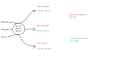
/sci/ smart. /sci/ explain smartly. caveman no understand smart explanation. so I draw simple flowchart diagram even peanut brain understand
>>
>>16942808
It doesn't really need to make sense if it is correct and aligns with experiment, 4 dimensions is "correct" and may even physically correspond to some things even though its not really something we can visualize
>>
>>
>>
>>16947639
In just as simple text form:
If you stick:
>Pick goat. Lose.
>Pick goat. Lose.
>Pick car. Win.
If you change:
>Pick goat. Change to car. Win.
>Pick goat. Change to car. Win.
>Pick car. Change to goat. Lose.
Don't say shit like "imagine a hundred doors" or "the host is picking the two doors you're not picking" there's no way someone dumb enough to not immediately understand why changing is the winning strategy would comprehend your roundabout, even more complicated explanation. It seems simple only to us, not to them.
>>16947715
I'm pretty sure that's a troll. Like 90% of the people acting like they don't understand the problem have to be bored people just seeking (You)s.
>>
>>
>>16947612
>Assuming a perfectly random distribution, 10 times.
Great.
10 times, Door A would have a car, and 20 times Door A would have a Goat.
Same would be true for Door B, and Door C.
Do you agree that if you just pick Door A every time, and stay with it, you'd get a Car 10 times, and a Goat 20 times?
>And if you choose to switch every time you would win the car about 5 times.
Why would you think you go down to 16% by switching?
>>
File: Screenshot_20260406_113744.png (47.3 KB)

47.3 KB PNG
https://pastebin.com/eeT0njST
{Akshually} if you switch is 1/2 and if you don't it's 1/3.
>>
>>
>>
>>
>>16947037
Consider this:
Player 1 chooses a door at random from among three doors. His odds of selecting the car door are 1/3, obviously.
Player 2 chooses a door at random from among the two doors player 1 did not pick. How likely is he to get the car door? Well, 1/2, - unless player 1 got it. So his odds are 2/3 * 1/2 = 1/3 as well.
So both players are equally likely to select the car door. And that is why, after a goat is revealed, their odds are 50-50. One equal chance against another.
Now consider, suppose Player 2 actually knows where the car is. He will select it if it's available. Is he still equally likely as before? Or did his chances improve? Because this is basically what Monty is doing.
>>
>>
>>
>>
For fuck's sake, it's really goddamn simple. Imagine you're forced to switch.
Three doors, you pick one at random, if you pick the car you lose. That's it. That's the question.
1/2schizos are magical thinkers who fundamentally don't understand reality.
>>
>>16948186
>for being so easy to test and prove yourself with one friend and a deck of cards.
Maybe that's the problem.
Not low IQ, not autism, not schizophrenia, not narcissism, not lack of education in stats.
It's just that they have no friends to test it with.
>>
>>16948186
>>16948202
Fortunately for /sci/entists you don't even need a friend: >>16944464
>>
>>
>>
>>
All you need to understand is you’ll pick the car on your first guess 1/3 of the time. Do you feel secure in this choice or do you opt for the field of twice as many doors with twice as many chances to win?
Look at it from the other side: 1/3 of the time Monty gets two goats, 2/3 of the time he gets a goat and a car. He can never eliminate the car so 2/3 of time by offering you to switch, he’s offering you the car.
>>
>>16947970
>this.pickedDoor
Here you go, dumbass. How could you not instantly realise you were wrong after your outcomes added up to 5 out of 6? What happens the other 1/6 of the time, does the universe wink out of existence? This is what I mean by you being a brainless codemonkey, you're literally incapable of thought and basic logic.
>>
>>16942772
think of it like this: the host is guaranteed not to remove the car door which means you have received free information about the problem. If you started on the car door the host could remove a goat or they could remove a goat, switching would give you a 100% goat. If you started on goat a door the host will absolutely remove the goat b, switching would give you a 100% car. If you started on goat b door, the host will for sure remove goat a, switching will give you 100% car. This means switching gives you a 2 to 1 chance of getting the car, and not switching gives you only a 1 in 3 chance of getting the car.
Me, i like goats and so i will not switch, they are just going to tax me for the car.
>>
File: phd.jpg (69.7 KB)

69.7 KB JPG
>>16942772
This has helped me a lot to filter out frauds when hiring.
>>
>>16943179
The box with both silver balls has been eliminated, leaving three possible outcomes:
>you draw a gold ball (win)
>you draw a gold ball (win)
>you draw a silver ball (lose)
The probability is 2/3.
The hangup people have with this one is they think by eliminating the double silver box, you are left with only two possible boxes, thus the odds of confirming its the double gold box are 1/2. But you have to consider all possible outcomes of the second draw from the three remaining balls.
>>
>>16950066
It’s 1/2 because you can easily tell a gold ball from a silver ball by density without seeing into the boxes. Once you have your hand in a box, you already know if it’s the mixed box or the straight box; you’ve essentially picked both balls in the box at the same time without needing to see them. Write the question better if you want a better answer.
>>
>>
>>16949160
That's literally variable name, you ware asked to point out error.
>>16948255
So simulation is invalid if it doesn't align your beliefs, and you call yourself a scientist?
>>
>>
>>
>>16950142
This doesn't affect the outcome in any way - you put your hand in, take one ball, and determine it to be gold. That you managed to determine that before taking your hand out is a neat party trick but irrelevant to the result.
>>
>>16950441
Yes, I believe in reality, and your simulation fails to align with it.
Not one but two people have pointed out the problem and you've completely ignored it.
Three times out of six, you win by switching.
Two times out of six, you win by staying.
What happens one time out of six? The door is in a quantum superposition of car and goat and collapses into a goat-car hybrid when you open the door? You've exhausted all the options and you're 1/6 short. Your simulation produces mathematical nonsense, so we can dismiss it as incompetently written garbage without even looking at the code.
If you purported to have written a fair coin flip simulator that lands on heads 99% of the time it also wouldn't make me start questioning how coins work. It would make me question your competence.
>>
>>16947612
>>16947536
>>16947477
Still around?
>>
>>16950500
People like you used to believe it's 2/3 until I showed them simulation in which it's 50-50...
Actually, fixing that error doesn't change outcome. You could've tried that.
Maybe reality is simpler than you think, and picking between 3 doors and 2 doors is what makes an difference.
>>
>>
>>16950615
>People like you used to believe it's 2/3 until I showed them simulation in which it's 50-50...
But it's not 50-50 in your simulation either... it's 50-33. If it was 50-50 you'd still be doing it wrong but then you'd only be doing it wrong in the usual way. You've instead broken new ground of idiocy.
>>
>>16950621
Okey, I fixed it... See post above yours... Thanks for pointing out mistake, real problem however was that it was even with name correct always falsy, because I'd have to compare index and I've compared value.
>>
>>16950498
False, you have different information. You could even make a good argument that the probability is 1 in this case since you can't really choose a ball randomly with respect to some attribute unless you're blind to that attribute, meaning that the mixed box is disqualified by putting your hand in and the straight silver box is disqualified by pulling out a gold ball.
>>
>>
>>
>>16950739
Look m8, it's not rocket science. You put your hand in and take out the first ball you encounter. Obviously if you first weigh the balls in your hands you may be able to tell which box it is and enforce a 50% success rate, but as you pointed out, that wouldn't be a random process, so you are precluded from doing that by the explicit wording of the problem statement, despite your eagerness to fondle balls.
It can also never be 1 because you have to have at least picked the box randomly before you even get to evaluate its contents.
>>
>>16943179
well either I picked the one with two or the one with only one so it's a 50% I get another ball
>but what about the third box?
might as well not exist as it became irrelevant the moment I grabbed a gold ball
>>
>>
>>
>>
>>16951814
You pick a box before putting your hand into the very box you picked, Anon. I don't know what else to tell you. There is no guarantee that you'll get the all-gold. What, are you also going to lift all the boxes first? And then pick one that's explicitly not random? If you don't stick to the problem as described, then of course you'll get a different answer, but that's not terribly insightful.
>>
>>
>>16951822
You're making the mistake of thinking that if an outcome is given that it was therefore guaranteed.
You pick a box at random. This means it could be any of the three boxes, at this point. You dont'get to do a pre-selection.
You take out a ball, again, at random, without doing any sort of evaluation of the balls inside the box.
This ball, that you've taken out has gone through two random selections.
Now IF you are going to force either of these selections to not be random you'll get something else, but then you are changing the problem.
>>
>>16951822
>>16951824
In fact, it's kind of like if the question was actually this
>You roll two dice; what's the probability that your total will be at least seven?
And then you say "well what if I just take one die and place it on six???"
>>
>>16951824
>>16951830
You’re confused. We’re going over your mistaken assertion. See if you can answer this.
>You roll a die. It’s a six. What’s the probability that your next roll brings your total to at least seven?
>>
>>
>>
>>
You replied to my post with at least one false assertion, which we're dealing with now, and at least one correct assertion, which we'll deal with next. But not until you prove you can answer a simple question and then admit you misspoke.
>>
>>16951857
You can stop wasting both our time by telling me what you believe to be a false assertion, and in the process reveal yourself to be an idiot.
But, failing that, I'm happy to just assume you are an idiot based on the available evidence, so I feel no great pressure to conform to your little power play.
>>
>>16951865
I already did, in my first reply. See >>16951814
>>
>>
>>16951870
>It can also never be 1 because
is the false part of your assertion. You don't seem to understand how conditional probability works, which is what the thread is ultimately about and what I'm trying, with the patience of a saint no less, to help you wrap your head around.
>>
>>
>>
>>16951879
Oh, we're back on this?
Can't you explain it with a more relevant example? One involving three boxes, perhaps, each containing some combination of gold and silver balls?
I think your insistence on this irrelevant question only reveals your own lack of understanding. In fact, I'd say there's only one person among us both who doesn't understand conditional probability. If it isn't me, what's the probability that it's you? Can you answer that one?
>>
>>16951879
>>16951882
By the way it seems rather odd to insist on such a silly song and dance and then lament that it requires the patience of a saint. You're the one who chose this, repeatedly. I'm not forcing you to be circumloquacious. And, in fact, you might find your interlocutor more cooperative as well if you were to speak plainly.
>>
>>16951882
We've never been off that. There's no point to moving beyond your first reply until we've resolved the errors in your first reply.
You don't like dice, I guess. Okay. Same set up. You pick a box at random. You pull out a gold ball. What's the probability that the next box you pick has fewer than two gold balls in it?
>>
>>
>>
>>
>>16952069
>at random
You could have theoretically grabbed any box with any assortment of balls. And if I can’t see inside the box, how can I believe what lies inside each one? The narrator could be a total glue sniffer.
>>
>>16952074
>grabbed any box with any assortment
You can grab any box you want whenever you want and keep grabbing random boxes until you die. Doesn't change what "same" means.
>narrator could be a total glue sniffer
Then the answer's not 2/5, it's the whole interval [0,1]
>>
>>
>>
>>16942772
>After one of the wrong choices gets eliminated there's only 2 options left, either one of which could or could not be the correct on
your initial choice is between three doors. The choice of choosing the correct door is 1/3. This choice carries over no matter the goat door reveal. You are choosing between keeping your 1/3 door or switch to a 2/3 door.
>>
Another way to think about it is what your initial choice gives Monty. Out of all the following possibilities:
>g1 g2
>g2 g1
>c g1
>c g2
>g2 c
>g1 c
Monty will be holding the car 2/3 of the time and since he must eliminate a goat, the car is the only door he has left. You don’t have to think of it as some abstract concept of transferred / inherited probabilities, the rules of the game simply dictate Monty is forced to offer you the car 2/3 of the time.
>>
>>16952263
Look at the way all of those can play out though. In the first two, Monty has a choice of which goat to offer to switch you to (door opened = x):
>g1 g2 > x g2
>g1 g2 > g1 x
>g2 g1 > x g1
>g2 g1 > g2 x
>c g1 > c x
>c g2 > c x
>g2 c > x c
>g1 c > x c
So at the time you’re ready to stay or switch, half the time Monty will be holding the car, half the time you will be holding it.
So yes, while you’re initially selecting the car 1/3 of the time, you’re also giving Monty twice as many goats to offer you 1/3 of the time. The very thing purported to provide an advantage to switching also provides a disadvantage that negates it.
>>
File: Screenshot 2026-04-08 at 9.22.09 PM.png (381.3 KB)

381.3 KB PNG
>>16942772
For example!
"==========want to win car======="
"car at 2"
"chose 1"
"*** revealed 0 (no change) ***"
"switch (not my door 2/3) won"
"stay (my door) wins 326"
"switch (not my door) wins 672"
"==========want to win car======="
"car at 1"
"chose 2"
"*** revealed 0 (no change) ***"
"switch (not my door 2/3) won"
"stay (my door) wins 326"
"switch (not my door) wins 673"
"==========want to win car======="
"car at 1"
"chose 1"
"*** revealed 0 (no change) ***"
"stay (my door 1/3 ) won"
"stay (my door) wins 327"
"switch (not my door) wins 673"
>>
>>16951889
>What's the probability that the next box you pick has fewer than two gold balls in it?
Why the next box? Did you misunderstand the problem, did you intentionally change it, or was it a typo?
Assuming you pick the second box randomly as well and that it can include the same box again, you could have gotten your gold ball from either GG or GS, and only in the latter case can you pick a box which does not have fewer than two gold balls in it. The probability of getting the GG box on your second pick is 1/3*1/3=1/9 and therefore the probability that the next box you pick has fewer than two gold balls is 8/9.
>>16951891
It's literally just the one objection: the probability of getting gold on your second pick is simply not 1. And furthermore if you could actually prove otherwise you'd undoubtedly have done so already. The answer to your question is so blindingly obvious as to be insulting, and you could simply continue in the assumption that I know it. But instead you insist I jump through your hoops first. The point of this little game is clearly not my comprehension but my subordination. I think your beef with me has less to do with the wrongness of my answer, and more with a need, on your part, to feel superior to me.
>>
>>16952296
sequencing doesn’t matter retard, picking either goat 1 or goat 2 will lose no matter what.
but if you want to apply this level of autism to a very simple concept, the first two arrangements (g1 g2 and g2 g1) can only collapse into one remaining OR the other, you wouldn’t count every single way they can be offered for the final choice the same way you count a goat and a car since those can ONLY collapse into a single possible offer.
>>
>>
It's easiest to think about it if you increase the number of doors. Let's say there are 10 doors, 1 car and 9 goats, and you pick one. Then the host opens 8 other doors where the goat is. Do you keep your first choice or do you go for the one door that was suspiciously skipped by the host?
In other words, with n doors, 1 car, n-1 goat, the host reveals n-2 goats.
The three doors is tricky because you're looking at it the wrong way: it's not that the host reveals what's behind 1 door, it's that he reveals ALL BUT ONE goat doors.
>>
>>
>>
>>16942772
>>16947137
>nist and the network time protocol finessing your monte hall
>>16942772
monte hall makes sense when you model the decision tree like in game theory and perform the exercise of backward induction.
reality A) you choose right the first time (1/3) , than
switch = win 0%
keep = win 100%
reality B) you choose wring the first time (2/3), than
switch = win 50%
keep = win 50%
so 1/3 of the time keep wins every time and 2/3s of the time keep wins 50% of the time. conversely 1/3 of the time, switch loses every time while 2/3 of the time its still 50%
baring showing how the fractions balance its obvious at this point keep wins north of 50%
backwards induction
the key to victory at connect 4
>>
>>
>>
>>
>>
>>16942772
Switching works because Monty gave you information about what's behind the doors. He CAN'T open the door you picked whether it's the right door or not, and he CAN'T open the door with the car behind it. You have a 1 in 3 chance of picking the right door from the outset, if you did, switching will make you lose, but if you didn't, which is more likely than not, he just told you the car is behind the other door, because he HAS to open the only empty door besides yours.
The remaining door doesn't magically have a 2 in 3 chance of having the car, you're changing your own bet from a 1 in 3 chance of being right on your initial pick to a 2 in 3 chance of being wrong on your initial pick. To be absolutely clear, by switching, you win if you were WRONG the first time.
>>
>>
>can’t win if I don’t make a final choice
>can’t lose either
I stand there silently, staring off into space with a smug grin as Monty pleads with me to make decision. I refuse to definitively set foot into the universe where I have lost, and nobody can force me.
>>
>>
>>
>>
>>
>>
>>
>>16955807
>>16955855
Dude, if you choose wrong the first time, switching wins every time. It's the exact inverse of choosing right the first time. How did you fuck this one up so bad?
>>
>>
>>16952380
Hey, sorry, thought you skipped out. Can't remember what the point of that last question was. You answered it faithfully, though, so thanks. In any case, the overall point is that, yes, an initial random pick with probability less than 1 can indeed be conditioned to 1, after the fact, by some other intervening info.
Your false assertion was that it can't.
>>16951641
>It can also never be 1 because you have to have at least picked the box randomly
Your true assertion was
>that wouldn't be a random process, so you are precluded from doing that by the explicit wording of the problem statement,
Per >>16950142 you're precluded from picking a random ball from box GS due to one ball being clearly denser than the other. That you can apply a random process to pick a random ball entails your randomly picked box to either GG or SS. Then pulling a gold eliminates SS, so the probability that you randomly picked box GG is now seen to be 1, meaning that the probability of pulling another gold ball from that same box is 1.
>>
>>16958579
>Your false assertion was that it can't.
It can't, under the conditions of the problem as stated.
>Per >>16950142 you're precluded from picking a random ball from box GS due to one ball being clearly denser than the other.
Which is denying the premise of the problem.
Of course you can make the outcome whatever you want if you specifically change the problem to effect that outcome - but that's a tautology and not very insightful.
Per the problem, both choices are random.
>>
>>16958774
You picked a gold ball. But one of the three boxes was stated by the problem to have no gold ball. Why allow yourself to "deny" that premise of the problem? You could have picked box SS but we know you didn't because you were able to pick a gold ball from the box you picked; likewise, you could have picked box GS but we know you didn't because you were able to perform a random process with the balls in the box you picked.
>>
>>16958827
>You picked a gold ball. But one of the three boxes was stated by the problem to have no gold ball. Why allow yourself to "deny" that premise of the problem?
This is not contradicted by the premise.
>you could have picked box GS but we know you didn't because you were able to perform a random process with the balls in the box you picked.
This is contradicted by the premise.
If I understand correctly, your argument is that you can't really pick at random from among two balls if you are able to assess their composition due to their varying density. To which the obvious answer is, don't do that, then.
Obviously, I can also use an ingenious trick involving opening the boxes and allowing the photons reflecting off of the balls to reach my photoreceptors and send impulses to my brain so that I can distinguish them by the different wavelengths of light, and thereby can guarantee that the probability of getting gold is 1. But that would be cheating. And that's literally all you're saying. The probability can be 1 if you cheat.
>>
File: monty_hall_portal.png (32.4 KB)

32.4 KB PNG
I'll gladly take Mony Hall bait any day of the week.
My favorite way to intuit it is to think of a scenario with more doors. Imagine you pick a random door out of 100, then 98 wrong choices get eliminated. Do you think it's more likely you picked the correct door at random on your first try, or that the other remaining door is the correct one?
Basically you just assume that the door you picked is wrong, because that's the more likely outcome, which means that the other door that doesn't get eliminated has a higher chance of being correct.
>>
>>16958838
>Note: You can't see into any of the boxes
Your ingenuity actually IS barred by the problem, in bright red print, even. Why would the problem do this? Maybe because you quite literally can't pick a random ball with respect to some attribute if you're able to differentiate that attribute.
>This is not contradicted by the premise.
>This is contradicted by the premise.
Based on what, your feelings?
>>
>>16958861
>Your ingenuity actually IS barred by the problem, in bright red print, even.
I specifically noted that I opened the boxes, genius.
>Maybe because you quite literally can't pick a random ball with respect to some attribute if you're able to differentiate that attribute.
Of course you can. You can simply not fondle the balls first. There's nothing about the act of grabbing a random ball that requires you to weigh each ball, and if, as you insist, doing so would preclude you from picking randomly, then indeed, your ingenuity is barred by the problem.
It says pick at random. You ask, what if I don't though? I say, then it's not the same problem. No different from looking inside the boxes to get around the stipulation that you're unable to see what's inside them.
>Based on what, your feelings?
Based on logic and the wording of the problem.
>>
>>16958864
>I specifically noted that I opened the boxes, genius.
Yes, so that you can see into them, which is proscribed by the problem.
>It says pick at random. You ask, what if I don't though?
No, and I don't need to ask. The assumption per >>16950142 is that gold and silver aren't simply colors but, moreover, metals. We're not arguing if it's a proper or improper reading, we're arguing axiomatically from that (im)proper reading. If you'd picked box GS, you couldn't have then picked a gold ball at random from that box any more than you could have from box SS.
>Based on logic and the wording of the problem.
The logic and wording of your feelings aren't part of the problem. Point to something real in the text.
>>
>>16958984
>Yes, so that you can see into them, which is proscribed by the problem.
No, it's merely saying the boxes are opaque. Obviously they are able to open, otherwise you couldn't be able to get a ball from them. And if you open them to get a ball from them, you couldn't help but see the contents. Unless... you were to... avoid doing that somehow... in order to stick to the parameters of the problem...
>We're not arguing if it's a proper or improper reading, we're arguing axiomatically from that (im)proper reading.
Enjoy being wrong, then.
>Point to something real in the text.
"you put your hand in and take a ball from that box at random"
>>
>>
>>
>>16959306
>the boxes are opaque
The condition "you can't see into any of the boxes" isn't time-dependent. It can only be satisfied by at least one layer of opacity existing between you and the interior of the boxes at all times. It's a math problem, not a philosophical inquiry: there's no grue/ bleen.
>Enjoy being wrong, then.
Rude.
>You put your hand in
Could be any box.
>and take a ball from that box at random.
Filters GS.
>(It's a gold ball.)
(Filters SS.)
>>
>>16942772
>this thread AGAIN
>dumbasses with 1000 doors AGAIN
Alright retards, here's a caveman-tier explanation
Strategy: always change the door
>2 case of 3 you start with a wrong door
>you change your choice, you always win
>1 case of 3 you chose the goat first try
>you change, you lose
3 cases, 2 wins, 2/3 probability
Strategy: stubborn retardmaxxing
>2/3 start with a wrong door
>you fucked up
>1/3 start with a good door
>you win
1/3 chance of winning