Thread #97699640

File: 1619190525237.png (1.3 MB)

1.3 MB PNG
Writing General: 'psychopomps' edition
Welcome to /wg/, the thread for all /tg/ related writing. Whether you're plotting your campaign, trying to come up with a character backstory, or just trying to write some setting fluff, this is the place to post it. You don't even have a campaign, just an idea you want to develop? You're welcome here. While the rest of /tg/ is arguing over monstergirl mating and which way rivers are supposed to flow, we're here to help you turn your thoughts into an actual finished product.
As the successor to the Storythreads, we're also open to /tg/ related fanfiction (D&D, Warhammer, Battletech, whatever). In fact, if you've written any vaguely /tg/-related short stories, you can try them out here. We also have flash-fiction challenges from time to time.
There's a discord for writers here
https://discord.gg/6AwKHGF
The previous thread can still be found in the archive here
>>97133758
And finally an archive of /tg/ fiction can be found here:
http://1d4chan.org/wiki/Storythread(dead link, but may be resurrected one day)
https://2d4chan.org/wiki/Storythread (page missing, wiki still up)
https://1d6chan.miraheze.org/wiki/Storythread
116 RepliesView Thread
 Showing all 116 replies.
>>
File: Discworld Death.png (149.5 KB)

149.5 KB PNG
Do you have a personification of death in your setting? Or some other guide to the afterlife, like Anubis, or Valkyries? How do you write them, and what do you think they add to a setting?
I'm going to be uncontroversial and say that Death from the Discworld series is the gold standard for psychopomps, although I do have a soft spot for Death in the Sandman comics.
>>
>>97699716
>Personification of Death
It's largely ambiguous and down to in-world perspective, but there are many people and cults who see the Dark Lords as either embodiments or agents of Death, given they rise the Nekropoli to the surface, absorb the land's mana, and turn everything surrounding into ashen desert and undead. These people believe that there is either some holy retribution or divine test in effect, or that the perceived "underworld" has broken a peace accord with "heaven" through their invasion.
The reality is the Dark Lords originate from a Void Dimension that has received self-awareness, and wishes to create, but can only consume, corrupt, and destroy through its efforts. The Dark Lords move in accordance with the "Doctrine of Hatred", which is essentially the burden of knowledge they will never be beloved like the living, because their presence uncontrollably kills all life indiscriminately.
>Guide
Other religions and cults believe the King of Cloud Kingdom, which floats high above the surface world, sends his Zephyrs to guide the pure or zealous to "heaven", much like valkyries and such.
The reality is that Zephyrs and The Cloud King are just as mortal as the surface world races, and visit the surface to either help fight evil, or as exiles who don't fit in with the higher realm.
>why so basic
It's for a game.
I don't really need much lore to define the character options or the enemies to fight.
>>
>>97691231
>Anyway thinking on doing spell jammer but I'll use some rules and lore points from the old edition since the 5th is really bare bones.
Yeah, that's been my complaint with it. I've never tried Spelljammer before and I really like it as a concept, but apart from a couple of cool monsters they don't seem to have done much with it.
If you take a map of Faerun and throw a dart at it then pretty much wherever it lands you'll have a bit of history and something about the local culture, politics, etc. Spelljammer, not so much. What are some of the major locations on the Astral Plane? Who knows. What are the major factions? I dunno... pirates, maybe? What are Astral Elves/plasmoids/Hadozee like and who are some major figures? *crickets*. The Rock of Bral has been fleshed out a bit but that seems to be all there is in terms of general setting background; presumably in the actual campaigns there are more locations, factions, etc, but I like to feel like the setting I'm playing in exists outside just the specific bits my character happens to be standing in.
>the "fun" part of the plant is that I throw 2 D100 one to decide 50/50 if time move forward or backwards, the second to decide how many years. The elf warlord will be multiclass half of it in a warrior spec the other half in a magic spec, the battle will be iun his "throne room" a place where there is a crystal shaped as a throne, when he's wounded he will teleport to the throne and regenerate and he will advance in years or be younger, if he's young he'll fight as a fighter, if he's old he'll use the wizard parts.
That actually does sound cool. Also an ability with a bit of risk to it, since presumably if he exceeds the 750 lifespan of an elf, he dies. Or becomes a helpless baby if he gets too young.
>>
>>
>>
>>97699800
I think that's some pretty good lore, actually. Although I like the concept of genuine wind spirits that guide the dead to an afterlife up in the clouds; quite a different take on psychopomps.
>>97703783
Sure, we're here for any writing-related activities. Although I don't know shit about MTG so I may not be able to comment much on it.
>>
>>
>>97704367
>that's some pretty good lore
Thank you, I actually wasn't expecting a compliment; I feel I'm fairly mid to basic as a writer.
In all my works, whether in games or stories, I like to keep the afterlife ambiguous and inaccessible, so nothing like killing Gods, undead don't remember beyond the veil or are too incoherent to get information from, can't plane-shift to Heaven/Hell, etc but I do like to exercise hypotheticals of what in-world people would believe in from observation, their own stories or hypotheses, and such.
I admit, it was a challenge engaging with the prompt, but it was fun for me.
>>
>>
>>97699716
The elven psychopomp appears as a full on skeleton in a robe, grim reaper style. He used to be trapped in a cycle of killing his mother (who is a daughter of the Leviathan, and sort of a mother of monsters figure) and becoming his father, the First of the Dead, but that cycle broke when hell overran the elves' old home. Now he guides the souls of dead elves to the moon, since the Land of the Newly Dead was flooded by the abyss.
He carries a silver blade given to him by the Lunar Queen, which is depicted varyingly as a scythe or a sword depending on context, and he carries the head of his father (who also looks like a skeleton, so it's just a skull) on his hip. The skull gives him weird advice sometimes, and is the combination of every iteration of his father from each iteration of the cycle, superimposed into a single being.
When the elves eventually reclaim their home, he will gain flesh, and take on a profile of rebirth
>>
File: You have no power here.png (51.8 KB)

51.8 KB PNG
Oh man this is like one of my favorite topics.
>>97699716
My book series resolves almost entirely about death and the concept of it. Its was conceptualized by my personal fears regarding the subject, as a way to cope.
In the setting, Death is a character, arguably almost the main villain of the setting but its a bit more complicated. Everything regarding the demons and supernatural elements tie back to her in some way. Its part of the creation myth of the setting that the Gods went mad from being alive for untold eons until they made a pact with Death to be able to die.
Also, the main villains of the book are basically descendants of that Death god its a whole thing.
Currently in the story due to the actions of the protagonists, Death herself is currently locked away BY one of those descendants. This has lead to the world itself being thrown out of balance because nothing can die "properly". Human souls remain trapped in their dead bodies and they slowly begin to calcify and turn to salt-like crystaline structures in a horrific undeath. The MC by virtue of her super special powers is actually one of the few people capable of granting release from this hell.
Thats actually the main conflict of the current book in a way. Two of those descendants mentioned earlier all want to use her power to "fix" the world in their own way. One wants to use it to release Death and the other well... the other's a necromancer that believes Life to be sacred above all else and actively spits in the face of Death.
As a bit of a spoiler, the plan for the finale of the book IS for this MC to embrace the villain's plan and become a full blown psychopomp, at least for some time until the next book works to fix that. Due to the web of intrigue and political and emotional blackmail Ive crafted this is basically the only way for her to save those precious to her.
>>
What are some good way to introduce a sense of sonder to adventures without risking derailing them.
I just like the idea of occasionally implying to players that there are other adventures going on simultaneously to their own that are just as interesting, complex, and important as the one their on. But that doesn’t involve them, and they may never fully know.
>>
>>97707311
This probably isn't very helpful, but my favourite example of that is Shaun of the Dead, where they briefly pass another group with all the same archetypes but played by British celebrities who are more famous than the main actors.
>>
File: Parley.png (316.9 KB)
316.9 KB PNG
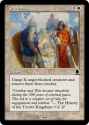
I guess I'll start my example with the primary location of the setting.
The Twelve Kingdoms, or 'The Realm' is a series of loosely connected kingdoms, city states, and organizations, with a central capital, simply known as 'The Capital'.
869 year prior, it was established, by then a very aged king, named William John Thomas II, later epitaphed the Conqueror.
In the historical record, he drove out the old Remus Empire from the continent, through unity. After doing that, he conquered the remaining tribes and kingdoms, and gave the land to allies. He then established the capital city, and a union to attempt to keep the peace.
Each Kingdom would have a seat in the capital, rounding out to 12. Him, the king, would make 13, which would act exclusively as a tie breaker, but inside this city, his rule was unquestioned law.
In turn, when the king passed, an election would be had to elect a new king. Tradition long dictated that the previous king's oldest son is eligible for election, as a sign of good will, but very rarely is a direct son ever elected, and no 'dynasty' has ever happened.
The system worked, and though summer battles still happen, and there were some growing pains in the the first few centuries, there has been 500 or so years of relative peace and stability.
>>
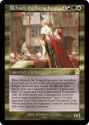
File: Richard the Young King.png (320.4 KB)
320.4 KB PNG
>>97712532
Each kingdom has a representative in 'The Council'. Each representative usually has a permanent residence, for as long as they hold the position.
These positions are one of the few things in the city that can't directly be controlled by the king. Instead, the land they reside on is treated as soil (to the kingdoms that have soil) of the land they represent, giving them a pseudo-diplomatic immunity. Naturally, how enforceable this is, has been debated before.
The twelve Kingdoms are as listed:
>Britonia, a fantasy not britian! A relatively poor and fractured island nation with a king currently living in the capital, far away from the island.
>Franks, Not France! A large, fertile kingdom based almost exclusively on medieval knightly romances. Big into the arts, has the most knights of any of the kingdoms, and is one of the richest. It also has a pretty brutal feudal caste system which supports this system.
>The Twin Kingdoms of the Hybernian Peninsula: A combination of Not Spain, not medieval Italy, and not Portugal. They use to be one kingdom, until compromise divided the kingdom in half. Both north and south however, have a symbiotic relationship.
>>
>>97704833
>I like to keep the afterlife ambiguous and inaccessible
Honestly, I think that's almost always best. Once you make the afterlife a known quantity it takes away some of the dramatic tension of death; a character isn't gone when they die, there's still the chance they'll crop up in the story again as some kind of spirit. And bringing resurrection makes it very hard to get any kind of narrative tension at all out of mortal danger. You just end up like the later seasons of Supernatural where everyone knows that even if one of the main characters dies they can just be brought back a few episodes later.
>>97704879
Absolute classic. A huge influence on all depictions of death that came afterwards.
But yeah, I can see how Swedish Arthouse Death could be difficult to work into a story.
>>97704925
>When the elves eventually reclaim their home, he will gain flesh, and take on a profile of rebirth
That's an interesting take on a psychopomp; usually they're just a symbol of death.
>>97706469
>As a bit of a spoiler, the plan for the finale of the book IS for this MC to embrace the villain's plan and become a full blown psychopomp
I don't know how 'people getting forced into becoming a psychopomp' became a genre, but I'm here for it.
>>
>>
Might as well contribute some of the lore for one of my own homebrew worlds. I need to write a novel or two for this setting, really. This all started as a dnd 3rd edition setting based on a minecraft world I had been messing about with.
The Kingdom of Hrundia was founded in the Central Mountains by the humans fleeing the trepidations of the Elves of the plains. Led by the great warrior Hrothfar they ventured deep into the Spine, fighting off attacks by the Goblin, Human, and Orc tribes whom lived in the sweeping peaks. At Trothan Ford the dishomed where confronted by the great Troll Landerstag whom barred the way. Hrothgar stepped to the fore and slew Landerstag, splitting the beasts skull twain with his great axe and, unknown to he or his people at the time, earning a great debt from many of the tribes for Landerstag had been a terror that haunted them for many generations.
Hrothgar led his people through the passes and valleys, following a calling he claimed to hear, until they reached a great, sweeping valley. In the centre was a single great structure, a pre-Sundering (name to be changed, possibly) city-fort the size of, and indeed built from, a mountain. Its great walls towered somehow untouched by time, over a mile into the sky, and into them where set ancient fortifications. Around the base where the ruins of some great city of aeons past and in silent trepidation the people followed Hrothgar through these to the base of the leviathan structure, for inspite of the taboos surrounding the Pre-Sundering structures the loyalty the people felt to Hrothgar, and their faith in him, overcame these dread superstitions, and so they came to the stairs that led to the entrance.
Hrothgar bade his people settle here, and they set about rebuilding some of the structures in the outworks. Once this was done Hrothgar, named King now by his people, founded the Kingdom of Hrundia and set about the clearing of the great city for all manner of evil had made its home within.
>>
>>97714093
The warriors past through the ancient gateway, itself a full 20 strides wide and twice tall, and through the tunnel through the walls, some 60 strides thick, to the interior. Inspite of being inside the great floor of the entrance level was still lit by great crystaline lights built into the ceiling, the art of making them long since lost, and indeed it would come to be found that these lights where present on all floors though in some places they had been damaged or destroyed and in these areas flame had to suffice.
It would be 4 long years before the first of the peoples or Hrundia where able to enter the city and settle within, and it would take no less than 60 years to finally clear all the upper floors and most of the lower, though in the true depths evil still dwelt and it was deemed that these would be sealed. until such time as sufficient manpower could be mustered.
Meanwhile, the peoples of Hrundia thrived in the vast valley, and expanded to settle across the floor and into the mountains. In time they ventured to the end and found a clear path that led through the mountains to the lowlands they had come from, though it was watched and contested by many tribes and raiders.
In the second year of settling, Hrundia was approached by representatives from several of the Human and Dwarven tribes within the mountains. They paid homage to Hrothgar and thanked him for the laying of Landerstag, and pledged oaths of friendship to his peoples. In time these people would eventually join with Hrundia, and be folded under its rule, though this would take some generations to fully achieve.
War would come to Hrundia in the 4th year, in the form of a great Orc horde that emerged from the North and swarmed through the mountains, slaughtering several tribes before being defeated by the Hrundian host at the Battle of Crowens Farm. Inspired by this the surviving members of the tribes pledged themselves to Hrundia and became its first foothold beyond the valley
>>
>>97712659
>I don't know how 'people getting forced into becoming a psychopomp' became a genre, but I'm here for it.
Didnt know it was an actual genre desu.
But yeah the MC has very close ties to that death, and the eventual story goal for her is to eventually take the mantle and become the new embodiment of death itself. This is a small taste of that eventual finale.
>>
>>97717833
To say it's a whole genre might be an exaggeration, but I've definitely seen it a couple of times. Somehow there were two TV shows in the 2000s based on the concept, Dead Like Me and Reaper. Then there's that Ryan Reynolds movie R.I.P.D., and I think the anime Bleach is based on a similar principle. And there's a Discworld novel in which Death takes a leave of absence and his granddaughter is forced to take his place.
>>
>>97719972
To be fair for a lot of those to my knowledge becoming a psychopomp is like the main inciting incident. In my case its more of a steady buildup/climax to a larger overall supernatural story, kinda like griffith's whole infamous moment.
>>
>>
>>
File: 1619148922045.png (99.2 KB)

99.2 KB PNG
I don't give a fuck anymore. Have a book for free, pdf and epub.
Only problem: it's inGerman
https://files.catbox.moe/nmxwcj.pdf
https://files.catbox.moe/86tfew.epub
It's also the first part of your usual fantasy-trilogy. It's the first one I finished editing again using new tools and AI, the other parts should take two weeks or three.I have another self-published novel, single-volume. But it's the first one I self-published and I fear editing it after so many years
>>
>>
File: FNWBOxTXoA4ab3g.jpg (437.6 KB)

437.6 KB JPG
Bump.
>>
>>97712532
>>97712659
In some ways this feels like fairly standard Medieval European fantasy, but on the other hand I kind of like the traditionalist aesthetic. Not trying to get gritty like Game of Thrones or make it... I mean, I don't know if 'woke' is the right word, but do what most fantasy does these days and include a bunch of non-European cultures. I mean, correct me if I've got the wrong impression but it seems like you're playing it straight, knights and princesses and chivalry almost like an updated version of an Errol Flynn movie from the '50s. You don't really see that in modern fantasy, you might find people like it.
The only note I have is that you might want to chose another name for the Hybernian Peninsula, as Hibernia was the Latin name for Ireland and is still used a lot in connection with Irish things; it might get confusing.
It's funny you have a Remus Empire when I was just talking about the Discworld >>97699716. Terry Pratchett's first iteration of the Discworld, a science fiction novel called 'Strata' which predates the series proper, included a Reman Empire where Remus killed Romulus and won the naming rights.
>>
>>97722907
Ich spreche ein bisschen Deutsch, aber leider nicht genug für einen ganzen Roman.
I'll probably use google translate to have a look at the first few pages at some point when I've got the time. Will let you know what I think.
>>
File: Remus Legionnaire.png (302.9 KB)

302.9 KB PNG
>>97730200
I am, at least for the realms, yes. For instance, the Remus empire, which is supposed to be a late stage but perpetually moving along western Rome is also in the setting.
>>
>>97713633
> Absolute classic. A huge influence on all depictions of death that came afterwards.
> But yeah, I can see how Swedish Arthouse Death could be difficult to work into a story.
I hope I figure it out as the campaign goes on.
So far, players learned about Death from the always depressed court jester Jöns, a former squire, who tells a story about how his master played chess with Death. Only one player encountered Death and played a friendly match. However, unlike other players, he didn't realize who the mysterious stranger was.
I am thinking about imitating a hook of the movie when one of the players dies next time.
I am already more or less """organized""" and interesting death of a PC character by founding a quest in the game on The Green Knight (movie, not og). It was fun for everyone.
>>
>>
File: Swamp.1.png (279.6 KB)

279.6 KB PNG
>>97712659
>Wullfkron: A germanic inspired kingdom, with a large population of dwarves. Deep primordial wooded mountains protect almost picturesque valleys. Famous for its mechanical ingenuity, and many holidays.
>Polankskalink: A small, pious nation, though while relatively isolated, always pays its taxes and tithes on time, and in full. Their famed magically infused Winged Hussar's saved the realm 500 years ago.
>Wrenna. The Cursed Kingdom, with little airable lands, surrounded by marsh, moors, and bogs. Has a notable brutal feudalism and caste system (even compared to The Franks). The Cult of Malel, black knights, and the fabled Order of Malel all originate from here.
>>
>>
>>97714093
>>97714167
It's never occurred to me before what a great design tool Minecraft would be for creating models of a fantasy setting. I mean, I know people have done Minecraft Middle Earth and stuff like that, but it never crossed my mind that you could have fun building stuff in Minecraft and then use that to inspire your own writing. Good idea, anon.
Although I do have to say, you are a prime example of why I discourage people from writing in Ye Olde Speak unless absolutely necessary.
>confronted by the great Troll Landerstag whom barred the way
'whom' isn't just an old-fashioned way of saying 'who', it's a relic of English's now mostly deprecated case system and can only be used for the object of the sentence, not the subject as you've done in this instance.
>>
>>97699716
>Do you have a personification of death in your setting?
No, reincarnation is basically confirmed to be a thing for the main setting and works automatically as a natural process unless intentionally interfered with through magic, usually to net negative results.
I mean it isn't like some being or death manager is going to come for you for messing with the cycle. It's just really unwise and most end up regretting it eventually. Fates worse than death and all that jazz.
The most common way of messing with the cycle is "reincarnatiates", who used or had used on them a spell to retain memories of previous lives before they die. Once one is a reincarnate they are stuck as one until they figure out a different more obscure spell to make it stop. A common side effect of this is early onset dementia or other memory issues as the memories of several lifetimes stack and get more and more tangled.
>>

>>
File: 1408186580940.jpg (149.1 KB)

149.1 KB JPG
>>
File: 1408188753799.png (650.1 KB)

650.1 KB PNG
>>
File: marina-kleyman-taegamhr.jpg (338.8 KB)

338.8 KB JPG
Bumpage.
>>
File: 1f5763b40292f60e70694e75ce1eb7ea.jpg (198.9 KB)

198.9 KB JPG
>>97699640
Oh cool, found something legitimately useful.
I'm trying to come up with a first campaign to run for my friend group, since we've agreed that our current campaign should be ending soon. Vanilla 5E for the most part, level 3. I want to keep it short and lighthearted, around 5 sessions with a possibility for more later down the line.
I've been drawing a map with a few towns, and my basic idea right now is that the party's gonna meet at a city and after dealing with a short encounter that brings them all together (think, a group of bandits attacks the market and they all come together to help?), the party will be hired to guard a diplomat with an important message to another city. Tensions between the cities are high (they're more like city-states, I guess?). They'll go on a trip to the other city to deliver the diplomat with the message, but there'll be a shady group interested in stopping them so they can profit if a war starts between the two cities by selling weapons to both sides. I don't have many ideas past this other than locations for them to go to I guess.
I also want some classic JRPG vibes if possible, rather than Tolkien or anything more contemporary like Critical Role where the tropes are regurgitated. This story has to be earnest, honest and unapologetically tropey and lighthearted.
>>
File: juhan-na-03.jpg (240.3 KB)

240.3 KB JPG
>>97758320
That pretty much sounds like its enough for five session. Have the shady group attack in session 2 or 3, as the climax. Followed by a chase to their destination. For instance, in session 4, they could arrive at their destination, with the intent to hand the diplomat over - with the plot twist being that the people they are dealing with are also part of the shady group and try to kill the diplomat. So the party has to free them.
Make sure that the diplomat is someone the party cares about, but try to avoid him/her becoming some dumb GMPC.
The differences between "Tolkien" and lighthearted JRPG are a matter of presentation more than anything else for the sake of running a game. Although, you probably want to avoid the post-apoc-vibes of Middle-Earth and have the world be more populated, and comfy. Comfy requires hardships to contrast. A rest in a comfy tavern should be earned.
>>
>>97758739
>with the plot twist being that the people they are dealing with are also part of the shady group and try to kill the diplomat.
I don't really get this, you mean the representatives of the other city also want to kill the diplomat? I'm honestly not very sure how to close out this story, but I know the city the party would be going to is the more aggressive of the two, compared to the starting city. So they have to be careful with them when being diplomatic
>but try to avoid him/her becoming some dumb GMPC.
I was considering making it a somewhat pathetic but loveable guy that doesn't really have as much combat prowess and has to be protected to a degree, but I'm not sure if the party is gonna want to baby this guy too much.
>The differences between "Tolkien" and lighthearted JRPG are a matter of presentation more than anything else for the sake of running a game.
I think this is more of a complex of mine than anything. The current campaign that's about to end is a Soulslike-inspired game with MASSIVE amounts of homebrew and a pretty dark and depressing story. So I'm a bit worried that a more traditional, lighthearted adventure is gonna seem boring or tropey by comparison. I do know that I want to run this with a bit of humor but I'm ultimately gonna play this straight, it's a legit classic adventure
>>
>>97758865
>with the plot twist being that the people they are dealing with are also part of the shady group and try to kill the diplomat.
Yeah, this feels like just a twist for the sake of having a twist.
>>97758320
>the party will be hired to guard a diplomat with an important message to another city.
This really rather begs the question: why would a city-state not be able to send people to guard it's own diplomat? No city government is going to say 'well sure we have our own army, but it might be cheaper just to use a group of random mercenaries for this vital mission'; it's one of those cases of a writer making characters way stupider than anyone would be in real life just because the plot has to happen.
Maybe a better start would be for the party to be in a village which happens to be on a busy road. They each just happened to stop at the same tavern, there's a shady guy in the corner looking at them nervously, the players think 'aha, this is another you-all-meet-in-a-tavern start, no doubt someone is about to offer us a bounty or ask them to join their quest or something'. Then they smell smoke... the tavern is on fire! And they run out into a full scale battle between the diplomat's guards (who are almost all dead already) and the mysterious ambushers. After winning the battle, the diplomat - with all his guards now dead - offers them heaps of gold if they'll see him safely to his destination.
Also, it doesn't feel very realistic for a diplomat to travel alone. Of course realism is great but a bunch of GMPCs could bog things down considerably, however, I don't think it would be too much of a burden to add in a secretary. A secretary who it turns out was working with the shadowy group who staged the attack all along.
>>
>>97759333
>>97758320
>there'll be a shady group interested in stopping them so they can profit if a war starts between the two cities by selling weapons to both sides
Sure, that works, but having a military industrial complex trying to start a war doesn't feel very Medieval fantasy-esque. Weapons weren't actually all that expensive in the Medieval era; a commoner could buy a basic sword for more or less the price of the clothes on his back (although clothes were MUCH more expensive before the industrial revolution automated weaving). Armour was more expensive but still, you didn't have $250k Javelins in those days (you just ordinary javelins; a stick with a metal point is *much* cheaper).
Maybe just have the shady group be from/hired by a rival city that wants a war to get their merchants' main competition out of the way.
>I don't have many ideas past this other than locations for them to go to I guess.
I think the main challenge in a story like this is stopping it from becoming the same battle four weeks running as slightly different groups from the same organisation try to stop the party from reaching their destination. >>97758739 has a point that if you have the shady group attack in session two or three it becomes a lot easier to have that story play out over the remaining three sessions: start, journey, arrival. Simple. However, for such a short campaign I would want the story to develop across the whole five sessions.
As a suggestion, it could be:
1. ambush outside the tavern, the party is recruited
2. on the road. Give the party a perception check; if they notice the figures in the woods they figure there's another ambush up ahead and can detour down a side road to avoid it. If they take the side road, off the beaten track, they run into interesting monsters.
>>
>>97759355
3. They reach a town that's a vassal of the diplomat's city state and should be safe. However, assassins come in the night; some are killed, the rest flee. The party must interview suspects from amongst the townspeople to discover who betrayed them and find the hideout, or track down the remaining assassins using some other clues. (always nice to give the more roleplay focused PCs something to do). Another fight at the assassins hideout ends the session.
4. on the road again. Another group from the shady organisation show up, but this time they party spot them in time to avoid being ambushed and are chased into rough terrain (because it's always nice to punish the more roleplay-focused PCs for using strength and dex as dump stats). How far the party manage to get before falling in a river or tripping over a log decides how many of the pursuers they have to fight. Then they have to use their wilderness survival skills to survive until they can find the road again.
>>
>>97759362
5. arrival. They're at the warlike city, they're safe (ish). However, disaster strikes: the host city's negotiating team holds a banquet for the diplomat and the party to celebrate their safe arrival, but someone poisons the wine. Constitution checks all round, and lets hope the high charisma characters pass because otherwise the combat-focused PCs are going to have to use their -1 to Persuasion to convince their hosts they had nothing to do with the poisoning. Those who pass the constitution checks get to roleplay through that, the ones who fail have to sit out for fifteen minutes until the next morning when, doctors having administered the antidote, they recover.
The diplomat survives, which only adds to the hosts' suspicions as several of their own people are dead. Talks look to be on the verge of breakdown. Will they be able to work out that the humble secretary was the enemy agent all along? If they do, they'll have one final fight as more assassins try to kill their own agent to stop him from talking. If the party successfully protect him then he will confess the third city was trying to start a war all along, and the diplomat will not only be able to avert war but negotiate an alliance against that city.
If they fail... well, depends on how badly they fail. Maybe war, maybe just continued tensions if they partly succeed. And of course if they really screw things up you can end the campaign with the party heading to the executioner's scaffold, because where would the joy in victory be without the potential of failure? Of course, depending on how much glee you take in your players' suffering as a DM, you could fade to black before their heads actually come off. And who knows... maybe a future campaign will *start* with them on their way to the executioner's scaffold.
>>
File: aee1795b4aef67c02aea5e73026c2ab6.jpg (223.8 KB)

223.8 KB JPG
>>97759333
>why would a city-state not be able to send people to guard it's own diplomat?
My thought was that there were previously other diplomat parties sent by the city, but for some reason or another they ended up not coming back (because of the shady group), so seeing the party's abilities, the city would trust them with the next diplomat they sent. But actually you might be right there
>>97759355
>having a military industrial complex trying to start a war doesn't feel very Medieval fantasy-esque.
Fair point. My idea was "this group wants there to be a war" and I guess that's not the best reason to want a war in a fantasy setting? I might have to go with what the other anon said and make this about a THIRD town that might benefit somehow, but that starts sounding convoluted. How could I make the reveal of "it was the OTHER city guys" seem well built-up?
>Will they be able to work out that the humble secretary was the enemy agent all along?
Oh so you're saying the diplomat should also be a mole for the bad guys? That's interesting, it could be a way to keep the party from babying him too much since the assassins might not target him. And it could be a cool reveal, like "hey, you've been surviving WAY too easily!.
I'm liking this concept you're cooking, though. I don't wanna copy it verbatim but it helps for giving me ideas. I think the biggest problem I see with all this is that the players are usually fighting assassins, I want there to be a particular antagonist that the party becomes at least a little familiar with in between encounters so that defeating him might be satisfying. But that might be hard to achieve in 5 sessions, right?
>>
>>97759449
>I don't think it would be too much of a burden to add in a secretary. A secretary who it turns out was working with the shadowy group who staged the attack all along.
My bad, I didn't read this part. Yeah that works better actually, I was already thinking "huh? but then why did the diplomat go there at all?" The secretary as the mole works
>>
>>97759449
>But that might be hard to achieve in 5 sessions, right?
That, and also the campaign you're setting up is essentially a road trip. When the party sticks to a single location then it's easy to set them up with repeated encounters with the same person, but when they're moving from place to place every session it's kind of hard to come up with organic ways to keep a single antagonist in the picture without it becoming 'the guy who ambushed you last week is ambushing you again with a new group of goons. Roll initiative'.
Off the top of my head, I can't think of a way you would have an antagonist consistent from week to week without it feeling forced. Maybe if you were really set on it you could have the leader of the initial ambush turn up again in session three or session four, then lead the final attack trying to take out the secretary before he talks. But I don't really know how you'd make him a meaningful opponent; with the setup provided it's not like he can have done much to make the party hate him. I don't think you could get away with having him burn down an orphanage en route just for kicks.
>How could I make the reveal of "it was the OTHER city guys" seem well built-up?
Just at the start of the campaign have the patrons of the tavern talk about how City A and City B are likely to go to war (A being the diplomat's city and B being his destination), but Cities C,D, E and F will probably sit it out, unless the war affects trade in which case it might drag in more players. Mention that City A and city D are well known for being merchant cities, while City B is more warlike.
>>
>>97759701
Then again when they get to the town, amongst the townspeople you can include a merchant travelling down the river rather than along the road, heading for City D as it's a major trade hub. And a town notable wearing fine silks from City D. Just keep peppering in little references to City A and City D being the main regional trade hubs, but mention Cities C, E and F as well as being more warlike or famous for their wines or whatever so the players don't have it too easy. If the players can draw the connection that City D seems to be a major competitor of City A and might benefit from getting them out of the way, maybe make the final bit to work out who the mole is slightly easier. Maybe they pass an investigation check and notice that the inkwells the secretary uses (where he hides the poison) are commonly sold in City D.
>>97759470
A single secretary would work, but rich people in the middle ages rarely travelled alone. At a minimum the diplomat would have a manservant with him, and maybe a groom for the horses. Diplomatic missions could be a whole travelling festival (just look up Henry VIII of England and the Field of the Cloth of Gold); obvious a whole city's worth of people is excessive, but you might want to include a few more hangers-on apart from the secretary just to give the players a harder time working out who the mole is.
Of course if you don't feel like dealing with all those DMPCs you can keep it to just the secretary and say that the diplomat was travelling with a bunch more servants who died during the initial attack along with his guards.
>>
>>97759707
>you might want to include a few more hangers-on apart from the secretary just to give the players a harder time working out who the mole is.
I could consider this because there's two outcomes I can predict:
>the party figures out it's the secretary immediately
Or
>the party has no fucking idea until the end
Plus, I feel like the secretary should have her own reasons to do all this, so she might need a little character work of her own here and there to leave a precedent for why she'd do this without it being too much of an asspull.
>it's kind of hard to come up with organic ways to keep a single antagonist in the picture without it becoming 'the guy who ambushed you last week is ambushing you again with a new group of goons. Roll initiative'.
Fair enough, I guess I can keep it to the first attack and then the bad guy comes back to the final situation too. Leave an impression as a powerful guy riding a horse in the middle of the blaze that leaves as soon as the party arrives, and maybe have him come back for the final battle. That could be as much as I can get away with
I was already planning a couple of cities, so I can see the City A and City D trade rivalry as a motivation for City D to want to screw over City A by hampering their peace talks with City B.
>>
>>97759942
>Plus, I feel like the secretary should have her own reasons to do all this, so she might need a little character work of her own here and there to leave a precedent for why she'd do this without it being too much of an asspull.
Yeah, definitely; I was thinking as much but that's the kind of detail you'd have to decide based on what you want the secretary's personality to be.
>Leave an impression as a powerful guy riding a horse in the middle of the blaze that leaves as soon as the party arrives, and maybe have him come back for the final battle.
This sounds good.
>>
>>97764987
>that's the kind of detail you'd have to decide based on what you want the secretary's personality to be.
She has to be a person that wants to sabotage City A (the current name is Silvervale, BTW) for a reason that isn't dramatically evil, and also she's putting considerable effort in this plan in order to infiltrate the Silvervale administration and be the secretary to this diplomat so it has to be a substantial reason. Hell, maybe we could just say the assassins from City D have a family member of hers, and that could be a plot hook if the campaign continues?
>This sounds good.
Yeah, a silent, mysterious guy that can be intuited to be a leader of sorts fot the assassins at a first glance, but he doesn't show up until the end and the power of the imagination can build him up for the players better than anything I can do in 5 sessions. I was thinking it could be an armoured guy on a black horse, a Darth Vader kind of guy
>>
>>97766640
>but he doesn't show up until the end and the power of the imagination can build him up for the players better than anything I can do in 5 sessions
You might want to have him show up again, just so it isn't a total ass-pull when he turns up again at the end. Maybe in session 4 there could be several groups of assassins trying to herd them, and they could catch a glimpse of him in the distance, but if the enemy catches up it's one of the other groups and the manage to kill them before BBEG shows up.
>Hell, maybe we could just say the assassins from City D have a family member of hers, and that could be a plot hook if the campaign continues?
Yeah, that would be a perfectly logical motivation.
>she's putting considerable effort in this plan in order to infiltrate the Silvervale administration and be the secretary to this diplomat
Maybe she didn't infiltrate anything, maybe she's a genuine secretary and that's why Silvervale's enemies targeted her.
>>
File: zlh04i0ey0p61.jpg (1007.5 KB)

1007.5 KB JPG
>>
File: la-barca-de-acheronte.png (393.3 KB)

393.3 KB PNG
>>97777777
>>
File: v47wkynll1p81.jpg (66.2 KB)

66.2 KB JPG
>>97713655
Interesting. Why?
>>
File: 1637826344984.jpg (154.9 KB)
154.9 KB JPG
>>
File: 1493055046506.jpg (329 KB)

329 KB JPG
>>
>>
>>97799679
Such are things these days. Publishing ain't what it used to be.
I mean, it used to be hard as shit to get an agent and get published too, but at least back then it mattered if your novel was good or not. Now most publishers are more interested in whether you already have a social media following, and the best way to get them to consider you otherwise is by writing some kind of awards-bait no ordinary person will ever actually read.
That, or writing monster porn for lonely Millennial women. Which is... well, look at what site we're on, I'm not going to judge, but you do kind of feel that the publishing industry should be more than that. The only way they'd publish Fight Club these days is if Tyler Durden turned into a werewolf halfway through and had "consensual" non-consensual sex with Marla.
>>
>>
File: 1619148922042.png (134.4 KB)

134.4 KB PNG
>>97800734
I went into this with some delusions of optimism, simply because it's more fun that way. But I sure didn't lie to myself: shit is hard to get a foothold into this industry.
My problem is as well that I believe that the book would be quite topical right now. On-trend, even. It should be released sometimes around this year to capitalize on it.
A decision will be made this summer.
>>
>>97803642
The good news is that there's absolutely no shame in self-publishing these days. Twenty years ago basically the only reason people self-published was because their book was shit and they were too invested to admit it; the printers that catered to self-publishers were even called the 'vanity press'.
These days the rise in e-books and print-on-demand for everything means there's no stigma to self-publishing. Plus the accelerating enshittification of the traditional publishing industry is driving even successful authors into self-publishing. Frankly at this point the traditional publishing industry is fast becoming the vanity press; there are still a few advantages to going the traditional route, but the main reason is there's still a cachet to it over self-publishing.
>>97801415
The trouble with writing a revelation is that you, as the writer, already know what's it's going to be, and are therefore in no position to judge whether it's good or whether you're making the reveal in the right way.
>>
File: 1486687981615.jpg (85.6 KB)

85.6 KB JPG
>>
File: 1539526635739.jpg (52.4 KB)

52.4 KB JPG
>>
---- A Friend Unto Death
Ravens peck at the corpse. It lies face down, and the armour means there's only a limited amount they can reach, but they're trying their best. Like trying to get the meat out of crab legs, it's a fiddly business, but it's worth it.
One hops over to another corpse nearby, only to discover that it's not a corpse when it waves a hand to swat the scavenger away. The raven squawks in alarm, and flaps away, but it doesn't go far. Propped up against a tree, the non-corpse picks up a pebble from the dirt and chucks it at the ravens hopping around actual corpse. They scatter, cawing indignantly, but they land right back on their meal a few moments later. The man throws another pebble, but it goes wide. The ravens glare at him, and the man glares back, but no more pebbles come.
He can glare at them all he wants. They'll have those eyes, later. But for now, the ravens ignore him, clacking and clinking away as they try to open up the gaps between the armour to get at the still-juicy flesh beneath.
Hoofbeats. Somewhere up the road, a rider approaches, but slowly, labouring every step; the horse sounds tired. The man sitting up against the tree tries to turn his head, but he's exhausted too so he just sits back. If the rider comes this way, well, then he'll see him pass in front of him. If not, well, then it's not his problem. He continues to watch the dirt road, and the wild-grown field, and the grey skies above.
A pale horse comes into view, and trots slowly up the road before coming to a halt just in front of him. The rider is wearing a long black cloak that covers his whole body. The hood his up, concealing his face in shadow, but he looks... gaunt.
Somehow, the man isn't surprised.
>>
>>97819147
"Can I help you sir?", he says; he tries to keep his tone light, jovial even. He's always thought of himself as a man who would laugh in the face of death, although perhaps never quite in such literal terms. The effect is slightly spoiled as the words crack a little whenforced out through his parched throat, but still he manages a smile.
The rider nods in greeting. "Do not trouble yourself, sir.", he says in tones as cold and deep as the night sky. "I had an appointment with your friend here, but I am afraid I am late."
The man can't help himself. "Don't worry, so's he.", and a ragged laugh escapes his throat. Then it seems to occur to him that that is perhaps not an appropriate comment in present company, and his face becomes serious.
The rider doesn't seem to mind though. "Not quite yet.", he says cryptically as he dismounts. "But we'll have that sorted in a moment." He reaches for the scabbard clipped to the saddle; the man had thought it was a dagger or a short sword, but when the rider draws the blade he sees that it is the head of a scythe.
There is no sunlight from the grey skies, yet still it glints.
The rider takes the curving staff that was slotted into the saddle like a lance, and fixes the blade in place. The ravens watch curiously, as does the man. Then without warning the rider turns with lightning swiftness and slashes towards the corpse. The ravens scatter, but he doesn't hit any of them. In fact he doesn't seem to hit anything; it passes too quickly to be seen but leaves no mark behind it. And yet somehow the man can feel that the strike was right on target.
The rider plants the butt of the scythe on the grass with a satisfied air, and waits. At first the man sees nothing, but then it seems like the clouds shift and a ray of light comes through, or perhaps his eyes just refocus, because it seems there is a figure standing beside the rider.
>>
>>97819152
He seems... insubstantial, in some way. Not white or transparent or anything like that, but perhaps like the man is looking at him through mist or fog, though there was none a moment ago. The man recognises the figure, though.
It is his companion. The corpse, which is still lying face down by the roadside. A part of him is shocked, but most of him already knew and in any case he is too tired for surprise or fear. He nods towards the apparition, and it nods back.
"My apologies.", the rider says. "I always try to be punctual, but..."
The apparition nods, understanding. No worries, the rider got here eventually. The rider stretches out his arm, gesturing towards something the man sitting under the tree can't see. His - former - companion hesitates, looks at the rider questioningly, but the rider just shakes his heads and gestures again. The apparition sighs, and nods, and steps in the direction the rider gestured.
Then he turns back for a moment and jumps towards his body waving his arms. The ravens, who have been watching with interest, scatter into the air, squawking with panic. The apparition smiles, and shouts something at the ravens that the man under the tree can't quite catch, as if the words were snatched away by the wind.
The rider lays a hand on the apparition's shoulder, and the apparition gestures towards the ravens as if to say, 'But did you see what they were doing?'
The rider nods in sympathy, but says, "In fairness, its not like you have any further use for it."
The apparition stops short, mouth hanging open, then sighs and shrugs. Suppose so. The rider gestures again. The apparition nods, then gives his former comrade one last wave. The man raises his hand in farewell. The apparition then turns and heads in the direction the rider pointed, and soon he seems to be very far away, disappearing into the distance after only a few moments.
>>
>>97819162
The rider watches his charge depart, then visibly relaxes; his shoulders drop and his posture loosens.
"Busy day, huh?", the man asks.
"Battles always are.", the rider replies sombrely. "But yes, this one was a rush. Men scattered all over the place, dying every which way and what."
"Fancy a rest? Plenty of room under the tree, I could use some company now that he's... ", he nods towards the corpse, a sentence that unlike some things does not need finishing.
The rider looks like he's about to reflexively refuse, but then he holds and thinks for a moment. "You know, I think I shall. Not for long, there's still plenty of work to be done. But the horse could use a break." The rider came and propped the scythe up against the tree, then slowly lowered himself down beside the man and leaned back. "Ah, that's better."
They sit in silence for a few moments, then at length the man ventures, "I don't suppose you'd happen to know who won? The battle, I mean."
"You know that even if I had been paying attention I couldn't tell you. Not my place. Besides, from what I've seen it looks like everyone lost. Except the ravens, of course. But then, that's what most battles look like from my perspective."
The man considers this for a moment. "Fair enough." Another few moments pass in silence, then the man says lightly. "I don't suppose you've ever been to that tavern just back across the river, have you? We were there a few days ago, him and me,", he nods at the corpse, "and he said 'this food is to die for'. Turns out he was right." The man laughs. "Was a good meal, though, almost worth dying for. You should try it if you ever pass that way."
"I know the place.", the rider says conversationally. "But then, I know most places. I can't say I've ever eaten there though."
"You should. If you have the time. Well, even if you haven't you should make the time. Can't let life get away from you."
"Indeed not. I never do."
>>
>>97819172
The man seems to think about this for a few seconds, then mentally shakes himself and moves on. The conversation continues, mostly about travel; the man had journeyed far and wide in his military career, and the rider... well, the rider had been *everywhere*. He knew the best tavern in every city the man had ever been to; he didn't know them quite as well as the worse taverns, but he could still talk at length about the quality of the cooks, the beer, and the clientele. He appreciated quiet drinkers; less work for him. Being rushed off his feet with plague victims, and then having to hurry over to the other side of town because some fool had started a bar fight over nothing but spilled beer... well, it wasn't his place to judge, but sometimes he had a few choice words for the participants. The man keeps his mouth shut at this point; now that it was all over and there was time to get some perspective, he wasn't entirely sure this whole battle was, in the grand scheme of things, any more noble than your average tavern brawl.
The rider also knew the castle out in the hinterlands where the man had taken work for a while, and the streets in the southern ports where the streetwalkers walked said streets in only gauze dresses, and the stretch of river just outside the man's hometown where the fishing was always good and the willows gave shade on a hot summers day. The rider manages to get a laugh out of the man a couple of times, with memories of places they know, common acquaintances; former acquaintances, in the man's case.
Eventually though the conversation peters out, and finally the rider says, "I think the time has come for me to make a move. There is still plenty of work to be done. But I thank you for your company, sir."
"I suppose so.", the man says grudgingly, and then he stretches, and gets to his feet; the rest has done him good, he feels a lot less tired now. "Probably time for me to be going as well."
>>
>>97819182
"Yes. Yes, I think it is.", the rider says.
The man looks at him, puzzled, then back at the tree. His body still lies there, propped up against it.
"Oh.", he says. He looks back at the rider and sees the scythe in his hand; he hadn't even seen him pick it up, he was that quick with it.
"Yes.", the rider says simply.
"Well. What now?"
Without saying anything, the rider stretches out his arm. And looking in that direction - the direction his friend just left in - the man does see a light in the distance, like a ray of sun coming down through a break in the clouds.
"Ah. I don't suppose you could tell me... you know, where I'm going."
"Even if I knew, it's not my place to say. Don't worry, you'll find out soon enough."
"I suppose so.", the man says, nervously. Then he seems to steel himself, but just before he sets off he turns to the rider. "Thank you. For staying with me, keeping me company. I know you had other things to be doing."
"All things happen in their own time, don't worry. It was no trouble."
"Still, thank you. I'd... I'd be pleased to call you friend, sir."
"But of course.", the rider nods. "I am every man's friend. I always come when they need me, without fail. And since I am the last friend a man ever has, I try to be a good one."
"That you are, sir. That you are."
>>
>>97819194
The man nods in thanks one last time to the rider, then steps away, and raises a hand in farewell. And then he turns, and sets out on the road once more; a journey he must make alone, but one that's now a little less lonely, thanks to the rider with the pale horse.
The rider watches in satisfaction as the man heads towards the light.
* * *
After about ten paces the man stops and calls out loud enough for the rider to hear, "Those ravens are going to eat my eyes, aren't they?"
"I'm sorry, but yes. I'm afraid it's generally what they do."
"Bugger."
The man pauses. However, after a moment he shrugs, and with a lightness in his step he continues on his way. The ravens watch him go, staring at his back as it gets farther and father away. Maybe it's just curiosity, but they have the decency to wait until he's out of sight before they return to their work.
The rider waits too, until he's sure that the man's away safe. Until he is alone again. It's a lonely line of work, and while he might have stayed mostly for the man's benefit, he was grateful for the company too. He pats the horse on the flank; at least they'll always have each other.
Then he mounts up, and without even having to dig his heels in the horse leaps into a gallop. His work is never done, and there are plenty more men nearby who could use a friend like him right now.
---- The End ----
>>
File: 1408190522826.jpg (103.2 KB)
103.2 KB JPG
>>
File: 1408218388191.jpg (88.4 KB)

88.4 KB JPG
>>
File: 1613040528150.jpg (114.2 KB)

114.2 KB JPG
>>
File: 1458823262285.jpg (1.3 MB)
1.3 MB JPG
>>

>>
File: 1619148922049.png (419.2 KB)

419.2 KB PNG
>>97730227
Sorry for the late answer. I know translators are pretty good these days, but imagine them having troubles with that. I deliberately use some oldish expressions and an orotund writing style.
>>97722907
Anyway. Part 2
https://files.catbox.moe/uioiym.pdf
https://files.catbox.moe/xlhn3n.epub
and 3.
https://files.catbox.moe/o5wxdt.pdf
https://files.catbox.moe/tgkoc4.epub
Also, a better version of the part 1 pdf.
https://files.catbox.moe/kjtecn.pdf
For anyone interested. Free stuff.
>>
>>97837706
>Sorry for the late answer.
It's just as well you reminded me because I had completely forgotten about it; I still haven't taken a look at it yet. I'll try and get round to it at some point but I don't know when that will be.
>>
File: 1598304667838.jpg (212.4 KB)

212.4 KB JPG
>>
>>
File: 1512200941820.jpg (164 KB)

164 KB JPG
>>
File: 1408276152891.jpg (189.6 KB)

189.6 KB JPG
>>
File: 1541480134382.jpg (130.2 KB)

130.2 KB JPG
>>
Hunting for grammar and spelling errors in my first book, that I released ten years ago, and it really isn't that bad.
There is a lot that I would write differently now, but I was really afraid of it being riddled with mistakes everywhere. Some of the later books were in a worse state when I went through. Weird, how that can happen.
>>
Im currently trying to lay down some foundations for the aesthetics of a city/nation. I already have several different cities in this one book and I want this one naturally to feel different in its own right, but I'm having trouble choosing the right direction to go in. Anyone available for some back and forth?
>>
Background: You endured a traumatic event as your annus was violated in prison: your annus is bleeding out, is destroid completely, you almost die from the blood loss and you have to endure a 24 hour surgery without anesthesia to rebuild your rectum.
Story: Then, about a month after being returned to population, the unthinkable happens, youre cornered by jamal and assraped, you can feel the sutured inside your annus unraveling as your asshole is ripped apart by jammal's BBC, so while he's ass raping you, you have one simple request, to avoid the horrors of trying to rebuild the annus destroyed even further, you ask jammal if he will kill you on the spot
He starts slamming your head against the wall in locomotion with the increasingly fast thrusts as jamal gets closer to climax. You die right as he explodes inside what used to be your anus, and feel yourself ascending into heaven
>>
>>97860671
Decide on the available material for buildings (potentially something nearby), then add some superstitions that warp their buildings into weird shapes (aka ghosts can only walk on straight lines, gods can only enter households via open yards) plus a landscape that defines how the city is structured (rivers, hills, cliffs).
>>
>>97866961
I already have ideas of that sort anon, I mean moreso going indepth and picking and nailing down a direction with everything.
For example for your available material point, the leader of the city is God-figure thats also the religious pinnacle of the citizens. She has pyrokinesis powers and steel tempered by her flames has [[special properties]] and such.
Im just finding it difficult to not go into a sort of "industrial" aesthetic when it comes to a nation so thematically linked to fire, cleansing, etc
>>
File: 6z2g8bal9ja91.png (2.5 MB)

2.5 MB PNG
>>
File: 1400601316132.jpg (371.3 KB)

371.3 KB JPG
>>
>>97867258
Stone. Lots of fire altars.
Stone is certainly another material that somewhat can withstand fire. Everything should be stained with root, and they want it that way.
Maybe they also burn their dead, which means pyres everywhere.
>>
>>97876994
Stone and the special metal I mentioned could make for some nice architechture. Maybe if I can come up with some sort of obsidian stone from the nearby mountain ranges (The city is in a river valley cut between two massive mountain ranges) to give it a sort of special flair
Soot is a nice idea, but I dont personally jive with it. Id like the city to be more "clean" overall. Maybe they have a great sanitary system. In my mind I want it to be the last shining beacon of humanity in a post-apocalypse,
>Maybe they also burn their dead, which means pyres everywhere.
Definitely. Also in the past before the city got founded, the leader... well, lets say she did her fair share of sins along the lines of, living pyres, church burning, andnuking a city.
Thats actually one of the issues Im struggling with the most here. A sort of personal "thematic reluctance to commit to the bit".
One of the core aspects of this entire story is that I want this character, the leader mentioned, to fall, which has all happened thus far, but I want by the end of their character arc for them to have a full character redemption as well. One that audiences actually buy and understand. The problem is, I'm worried I may have already crossed a bit into that "Moral event horizon" line. I believe that redemption hits hardest when the character in question actually has done something horrible, something worth redeeming. A character that will spend the entire rest of their life atoning for what they did.
My problem is if I lean too much into the whole "Fire goddess cult" city aspect, it may end up feeling too much like, im not sure what to describe it as. Brainwashing? Lack of genuine desire for good? Idk.
>>
File: 1509832314224.jpg (102.4 KB)

102.4 KB JPG
>>
>>
>>97882214
Theoretically, none of them. Even the Open Game Licence offered by Dungeons and Dragons only allows you to publish material related to the system, not the settings, races, characters, etc.
However, the catch there is that Dungeons and Dragons, along with many other game systems, are essentially just rip-offs of Tolkien with a few extra bits thrown in. So in order to avoid being sued by the Tolkien estate, they had to keep their IP as generic as possible, which in turn makes it easy to write something that's Dungeons and Dragons in all but name.
If you want to have a man, an elf and a halfling set off on a quest to discover a dungeon's secret treasures and defeat a dragon, go right ahead, Wizards of the Coast can't do shit about it. Just make sure you don't include any copyrighted names, like drow, or original D&D monsters like the Beholder.
Similarly with Warhammer 40k, if you want to have a galaxy-spanning Imperium ruled by an ancient emperor, beset on all sides by orcs and evil elves, Games Workshop can do nothing but gnash their teeth in frustration. Everything they didn't borrow from Tolkien they got from Dune, Alien, and a couple of other sci-fi franchises.
However, while that is all doable, if you're writing without official sanction you can't use any of the branded terms or identify it as Dungeons and Dragons, Warhammer, or whatever, so you might not want to be known as Temu D&D.
>>
File: 1596953698303.jpg (758 KB)
758 KB JPG
>>
File: 1610745885031.jpg (272.8 KB)

272.8 KB JPG
>>
So, I have a character who after losing everything, she ends up in a city she doesn't know well. She's reduced to becoming a teen delinquent, a wharf-rat on the city's docks. I'm thinking of adding a small detail. I know some people might go and ask "why didn't you find a job or a master" (she couldn't without selling herself as a de facto slave, marrying, or joining a convent) unaware of the many, many barriers that can keep someone poor or stuck in criminal life.
>Legal Barrier.
To work in a shop or a trade, someone (a father, a priest, or a guild member) had to sign a document taking responsibility for your soul and your behaviour. Since she has no one left, nobody can vouch for her no matter her skills or upbringing.
Incident 1: She tries to help a merchant or a craftsman. He asks: "Who is your master? Who can answer for your theft?" When she says "no one," he sees her not as a worker, but as a risk. To hire her is to break the law. She learns that in the eyes of the law, a person without a master is a person who doesn't exist.
>Heathen, otherness
Since she's mixed and has a southern accent. She isn't just a girl; she’s a "pagan" or a "witch."
Incident 2: She tries to get a job as a kitchen maid or a laundry girl. The mistress of the house sees her mother's amulet or hears her pray differently. She is crossed out with a sign of the cross and chased away with a broom. She realizes that even if she worked twice as hard, she would never be "clean" enough for their world.
>Vagrancy laws
If she hangs around a legitimate business too long without doing nothing searching for a job, she would be chassed off by the guards for being a vagrant, which creates a Catch-22.
Incident 3: While she’s waiting outside a bakery hoping for a scrap of work, the guards harass her. They don't offer her a job; they threaten her with the knout (whip) or the workhouse because "idleness is a sin against the king."
Criminal life and semi-legal jobs are the only recourse left.
>>
>>97890287
I mean, you don't even need to make her foreign or heathen. In Medieval times immigration into cities was strictly controlled; you couldn't just walk through the gate and expect to get a job. Lords didn't want to lose their agricultural workforce, and cities didn't want indigents competing for jobs, nor all the begging and thieving. Peasants were tied to their land and cities legally distinguished between their own citizens and immigrants.
Of course, the strictness this was enforced with varied. If there was a demand for labour, cities often turned a blind eye to peasants coming in from the countryside; there was even a law in some places that if a peasant spent a year and a day in a city without his lord demanding him back that he would be officially recognised as a citizen.
But in general, there were not a lot of spare jobs to be had. All the trades were tied up in guilds, so you couldn't just set yourself up as a cobbler or whatever, and apprenticeships often had to be paid for by the apprentice's family. There would have been a certain demand for unskilled day labourers, but not much, and it would have been heavy manual labour that certainly would not have been offered to a woman.
>>
>>97892738
>>97890287
More or less the only legitimate work that would have been available to a young woman would have been as a domestic servant, but a family would be very unlikely to take a stranger into their house with no references; maids were often daughters of a family known to the employer who hired them as a favour, or at the very least they'd served in another household known to the employers. As you say, there was the risk of theft, and just the general suspicion of strangers in a world where there was no effective police force; a multiple murderer could travel fifty miles, change their name, and no one would ever know. It's not impossible that a family or business in need of a maid might take pity on a young girl, but it would definitely require a stroke of luck.
Which is why prostitution was so common in the Middle Ages: because if you were a young woman who got severed from your family and community, you had few other options. Thieving was one, but why risk getting hanged when prostitution was far easier and safer?
But of course, you can't really write a fantasy adventure starring a young prostitute, at least not if you want to get published. So yes, criminal would be her only option, and you don't even need to make her foreign or heathen to explain it.
>>
>>97892748
>But of course, you can't really write a fantasy adventure starring a young prostitute, at least not if you want to get published
That's where you're wrong kiddo
https://en.wikipedia.org/wiki/JK_Haru_Is_a_Sex_Worker_in_Another_World
( this thing was even officially transalted in english, so I guess publish it under a believable weeb guise?)
>>
>>
>>97893371
First, the lifespan in that role was often unstable unless you were active part of a brothel (which amusingly were sometimes run by monks or monks were their best clients):
>High risk of disease, violence, and displacement
>Constant movement between roles (begging, labor, theft, etc.)
>Few people stayed in one fixed “identity” long-term
So "working" part-time, situational, or transitioning out, is actually more realistic than a fixed “profession.”
What matters most isn’t so much age ranges but: "how did they get there, and how do they navigate it now?" Show pressure, gradual erosion of choices, adaptation and strategy.
>>
Finished going through my first book that I relased - and fuck me - ten years ago.
Was somewhat scared of it being very rough. But, while I would do many things differently today, I was pleasantly surprised.
And boy, it is "anime" at times, for a lack of a better word. Including flashbacks right before important character scenes. Various characters, lots of fighting, long fight scenes, deliberate hype moments. This juvenile energy, it needs to be rekindled.
>>
>>
>>
>>
>>97893371
>What age ranges are realistic?
Don't ask questions you don't want to know the answer to. I offer the following out a sense of completeness, but I suggest you think carefully before reading on.Basically, any age. In Britain when the age of consent was set at sixteen in the late 19th century they did so because of widespread prostitution of girls thirteen and up, although some were even younger. Some Victorian brothels would start offering a girl when she was about ten or eleven, i.e. when she was physically able to have sex with an adult man.Likewise, in brothels in India it was common for girls to start as young as twelve, and not particularly rare for them to start even younger. I say 'was', there are still villages where the prostitute caste live where generations of girls have started work as young as nine or ten; the Devadasi used to be associated with temples, but when temple prostitution started to become taboo they were forced onto the economic margins and many mothers are keen that girls start as young as possible to help support the family. Activists have been working to change this but I'm sure it still goes on.India was far from the exception in Asia. In Japan, rather than there being a caste of prostitutes girls as young as six or seven would be sold to the brothels by their poor families. They generally started as an attendant who didn't service customers directly, training for several years before starting as a proper courtesan around fourteen or fifteen. However, starting around twelve or thirteen was not uncommon. In the late 19th century one of the best places in Asia to find Japanese prostitutes was actually Rangoon in Myanmar (formerly Burma), which as a cosmopolitan port city attracted traders from all over Asia; the Japanese madams would offer girls as young as twelve, so it probably wasn't uncommon back in Japan even by the late 19th century.
>>
>>97895988
>>97893371I have less specific knowledge about other areas - although I do know that prostitution of young boys was very common in Persia during the middle ages (which survived in the Afghan custom of Bacha Bazi, 'boy play') - but from everything I've read I'd say that up until the 20th century it'd be difficult to find a major city anywhere in the world where you couldn't find brothels offering prostitutes as young as eleven or twelve. Of both genders, in many places.Of course, that's just the actual brothels. If you wanted something younger, it wouldn't have been too difficult to find. When a child is hungry enough, they will do anything just to get enough to eat for the day. It was one of the many accusations levelled against the Byzantine Empress Theodora - a former actress and dancer - that before she was old enough to have sex with a man the conventional way she offered her anus instead (probably Procopius' Secret History, although I don't remember the exact passage). Social provisions varied, but in places where there were no laws for the support of the poor - which did exist in some Medieval countries, but were patchy and often required that someone had already been resident in the parish - then orphan children simply had no choice but to steal and prostitute themselves no matter how young they were. There was often little sympathy for child prostitutes, they were just treated as a social nuisance.
>>
>>97896016
>>97893371Again, I say 'was'; conditions were similar in Russia in the 1990s. I remember one interview with some Russian street children where they said which sex acts they were willing to do; 'Alexei only sucks dick, but Sasha takes it up the ass'. We're talking ten and eleven year olds. I know that in the poorest parts of Africa and Asia it's still not all that uncommon; in Africa some truck drivers will just take a boy around with them for sex and no one bats an eye. I'm haunted by an interview I saw once with an Indonesian child prostitute whose main complaint was not that she had to sell her body, but that she couldn't find any customers because she visibly had AIDS; she couldn't have been more than eight or nine.Sometimes, knowledge is a curse.
tl;dr whatever you put in a novel, it will still be tamer than the reality of the pre-modern world (and sometimes the modern world as well)
>>
>>97896016
>Procopius' Secret History
The same document also describes Justinian as either being possesssed by demonic spirits or being a demon himself, and having his head separate from his body; I wouldn't treat it as a particularly reliable source.
>>
>>97896122
Oh, for sure, but whether Theodora actually did take it up the pooper or not is sort of beside the point. It would be kind of an odd thing for Procopius to mention if it wasn't a known thing that happened, and the fact that he thought it an indictment of her rather than a reason for sympathy illustrates contemporary attitudes towards child prostitutes.