Thread #2962625

File: xmaspepe.png (360 KB)

360 KB PNG
Homebrew general.
Post you brews, recipes, ideas and problems
old 'un >>2921463
133 RepliesView Thread
 Showing all 133 replies.
>>

>>
>>
File: IMG_1197.jpg (761.8 KB)
761.8 KB JPG
I make moonshine, corn liquor in my house. I have a 5 gallon still. When everything goes well I produce about 1 liter of 110 Pf in a week. Things rarely go that well. I don’t really drink anymore, I give it away to friends and family and have a swig with them when they come by to refill their jug. I use corn, sugar yeast and water. I’ve been thinking about trying whisky but haven’t worked up the gumption yet to try a batch or two.
>>
>>
>>2962846
methanol is vastly overhyped. dont ferment wood or anything with too much pectin (blackberries are really the only things to worry about)
the reason people went blind in the prohibition days is because they mixed their moonshine with industrial alcohol that contained methanol, the shine didnt have any before it was added. also methanol poisoning only became a meme during prohibition, you would struggle to find a case where alcohol made someone literally blind (they used "blind" metaphorically, for example when you hook up with a 4 you were "blind" in that moment) in the several thousand years prior.
tldr make sure you dont ferment wood and dont accidently add any methanol and youll be fine
>>
>>
File: ciderpress.jpg (949.8 KB)
949.8 KB JPG
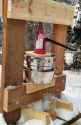
I ended up going with option 2, jack on top. It seemed like that was overwhelmingly the most common based off pictures on the internet. I found a few instances of option 3 (jack on bottom) and none of option 1 (jack to the side). It worked great, I got a gallon and a half from maybe 3 gallons of honeycrisp. I put the apples in whole but they had frozen on the tree so they were pretty soft.
I used the stainless steel steamer pot not a plastic bucket as anon had suggested. I guess buckets must work fine as I saw a lot of that on the internet but I was worried it would crack from the pressure. I used 2x6 instead of 2x4 like I had planned, and I'm glad I did since it was making some kinda scary creaking noises.
>>
>>
>>
>>2962941
You are supposed to grind them into smaller chunks, but I don't have a grinder. Maybe that'll be next year's project. Freezing does a lot of the same thing though, since it sort of crushes them from the inside out. I don't think I would've got much more by breaking them up, they were really dry and light when they came out.
>>
>>2962834
My last batch was a decent rye.
Mash was 90% rye, about a fifth of that was double peated. Remainder was a barley oat mix.
Had been planning to make more to fill a small barrel but my still self destructed.
Ended up mixing it with a batch of vodka and aging for 6 months in oak.
It's kind of bland for a sipping rye but is a decent mixer.
Something that worked well was switching to that chinese angel yeast. Has a koji mold mixed with the yeast so no need for complex mashing. Can just pitch it straight into the cooked grain.
>>
>>
>>2963711
Get a 2kg cannister to avoid getting ripped off in the long run. Those tiny cartridges are only good for tiny 2-5L kegs and soda stream cannisters cost almost as much as a normal cannister but aren't refillable, and are made by israel
>>
>>2962946
I've done a test pressing thawed frozen apples whole vs grinding, grinding still substantially increases yield.
Frozen and thawed apples also yielded more juice than fresh apples, but specific gravity of the juice was the same (given the same type of apples from the same tree).
>>
>>
>>
File: IMG_20251212_213147073.jpg (3.3 MB)
3.3 MB JPG
Forgot the pic
>>
File: 655711E7-289E-489E-8B07-CA7D2532F889.jpg (2.1 MB)
2.1 MB JPG
>>2962927
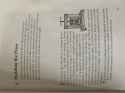
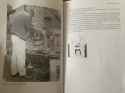
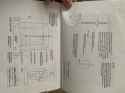
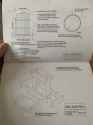
btw, I mentioned about a book with a DIY cider press and here it is: from a book called “Real Cidermaking on a small scale” by Pooley and Lomax.
>>
File: 6BFA5C39-0C19-45CF-A0E7-F9DE3C11F7BE.jpg (2.2 MB)
2.2 MB JPG
>>2964591
>>
File: FEBD7652-F7C3-4970-A63B-9E75CD09763B.jpg (2.2 MB)
2.2 MB JPG
>>2964592
>>
File: 5D75DC58-239F-474F-ADEC-E62E0434D55A.jpg (2 MB)
2 MB JPG
>>2964593
I know you’ve already made it but just in case you wanted to improve it or if anyone else was interested. Although if you want to buy a press I’d recommend a stainless steel one rather than wooden.
>>
>>2963896
Good to know, I will try to build one before next season. I hadn't really planned on making cider this year but then I saw all those apples still on the tree and didn't want them to go to waste.
>>2964591
Thanks for posting these. Honestly pretty similar construction to what I came up with, except using a lead screw instead of jack. I had done a lot of thinking about lead screws, but it's a specialty part while bottle jacks are great because you can get them anywhere for cheap. I thought maybe I could modify a scaffold jack but that's more work and more expense. I already had the jack, and it was formerly useless because it was too tall to fit under the car I intended to use it for.
Also I wanted the food contact parts to be metal so it'd be easy to clean, hence the steamer.
>>2964297
Nice, did you add yeast or use the wild yeast? I was going to count on wild yeast but after a few days I still didn't see bubbles so I added champagne yeast to kick it off.
>>
>>
File: 4FD12F2D-EBC0-4354-B249-F82202DC05B8.jpg (2.8 MB)

2.8 MB JPG
Merry Xmas lads. Hope you are all enjoying some homebrew!
>>
File: E7011F8B-F460-4549-9688-B17B73066318.jpg (169.3 KB)
169.3 KB JPG
>>2966870
>appears sideways AGAIN
ffs
>>
>>2966870
I kegged a SMaSH pale ale and have some leftover Irish reds in the cellar for Christmas day.
Now that the cellar is below 15C I'm thinking of brewing a lager but only have pale ale base malt. Anyone ever done that before? Can't imagine it will impact the final beer very much besides being a bit less crisp.
>>
>>
>>2966963
Yeast eats sugar and shits out alcohol. When you brew beer you extract sugars from malted grains and then add the yeast. Before you do the last part, you measure the liquid density of your brew with a hydrometer (you probably did this in high school chemistry class) and it tells you basically the amount of sugar in it. Then you add the yeast and after a week or two, you take the same measurement and see how much sugar has been converted to alcohol. You compare the original gravity reading with the final one and you calculate the ABV based off that. Most people use online calculators but if you brew long enough you can guesstimate the percentage based on the gravity readings and type of yeast alone.
>>
>>
>>2962625
I do occasionally brew up some pumpernickel kvass.
Its not particularly alcoholic, the yeast is just for carbonating it.
TL;DR:
A loaf of pumpernickel is toasted to hardness, slice by slice, then this is busted up into small bits.
These bits are boiled in water, about 2 liters per loaf, until the water takes on the dark hue of the bread.
This is then strained to remove the bread, some rasins added, and upon cooling, a bit of bakers yeast is added.
This is sealed in bottles and left to ferment for a few days.
A flavorful drink, being only 1 or 2 % ABV, it is rich and filling.
>>
File: AAF186AF-CE64-46AD-ABCD-8726911FA3E9.jpg (528.4 KB)

528.4 KB JPG
Did Father Christmas bring any homebrewing stuff for /hbg/ anons?
>me
No.
>>
Keep meaning to do a strong ale/barley wine for xmas every year, especially as my nan puts Gold Label in her xmas pudding, but I never get round to it and now she's decided she will never do it again. Hoping to do one in the next month or so and give it 6 months in barrel and then another 5 in bottle, not going to make it too strong in case its a wash out.
heres what I was thinking
>OG 1066
>60% PA malt
>15 % Imperial Malt
>7.5% crystal malt
>5 % dextrin malt
>5% flaked maize
>7.5 % invert sugar
120 minute boil
>Challenger 120 min (45 ibus)
>Golding 40 min (30 ibus)
>EKG 15 min (15 ibus)
>Challenger & Golding dry hop
>>
>>
>>
File: IMG_1928.jpg (57.9 KB)

57.9 KB JPG
I screwed up and ordered a beer kit with a high gravity and now I’m going to have 55 bottles of roughly 7.2% ABV beer which is nearly useless because I’ll get drunk way too fast. I didn’t want to omit any malt extract during the boil because I was afraid it would affect the flavor profile. What do? Should I water it down?
>>
>>
How do you remove alcohol from brews? Say I'm just doing basic ass cider in a jug, is the left over from freeze distilling going to taste nice? I just want non alcoholic cider that has tang unlike sparkling apple juice
>>
>>
>>
>>2969257
>>2969258
Just reduce the grist so your OG will be lower.
Also there is no definite reason to suppose you would hit the target OG if you are a starter, you might end up with lower efficiency; although usually a kit like this would probably assume you aren’t going to have a very high efficiency as a beginner.
>>
>>
>>2970770
>>2970818
It was a classic grape wine, over 20 liters of it after fermentation was done.
I made it over a year ago from my own grapes, every few months I would drain some of it for drinking and move it into a smaller jar when possible.
It tasted ok ever time until now when it's undrinkable, I think I might have failed to tighten it properly after last time and it was breathing air but I'm not sure.
I think contamination is unlikely as I always clean my jars with potassium metabisulfite and citric acid before pouring anything into them.
I don't think I can salvage it in any way so I'm thinking about just dumping it down the drain but maybe there is something I could still use it for I don't know about.
>>
>>
>>2970832
Can I make decent quality vinegar this way?
I have hear I could do this but I assumed it would be inferior to off the shelf vinegar and smell really bad
I guess I could give it a shoot, not like I'll use it for anything else, do I just leave it open and let bacteria do their thing?
>>
>>
>>
>>
i have a lot of yeast slurry stored in the fridge from previous brews / ciders. all have separated into a liquid an solid phase. am planning on using some to make a cider. is it as easy as just taking it out the fridge and mixing it together with the apple juice? i dont want to hassle with making a starter with it or whatever. should i take it out the fridge 12h before pitching?
>it will leach flavors
dont care. i have dumped some apple juice on top of the yeast cake of a saison brew before and actually enjoyed the flavor profile
>>
>>
>>
>>2973932
here's the thing, i have neither a stir plate nor DME to make a starter. and most importantly, I never made a starter to begin with.
i am just unsure if the lag time of directly pitching old-ish slurry will result in stressed yeast and thus off-flavors.
how would you go on about making a starter for cider? mixing the solid and liquid phase of the slurry together, add a bit of apple juice and boiled (room temp) bakers yeast as nutrient, and wait until it foams?
>>
>>2974035
Sanitise large jar (boil lid 10 min jar in oven 180C 10min if you haven't got another way). Boil bakers yeast. Let everything cool. Add apple juice 1/3 of jar, close lid and shake, this adds oxygen. Pour out most of the liquid from the slurry (it's just water since you cold crashed it in the fridge) and add. Cover jar with tissue paper, secure with rubber band. Wait a day after it start to get active, it doesn't go "bad" until the yeast has eaten all the sugar. Give it a gentle shake a couple of times a day.
Or to put it simpler: you're just brewing a small batch, but instead of restricting air access to get alcohol you're introducing oxygen to grow more yeast cells.
>>
>>
>>
>>2973843
Just pour off the excess liquid beforehand and then dump just the yeast into the new brew.
>>2974035
You don’t need DME just pour in some of the pre-fermented wort/juice in with the yeast and that’s your starter, as the other anon said. some worry too much about oxygenation but it’s not really that much of an issue for pre-fermentation wort especially at a homebrew scale.
>>
>>
>>2974192
>>2974210
thanks for redeeming me guys
on the never ending quest of making some good ginger cider, i am planning on adding some to the bottling bucket. particularly i am planning to press the ginger with a garlic press (or rather juice it) and boil the leftover skin in apple juice, then sieve the skin out. this way i am hoping to get both the taste as well as the spiciness. has anyone experimented with a similar approach? mainly worrying about the amount of ginger to add to 20 liters of cider.
>>
>>2974880
>press the ginger with a garlic press (or rather juice it) and boil the leftover skin in apple juice, then sieve the skin out. this way i am hoping to get both the taste as well as the spiciness. has anyone experimented with a similar approach?
No.
>>2974880
>mainly worrying about the amount of ginger to add to 20 liters of cider.
You could make two batches of different strength and blend to taste.
>>
Ok so my current buy list is
>4 x 1 gallon glass carboys
>2 x 2 gallon plastic buckets
>airlocks
>swing top bottles
>bottling wand
>plastic siphon
>hydrometer
>measuring cylinder
>fermaid O
>goferm
>campden tablets
>yeasts
>acid mix
>starsan
>pbw
Am I forgetting anything? I want to make mead and cider
Also which tannin should I start with? Is there a type that is easier to use?
>>
Couple of questions:
Cans of pre mixed malt, is there any reasons to buy them other than the convenience?
Those little bottles of flavouring to make moonshine taste like popular commercial spirits, worth, not worth?
What's the deal with dextrose, some recipes call for it, some just say white sugar. Why? What gives?
Are carbonation drops a meme? What's the difference between bottling something that's still fermenting so it carbonates in the bottle, the 'old' way, running the fermentation to completion then doing a secondary ferment to carbonate it eg. Putting a bit extra sugar in the bottle. Carbonating a keg with a co2 canister. Seems to depend more on how you're storing it then anything else.
>>
>>2975370
depends on how fancy you want to get / how much money and space you're willing to spare. personally id go with plastic fermenters as they dont take much space if you store them stacked when not in use.
> Also which tannin should I start with? Is there a type that is easier to use?
never used tannins directly. i just steeped some black tea and added that
>>2975497
>What's the deal with dextrose, some recipes call for it, some just say white sugar. Why? What gives?
to raise the OG, in order to provide more fermentable substrate and thus raise the alcohol content.
>>2975497
>Are carbonation drops a meme? What's the difference between bottling something that's still fermenting so it carbonates in the bottle, the 'old' way, running the fermentation to completion then doing a secondary ferment to carbonate it eg. Putting a bit extra sugar in the bottle. Carbonating a keg with a co2 canister. Seems to depend more on how you're storing it then anything else.
bottling something that is still fermenting is no bueno. you have no control of what is happening, best case is your beer is carbonated just right, second best is your beer is completely flat, worst case you have a bunch of sticky glass shrapnel in your home.
the rest comes down to setup, how much money or effort you want to put in. never used carbonation drops, but i guess if you want to go directly from fermenter to the bottle without a bottling bucket, then they are way less effort than measuring and adding the exact amount of sugar for each bottle individually.
>>
I recently tried to use Kieselsol->Chitosan for the first time on a mead and while I'm seeing the yeast drop out at the bottom, the clarity is still poor. I think I may have added the Chitosan too soon as I only waited about 2 hours. Assuming I wait say 2, 3 days and clarity is still missing, any chitosan should have settled to the bottom and I can try adding Kieselsol again correct?
>>
>>
>>
>>2975672
I have only tried pectinase, which i added after fermentation so it probably couldn't even do anything if it wanted to. but i have honestly stop caring about clarity anyway, most things will clarify with time.
>>
>>2975542
I'm looking at the process and on a small scale, bottling is the bottle neck.
Why wouldn't you just ferment in a vat, strain the 90% ferment into plastic kegs and carbonate the kegs? That's essentially what commercial breweries do.
I'm using sodium metabisulphite to streamline all my kit without the need to take it all down to wash it, the sulphur dioxide gas works very well for that.
You can ferment directly in a keg but it becomes hard to clean, and production wise, vat fermentation is a no brainer.
So for carbonation, well either you calculate the relative gravity and bottle it when it's got exactly the right amount of sugar, or you bottle in venting bottles to reduce the margin of error, or you compete fermentation then dose sugar or drops per bottle or just directly carbonate it in the keg.
But what over never seen is discussion on which process is better.
>>
Making my first lager but I think I’ve got it set up to succeed. 4.7 KG of Pilsner malt and just 100g of melanoidin because in a lazy faggot and didn’t want to do a decoction (though I did step mash it)
Tettnanger and Hallertau mittlefruh for the hop additions (60 and 10 mins. Roughly 35 IBU total). My water is incredibly soft, I added some gypsum and calcium to harden the calcium just a bit (~30PPM) and di roughly a 2:1 sulfate to chloride
Pitched 2packs of 34/70 and have it pressure fermenting at 15 PSI in the fermzilla. Pitched at 11 degrees and it’s been staying between 10.8-11.8 for the past 2 days, I intend to keep it there until the last 25% of attenuation or so and I’ll raise it to 15 for the D rest.
Should be interesting because I’ve only made ales up until now, want to see if I can nail this thing when there’s no where to hide mistakes behind hops/yeast.
>>
>>2975690
>>2975690
Not the anon you were replying to.
>Why wouldn't you just ferment in a vat, strain the 90% ferment into plastic kegs and carbonate the kegs? That's essentially what commercial breweries do.
You can and many people do. Bottling sucks dick and transferring to a keg and force carbing is way better.
>
You can ferment directly in a keg but it becomes hard to clean, and production wise, vat fermentation is a no brainer.
It’s not so hard to clean you just spray it out and can do an overnight soak in oxyclean. Many people will ferment and serve off the same keg because it guarantees you have no oxygen ingress but I don’t because you’ll lose a few liters if servavle beer to trub and I’m sure that if you have the beer in the keg sitting in trub/yeast for more than a month or so it’ll start to get off flavors especially if the yeast starts to go through autolysis.
(1/2)
>>
>>
>>2975720
Seems like a lot of work to routinely calculate the gravity of an active fermentation and then also need to be in a position where you can drop everything to bottle everything when it’s right at the perfect gravity that will ensure full carbonation as the beer finishes up but also not overcarb it and give you a garage full of beer grenades. You’ll have to keep pulling samples which is going to waste your beer and also risk oxygen fucking it unless you’re running a Rapt pill/ispindel and even those aren’t 100% accurate in the gravity readings so you’re still leaving some risk on the table. Much easier to just wait until you’ve reached your terminal gravity and then transfer them to bottles and dose them with sugar for the secondary carbonation. Belgian beers arguably require this as the secondary fermentation characteristics are argued by some as integral to the style of the beer.
Back when I bottled I never bought carbonation drops because all they are is pre measured amounts of sugars, I would use an online calculator for the beer style I was making and dose the bottles individually to have even carbonation amongst them. Some people will say to move to a bottling bucket and dump the sugar en masse and to mix it up and then transfer to bottles but I never liked this idea because it seems like you’re just raping the beer with oxygen in doing this.
> But what over never seen is discussion on which process is better
Outside of extremely rare cases (Belgian beer secondary fermentation being the only thing I can readily think of) kegging is superior in every way. It’s less work. It’s faster. You can do it in an oxygen free method which will ensure your beer isn’t getting staked by oxygen (which will 100% be introduced in any bottling method). You only have to clean a single keg instead of 50 bottles every time. Moving from bottling to kegging made the hobby far more enjoyable for me.
>>
>>2975672
I think you just need to wait. in my experience it takes something like two weeks to clear an then I rack and get it to drop some more. 2 hours seem like something the actual packet instructions would say although I've always waited longer. I think why it clears so slow for me is because trouble remaining co2.
There's a test you can do to see if there's pectin left causing the haze (I havent tried this, source is Keller): "Add 3-4 fluid ounces of methylated spirit to a fluid ounce of wine. If jelly-like clots or strings form, then the problem is mos likely pectin and the wine should be treated with pectic enzyme."
He then suggests adding 1/2 of the enzyme originally used and if that still doesn't do it another 1/4.
>>
>>2975690
>Why wouldn't you just ferment in a vat, strain the 90% ferment into plastic kegs and carbonate the kegs? That's essentially what commercial breweries do.
Most commercial breweries don’t do a secondary fermentation, they rack into kegs as soon as primary is done, that goes for lagers as well. Commercial breweries are operating on a much larger scale than homebrewers and are looking for a much more consistent product and one whos condition is completely in their own hands, most of what they produce is bland. kegging and forced carbonation produces blander beer, and removes a lot of the subtlety from the end product, there is lots of good bottled beer but the cask versions are almost always superior. Besides bottling conditioning wouldn’t suit the vast majority of beer, most is designed to be consumed immediately and is forced carbonated. I think you can do this at homebrew level with kegs but it seems a little complicated, I didn’t get a reply to my question of whether anyone here does it.
>You can ferment directly in a keg but it becomes hard to clean, and production wise, vat fermentation is a no brainer.
The point of kegs is not to ferment in them, hence why they use artificial carbonation rather than natural. Not sure what you mean by that, nobody ferments and serves from the same vessel, everyone uses a separate fermenter and serving vessel.
>So for carbonation, well either you calculate the relative gravity and bottle it when it's got exactly the right amount of sugar, or you bottle in venting bottles to reduce the margin of error, or you compete fermentation then dose sugar or drops per bottle or just directly carbonate it in the keg.
I don’t think anyone does the first, it’s bad practise not waiting for fermentation to complete before racking or bottling.
The benefit of bottle conditioning is you get that natural condition which is frankly preferable and you don’t destroy flavour by filtering, pasteurising or force carbonating.
>>
>>2975856
> kegging and forced carbonation produces blander beer, and removes a lot of the subtlety from the end product,
Absolute fucking nonsense based on nothing.
> I think you can do this at homebrew level with kegs but it seems a little complicated, I didn’t get a reply to my question of whether anyone here does it.
You can. I do. It’s very simple and having a pressure rated fermenter with a jumper cable to keg system is the best way to ensure you aren’t getting oxygen into your finished beer. It’s not difficult at all and requires maybe $200-$300 of investment total (pressure rated fermenter, keg, jumper cables)
>nobody ferments and serves from the same vessel, everyone uses a separate fermenter and serving vessel.
It’s actually relatively common in home brewing circles. You can entirely ferment and serve from the same keg if you’re using a floating dip tube. I don’t do it but many people do
>force carbing
>bland flavor
You’re making shit up literally. If anything adding priming sugar to any none Belgian beer is fucking with the flavor in a way it shouldn’t be, it’s going to dry out the beer or add secondary fermentation characteristics to it that aren’t part of the beer style. Priming sugar is not even Reinheitsgebot compliant so I have no idea where this massive cope is coming from. If you want to be hyper autistic and argue that certain methods of carbonation (like forced carb) detract from the beer then you should 100% be kegging because the only way to have a truly naturally carbonated beer would be to ferment it with a sounding valve and allow the beer to carb from its initial fermentation and then push the beer into a keg with a closed transfer. Bottlefags are so scared of kegging that they have to make up insane reasons to not do it.
>>
>>
>>2975860
How about you try drinking some cask and then tell me that keg is superior.
You’re the one talking absolute shit if you think that’s the case. Go try a beer like Fullers London Pride on cask and keg/bottle and then tell me that keg is better.
You’re the one who’s talking nonsense if you think adding priming sugar “is fucking with the flavour” when every single cask beer uses priming sugar and has done for centuries.
>it’s going to dry out the beer or add secondary fermentation characteristics to it that aren’t part of the beer style.
what beer style are you even referring to? most beers are improved with secondary fermentation and it certainly doesn’t mean a “dried out” beer otherwise every cask and bottle conditioned beer has an FG of <1005, which isn’t the case.
>muh muh muh my crap bavarian law from the 15th century tells me it’s wrong
consider this: the Reinheitsgebot is a load of shit and I don’t care. Where does original version of the bread purity law allow forced carbonation. Plus the irony of you saying this when you also believe that “secondary fermentation” ruins a beer and “lagers” are traditionally aged beers is seemingly lost on you.
>you don’t do it because your scared
or because we just prefer using bottles.
>>
>>2975862
Oh I get it you’re one of those retarded Britcucks that think only brown cask ale is “Le real beer”
Secondary fermentation can absolutely add desirable character to a beer but to claim it’s better for every style regardless just outs you as a pseud. You’re a literal retard if you think any Pilsner is going to benefit from having secondary fermentation flavors added to it. Kelsch/ most lager (outside of maybe something like a Baltic porter)/american IPA/cream ale, basically anything where the hop and/or malt as opposed to the ester profile is the focus is going to benefit from a cleaner profile that accompanies force carb/spunding. When you put a beer through secondary fermentation the yeast is going to shit out a bunch of ester/phenols that works form some styles but not others.
>we prefer Le bottles
Massive cope. I’m sure you enj it oxygen fucking your beer so the hop flavor goes stale and it has 1/4th the life span lol.
You know, if you want ten be a giga autist that only drinks English style secondary fermented beer you can 100% prime a keg and have it go through secondary fermentation as well? It comes with the benefit of not oxygen raping your beer and also you not having to spend 2 hours individually washing and priming 50 different bottles.
>>
>>2975870
Totally not the person that you are responding to, but wow.
Most secondary fermentation cycles are actually meant to clean up undesirable flavors from a beer, not add additional esters. If you are actually adding any flavor during secondary, you should really check your yeast and select a cleaner one.
>>
>>2975901
To be clear, most of the time a secondary fermentation is meant to more fully attenuate the beer, down to a point that the original yeast wasn'tt able to. It is also a way to help get rid of dialectal or acetaldehyde.
There is a difference between a secondary fermentation and just aging in a cask.
Also, whoever was saying earlier that you cant ferment in a keg, I do it all the time. It's a great way to ferment faster and more controlled, plus you can move it from keg to keg without letting oxygen in.
>>
>>2975721
>>2975903
>>2975870
>>2975860
>>2975719
i may have gotten lucky until now (and may be jinxing myself with this) but in my experience all the talk about oxygenating is fear mongering.
yes there is clearly a risk of totally ruining a brew with oxygen ingress, but in my opinion you can reduce it to a very manageable level by taking enough precautions. i always use a bottling bucket and start the siphon by sucking on the hose (using a piece in between) and i never had an issue, even if it splatters sometimes. so to all the newbz, dont freak out
but as others have said, bottling sucks really bad and takes a shit ton of time. im planning to switch to kegging because bottling does reduces the fun in the hobby for me
>>
>>2975901
> Most secondary fermentation cycles are actually meant to clean up undesirable flavors from a beer, not add additional esters.
Why would you add sugar and oxygen to your beer to “clean up flavors” instead of rubbing a diacetyl rest? If you can’t cleanup your beer and reach terminal gravity in the primary fermentation you aren’t managing your yeast/temperatures properly. And yes, a secondary fermentation absolutely will add flavors. You’re adding sugar into the beer that the yeast is going to convert into alcohol and additional esters which will give the beer additional fermented character.
>>
>>
>>2975945
>You’re adding sugar into the beer that the yeast is going to convert into alcohol and additional esters which will give the beer additional fermented character
Totally depends on the yeast. Some people finish with champagne yeast which leaves no additional flavors. Even Saison Dupont uses a finishing yeast after the primary saison yeast is done. Don't believe me? Get a glass bottle of Saison Dupont, harvest and propagate the yeast from the bottle, and try to brew with it as a primary yeast. See where that gets you.
There are like 1000 yeasts to select from, all of which have different properties. But go ahead and keep using your bread yeast and bitching about how it always adds an additional yeast-poop flavor.
>>
>>2975919
I totally agree with you (for the most part)
Oxidization isn't typically a huge concern, and often times gets blown out of proportion. For beginners that are just starting to develop their pallets, they probably wouldn't even notice a bit of oxidization, and their beer is something they should be proud of as a beginner. If there is a strong note of wet cardboard then you DO have a problem, but if you are being fairly careful, it will never get that bad.
Oxidization only really starts to become an issue when your beer is going to be judged by people who have a very sensitive palate and are looking to knock a couple of points off flavor. National level BJCP judges will fault you for it, but mostly just as a way to have something to offer suggestions on for your brewing process. I know plenty of Certified level BJCP judges that aren't very good at detecting oxidization and would let it slide.
>>
>>2975953
That’s a fair point there are yeasts that if added for priming and are handled in appropriate temperature will give you a clean profile but arguing that they “clean up the beer” is nonsense. The reason beer is “cleaned up” from secondary fermentation is because you’re pulling it off the yeast cake and preventing autolysis (or because now you are finally doing a diacetyl rest which suggests you didn’t properly do one during primary fermentation.)
There’s no magic element to secondary fermentation that results in a cleaner beer, if you properly manage your primary fermentation temperature and then cold crash before transferring to a keg you’re doing it far more efficiently with far less risk from oxidation as opposed to open transferring to bottles and/or a bottling bucket.
The only reason I would ever consider bottle carbing at this point would be if I’m making a Belgian style ale that benefits from the secondary fermentation. For everything else kegging is king and all other claims in the opposite are cope.
>>
>>
>>2976117
You’re insane and have no idea what you’re talking about. Hop oil is incredibly sensitive to oxygen and will stale incredibly quickly if it is exposed to it. Go make a hazy ipa and let it get fucked by oxygen if you don’t believe me. You’ll have a brown colored cardboard tasting shit soup beer in hours.
>>
The first keg didn't go very well. Primary fermentation finished faster then expected, the beer was very cloudy, wasn't ready to keg it so it wasn't carbonated.
So now I have a keg of flat, cloudy beer.
Is it too late to add carbonation drops to the bottles? Unsure if the yeast is still active enough
>>
>>2976122
Not the anon you are replying to, but I'm quickly seeing why closed loop brewing with sulphur dioxide, carbon dioxide, fermenting in the keg is the way to go.
Brewing is laughably easy but trying to store the product without it oxidising, that's hard.
>>
>>
>>2976566
the beer will clear out over time.
> Is it too late to add carbonation drops to the bottles? Unsure if the yeast is still active enough
are you mixing up keg with fermenter? if not, don't try to transfer from keg to bottles. while you /can/ carbonate a keg with priming sugar, consensus is that the keg will go flat after a certain amount of pours. so i'd suggest to stay with force carbonation
>>
>>2976567
Switching to kegging (closed transfer from a pressure fermented to a purged keg) was one of the process changes I made that resulted in immediate noticeable improvement to my beer. It bewilders me that people try to minimize the impact that oxygen has on beer so much. I think either people are either mindlessly drinking their beer without trying to critically review it and improve their processes, or they just believe that “home brew taste” (either oxidation or shitty yeast handling in 99/100 cases) is unavoidable so they don’t even bother. Oxygen will absolutely destroy a beer in almost no time, if you aren’t drinking ~20 liters of beer in 10 days or so it’s worth an investment into kegging and a no oxygen set up provided you have the space and money (not so much) required to do so.
>>
>>
>>2976598
I was under the impression that I could put priming sugar in the keg, and indeed it went flat.
And you say it will clear out over time, it did, but the instant the keg was moved the sediment all got tired up, and there was a significant amount of sediment in the keg.
>>2976615
The instructions I got never even mentioned purging the keg, I was confused and thought that steralizing the keg with campden tablets was the same as purging.
As is often the case, I'm very angry that reliable sources are being drowned by AI slop, commercial misinformation, here-say and amateur sources.
>>
>>2975497
>Those little bottles of flavouring to make moonshine taste like popular commercial spirits, worth, not worth?
The further it is away from just oak flavor the more worth it it is.
>What's the deal with dextrose, some recipes call for it, some just say white sugar. Why? What gives?
Ferments out faster cleaner and dryer. If you spend the tiny bit extra time to make invert sugar syrup you get pretty much the same effect for cheaper.
> What's the difference between bottling something that's still fermenting so it carbonates in the bottle, the 'old' way,
The old way is a big cornerstone of how the occidental concept of the witch came to be.
i.e
Brewing used to be largely done by women and still-fermenting bubbly brews can make you S I C K asf leading to rumors of being cursed or poisoned.
It's like using tallow over parafin or beeswax -- Sometimes the old school ways are straight dookie and no longer in use for a reason.
RE Keg: Kegs are overkill. Use a carbonation cap for the time being.
>>
>>2976641
Keep making your shit slop beer because you’re a pussy that half asses everything.
>>2976646
I recommend reading classic books on homebrewing (Palmer is very in depth) and diving into brewer forums. AI will lie to you.
To purge it’s not so difficult, fill a keg to the brim with starsan and push it out with CO2. Purge all of your lines for your jumper cables etc and then hook them up to your pressurized ferm tank and move the beer into the keg, you’ll have zero oxygen ingress. I’ve kept hazy IPAs alive for months that taste as fresh as the first pull using this method. People who pretend that oxygen isn’t impacting their beer are coping massively. Any professional brewer will tell you that cold side post fermentation oxygen prevention is absolutely key in making repeatable good beer.
>>
>>2976646
>I was under the impression that I could put priming sugar in the keg, and indeed it went flat.
You can, and you can carbonate a beer this way but you’ll need to hook it to C02 in order to move the beer through the lines otherwise it will go flat over time as you pull from it.
>>
>>
>>
>>2976764
> I can brew,purge, then keg, then add priming sugar, then augment the natural carbonation with co2
If you purge and then open to add sugar you’ll be introducing oxygen again.
There are 2 widely used methods of purging a keg. One is to fill it to serving pressure with the c02 attached and then to open and close the PRV several times to vent it. It’s probably effective but I (and some others) have questions in regards to how effective it really is (how many times do you need to purge the prv to insure there’s no o2 left mixed into the co2? No one has a straight answer)
The second, sure-fire way of purging a keg is to fill the keg to the brim with sanitizer and to then seal the keg and push all of the sanitizer out until only gas is coming out of your tap. This will ensure there’s a zero oxygen environment in the keg and is the protocol I usually follow.
Now on to your point, can you purge and add the priming sugar?
Well if you add the priming sugar first and then purge using method one, I don’t see why there would be any issue, but you are risking residual oxygen being left in the tank which could stale a Pilsner or Hazy IPA quickly depending on the amount of O2 left.
I guess the greater question is what is it that you are trying to achieve by priming a keg and carbonating with sugar as opposed to force carbing with C02? The molecules created are identical. Some people will argue that natural carbed beer has “tinier more mixed in bubbles” but I have seen zero reputable research backed articles on this, it sounds like more homebrewer mysticism to me.it has been my experience that if you use a carbonation stone and set to serving pressure and leave it in the keg for a day or two you’ll have identical carbonation style.
>>
OK went out and bought a c02 cylinder.
Didn't really realise I'd need one to purge the system, figured I could use the c02 given off from the fermentation process. Technically I think you could, but it would be silly. C02 cylinder, sensible.
Closed loop transfer. Didn't know that was a thing, but obviously a good idea. Honestly didn't really think ahead to storing a keg, just figured I'd drink and hand out a bunch of fresh beer like beer jesus. But clearly I need to prepare the kegs for storage.
Next issue, fining. Not technically necessary but worth doing. Going to use gelatine the first time because it seems like the easiest way. Unsure about how necessary crashing the keg is. I've done gelatine washes of all kinds of things at room temperature before. Also unsure how to get the solidified mess out of the keg. I really don't understand why you would even do that in the keg.
Next issue, co2 pressure. To pressure the keg at the final stage, I really can't get a clear answer as to what PSI I need or if I need the co2 to stay hooked up to it to dispense it.
Very frustrated with the resources I've found online. Either autistics insisting there is only one method, when clearly there are several, failing entirely to mention steps, or lacking technical details.
I got drinkable beer in the first run, if I get a stable product in a keg this time, and a decent process the next time, that would be a good outcome
>>
Also intensely frustrated about these fucking duotight fittings. Is this some kind of proprietary parts scam?
One of the kegs bought is functionally useless because it doesn't accept generic barb fittings, didn't come with even the minimum number of duotight fittings to use it, and nobody local stocks or even recognises these fittings.
>>
>>2977010
>co2
What size are you using the little paintball ones? Get a proper sized one and it will last several kegs. I use 5kg canisters and they easily last for 4-5 kegs including all of the purging etc
>Closed loop transfer.
It’s the best thing you can do to keep your beer fresh, especially if you’re making a hazy ipa. I wouldn’t even thinking of making a hazy without doing a closed transfer to a purged keg.
>fining/gelatin
I only do kettle finings and after cold crashing/lagering for a week or two tops I have crystal clear beer. You can gelatin if you want to but you’ll need to dump the first pint or so of goo that comes out.
>Next issue, co2 pressure.
There are multiple ways to do it.
First of course you need to look up the proper psi/volume for the beer style, stouts and sour beers need to be pressurized to different levels.
Let’s take a standard serving psi of ~13 you could:
>”set it and forget it” simply connect the co2 to the keg, leave it at 13 psi for 2 weeks and have a carbed beer by then
>the “shake method” increase the PSI to 25-30, set the keg on your knees and rock it back and forth until you hear it hissing no more. Set the keg up and let it sit for a minute or two and repeat the process until the keg no longer hisses. Beer should be ice cold. VERY EASY TO OVER CARB NOT RECOMMENDED
Perhaps the easiest way:
>spend $13 on a carbonation stone/lid and hook your gas to the beer at 13 psi, set it and forget it and have fully carbed beer in 2-4 days, even less if you were spunding during fermentation and already have beer partially carbed
Or
>use a carb stone and follow the guide by this guy and have your beer carbed in hours.
https://www.reddit.com/r/Homebrewing/comments/15l75wy/comment/jv9fznf/ ?utm_source=share&utm_medium=mweb3x &utm_name=mweb3xcss&utm_term=1&utm_ content=share_button
>>
>>2977016
What issue are you having with the duotight? They’re very simple, you pop it onto the post and if it’s a quick connect you just need a non oxygen permeable tube with the outer diameter to fit the quick disconnect and you slide it in, simple as. Only major issue I have had so far with them is when I hooked a nukatap mini to one it got stuck hard as fuck and the gap between the tap and quick disconnect was very small and hard to press down to get it release.
I had a much bigger issue when I first started kegging and tried to use the barbs because when clamping tubes onto them I could never get a truly airtight seal when I’d run psi anything over 8 or so in them.
>>
>>2977028
I've got a huge co2 tank because I use it for other processing. While new to brewing, I am in fact actually a commercial producer of other products.
>closed loop
I think there's a compelling reason to daisy chain my kegs and run the same sanitiser through all the kegs.
>fining
I don't think I'll stick will gelatine, but as I know how to do it already I'll stick with it in the trial runs.
I'm going to shake it, despite the risks, which I generally recognise. This isn't a craft quality beer yet, but time. Time. Always time. This is where I just can't respect hobby/craft methods.
>>2977031
I was sold a cheap keg which only accepted duotight, but not even the minimum number of fittings required to use it, and nobody stocks these fittings, and the companies instructions are worse then useless.
I needed a working production system last week, I've already lost more time than the equipment was even worth. Time, time, always time. The company messed me around by not selling the equipment in sets, which new brewers need, and not providing sensible assembly instructions.
>>
>>2977034
what kind of keg did they sell you? I’m genuinely interested. Like 99% of home brewers I know use Cornelius kegs which all have 2 standardized posts that you just pop the duotight fittings onto, you only need 2 posts (3 if you want to run a carb stone but that one is attached to the lid itself which is sold in a set with the stone usually) Are you using a brewery sanke keg which has the center spear and everything? If so that is a fucked to use if you don’t have the tools to remove the spear etc.
>>
>>
File: OIP.jpg (24.8 KB)
24.8 KB JPG
Was looking up some ancient russian recipes for fun this morning and stumbled on a recipe known as Berezovitsa (бepeзoвицa) which while having a low alcohol percentage seems like something I never really have tasted and piques my interest. Has anyone tried making this before and if so what is it like?
>>
So it seems that the store has fucked me up selling me things i didn't need and leaving me without half the things I do.
And unable to find any complete, credible instructions this has made my first experience brewing a very poor experience.
All I actually needed was to daisy chain a bunch of kegs, gas the system with s02 from the fermenter, ferment the brew, purge the system with c02 which yes, yes you can generate from the fermenter, then use co2 to closed loop transfer the beer into the kegs, then pressurise the kegs individually.
And thus achieve continuous production rather than single batches which tie up all my equipment for weeks, months on end.
It seems that all the resources I've accessed with for hobbyists, where cost, time, labour were not really considerations. I'm setting up a commercial style brewery, albeit a very small one, because my time is worth more than any of this equipment and I'm making dollar on cent beer not small quantities of craft beer, which frankly, is a fools errand at small scale.
>>
>>
>>
File: 1771472092107.jpg (76.5 KB)

76.5 KB JPG
>>2977381
it's not the atf you have to worry about
>>
>>
File: 1771478178163.png (168.1 KB)

168.1 KB PNG
>>2977391
sweaty thats not the atf logo
>>
>>
>>
>>
File: 1771546202906.jpg (292.9 KB)

292.9 KB JPG
>>2977503
they watch the recordings
>>
Brewed my first lager today:
>77.8% Chateau Pilsen
>22.2% Chateau Pale Ale
>30g Northern Brewer (8.6%)
>Saflager W-34/70
>Mashed at 65c for 60mins, 75c for 10, sparge at 78
>OG 1.055, predicted FG 1.009
I don't have a keezer or anything for temp control but my cellar is a consistent 14c this time of year, will ferment it there before kegging it and moving it to my unheated garage to lager at around 5c. The only crystal malts I have on hand are carabelge and a chocolate malt that would've been too dark or sweet for the kind of helles lager I was aiming for. Threw in the pale ale just to get the colour
Anyone have a favourite lager recipe? I'd love to make a doppelbock but the grain bill might be too much for my all in one machine.
>>
>>2977601
No help with a recipe, but it’s easy enough to make whatever kind of crystal malt you want in an oven, plenty of info out there. You basically just soak some malt in water, heat it to mash temp for a while, then toast/dry it.
>>
>>
I found this on an old usenet site. Has recipes from the old Internet dating as far back as even 1992. Its on the wayback machine but its in a .zip file and the file is a .faq so I reuploaded it to ghostbin. https://ghostbin.lain.la/paste/rp5do
If you guys find any recipes that interest you definitely share. I'm curious to see some (relatively) ancient recipes get made!
>>
Gonna make 8 gallons of wine in a conical brewer vid related
Roughly 40ish bottles with fresh corks
6 week brew time
No added sugar aside from whatever the fuck is added for store bought cranberry juice or random juices.
Only concern i have is refermentation, aging in the bottle and timeframes. Any advice or places i can get quick math for? I have a hydrometer but i am unsure of the variables.
https://www.youtube.com/watch?v=Lj3E_6amCY8
>>
File: 71a3txdUFqL._SL1500_.jpg (128.7 KB)
128.7 KB JPG
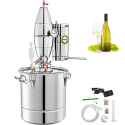
you mean to tell me i can just buy a cheap ass still online?
>>
>>
>>2978372
>Vevor
OEM turned direct sales. Hmm i wonder how well its rebrands are reviewed. Alot of these chineses direct sales are paid shills so you won't get an accurate representation unless it's shit like Harbor Freight which is fine with being ranked lower in reviews.
>>
>>
>>2978372
Sounds pretty evil but one cost cutting thing I have done is in order to put in corks I use a rubber mallot to hammer in the cork. Sounds like it easily could fail but I havent had a single fuck up even on a granite countertop.
>>
>>
>>
>>2978678
If you have a gas burner that's ideal, but electric or induction are annoying to brew with. I recommend getting an outdoor paella gas burner that can hold decent weight, you'll have excellent temp control and can bring your wort to a boil in seconds. You can also BIAB small batches using the same equipment as a normal 20-30L batch, if you don't have gear yet just get a 50L stock pot, a brew bag and the gas & burner in case you decide to make larger batches/batches with large grain bills in the future.
>>
>>2978529
update:
kinda fucked it up but had to wing it somehow. from what i tasted i added way too much ginger and lemon (~1 kg ginger and 1 lemon for 20 liters).
my initial method of juicing didnt work out so i had to resort to a blender. diced it up and threw it in together with 500 ml of priming liquid (5 teabags of black tea and 150 gr of table sugar). almost fried up my blender by doing so. then i transferred the pulp into a brewing bag and squeezed the sucker.
here is where i fucked up: i freaked out about having contaminated liquid so i brought the whole thing to a rolling boil and put everything in the fridge to cool down because i was in a pinch. when i took everything out it had partially gelatinized. well fuck, but this thang had to be bottled by the night. threw everything into the bottling bucked, siphoned the cider, gently "stirred" in a futile effort of homogenizing it to have equal taste and carbonation...
kinda lost hope when i tasted the cloudy slurry and the ginger and especially the lemon were wayyy overpowering. time will tell how it turns out, but i guess this will go down the drain.
next steps are definitely trying to get into kegging and getting a better juicer. what is your procedure on doing ginger beer?