Thread #18364896

File: tune-runestone.png (146.8 KB)

146.8 KB PNG
The Proto-Norse inscription on the Tunis stone features the word Arjostez, and from what I've read, it's a Norse equivalent of Aryan.
Is this accurate? And if so, how commonly was it used as an ethnonym? Wikipedia doesn't provide much information, but it seems to derive from Proto-Germanic
272 RepliesView Thread
 Showing all 272 replies.
>>
>>18364896
>Is this accurate?
No, I carefully researched this a long time ago. ⟨arjosteR⟩ is an old conjectural emendation. Bernard Mees has a paper about this where he reads the actual string of letters as having ⟨asi-⟩ and not ⟨arj⟩ and the word has a nasal vowel.
IIRC this is the paper:
https://doi.org/10.1515/ejss-2022-2011
>the superlative appears to be most obviously comparable to Gothic sinistans ‘elders’.
I cited Mees on this issue in one of the old Aryan charts.
>>
>>
>>18364910
I will clarify a little further:
the actual word is ⟨sijosteR⟩. The supposedly word-initial ⟨#a-⟩ in the reading ⟨arjosteR⟩ belongs to the previous word. ⟨si-⟩ in ⟨sijosteR⟩ is to be understood as /sĩ-/ (where /-ĩ-/ is a nasalized /-i-/. The nasal vowel is from Proto-Germanic *sen- "old" from PIE *sén-os "old".
Since ⟨sijosteR⟩ is a superlative, it refers to the "eldest".
>>
>>18364925
If you're looking for the Aryan cognate in Germanic, the best example is still seen in OE ⟨eorl⟩, ON ⟨jarl⟩, and the tribe called the ⟨Heruli⟩.
These words are the result of an umlaut + syncope process on earlier *ari̯a- that gave Proto-Germanic *er-.
>>
>>18364925
>>18364928
>eorl
In short? The Nordic peoples didn't have any cognates for Aryan, and the supposed cognates have nothing to do with Aryan. If we had known this in 1914, the second one wouldn't have even happened, haha.
>>
>>18364949
>The Nordic peoples didn't have any cognates for Aryan
They did. *ari̯a- becomes Proto-Germanic *er- if the second syllable is open. The same thing happened in
PIE *tósi̯o > *tasi̯a > Proto-Germanic *tes > Gothic ⟨þis⟩
https://en.wiktionary.org/wiki/%F0%90%8C%B8%F0%90%8C%B9%F0%90%8D%83
>>
>>18364953
Stop being charming, friend. That wasn't even an ethnonym, and besides, eorl is so similar to aryan that if you hadn't said so, I wouldn't have noticed. Arjan, as far as I know, is attested as a loanword.
>>
>>
>>
>>18364956
>That wasn't even an ethnonym
It was. See the tribe called the Heruli which Mees connects to Proto-Germanic *erlaz (> OE ⟨eorl⟩). The ⟨-u-⟩ in ⟨Heruli⟩ is just an ablaut vowel from the plural oblique stem.
In case you need a sort of similar parallel for this (independent) development *ari̯a- > *er-, then look no further than the name of Iran. Nobody denies that this is an Aryan cognate. The reason is that the sound changes from PIA *ari̯a- > Middle Persian /ēr/ "Iranian".
https://en.wiktionary.org/wiki/%F0%90%AD%A0%F0%90%AD%A9%F0%90%AD%AB
Likewise, the sound changes from PIE to Proto-Germanic must be carefully understood for people to have confidence in the etymology.
>>18364958
I recommend you get your hands on Mees' paper and see for yourself if you agree with his arguments. Also, you should definitely take the time to look at the actual runes or the most accurate depiction of them.
>>
>>
>>
>>18364958
Even OP's image makes it clear that the ⟨a⟩ isn't written twice. If you can read runic letters, you can see the ⟨a⟩ belongs to the end of the previous word ⟨arbija⟩.
You have to deliberately infer that an ⟨a⟩ was left out in order to read ⟨arjosteR⟩ as the next word, which to be fair, can happen in some contexts, but understanding this much allows you to see that ⟨arjosteR⟩ or (the fake word) ⟨asijosteR⟩ are unnecessary as readings.
>>
>arbija arjostez(?) arbijano
Popular sources suggest that the preceding word, arbija, already accounts for a separate "a". Therefore the word is arjostez, not rjostez sporadically turning into sijoster for a convenient explanation.
While your appeal to academic authority is noted, it does not line up with the obvious common sense of the situation, unless you're arguing that we need to not trust our evil lying eyes and believe l'science.
>>
>>18364896
aryan comes from arya, its root is sanskrit. it translates to 'the ones set aside' aka chosen ones. its where we get the word area from. these arya wrote the hindu vedas. a curious tablet was found stating the arya came from venus and brought wheat to earth with them. which explains the use of wheat as a magical scepter in mesopotamia.
the farthest west ive ever seen the word is barbarian, latin for 'bearded aryans'
>>
>>18364984
>unless you're arguing that we need to not trust our evil lying eyes
No, no. Can you read runes? Just carefully look at OP's image. You can read the string:
⟨arbijasijosteR⟩
Find some pictures of the actual Tune stone if necessary.
>>
>>18364985
>aryan comes from arya, its root is sanskrit. it translates to 'the ones set aside' aka chosen ones. its where we get the word area from.
None of that makes any sense, that's not what Arya means, area comes from Latin referring to open ground. Arian, Arios, Arius, and Arrian are all derivatives of Aryan though, so you could be right about the etymology for barbarian.
>>
>>
>>
>>
>>
>>
>>18365010
I told you where to look in the picture. It says B3. The string ⟨arbijasijosteR⟩ starts at the very beginning of B3.
Now that you know *exactly* where to look, I think you can pull up a rune chart and verify for yourself.
>>
>>
>>18364997
arya = set aside from a greater pool
area = measurement of land set aside from a greater pool of land
latins got their root from ancient sanskrit.
the prefix Ir will pass as arya. like in Ireland, Iraq, Iran. which translates to land of the aryans
>>
File: proto celtic Aryo.png (64.8 KB)

64.8 KB PNG
>>18365018
Sanskrit isn't even that old. It's all coming from an Iranic language that predates proto-Celtic and Sanskrit alike. I know in India they teach you that Sanskrits are 9k years old or whatever and they come from the sunken city of Dwarka which is actually Atlantis/Ys/Mu/Lemuria/every-other-sunken-city but it is, I'm sorry to say, not so.
>>
>>18365008
>Why neglect Arjan, which is phonetically closer to PG?
Neglect what now? What are you referring to?
>>18365017
The line is already labeled B3. The string ⟨arbijasijosteR⟩ starts at the beginning of that very line. I am not going to highlight anything for you. The picture is already labeled enough for you to find your place.
>>
>>18365021
Please highlight the selected region in discussion, ,and also you need an adequate explanation why elision did not occur since we have evidence of Celtic borrowings and the Celtic languages use various types of word reduction.
>>
>>
>>18365026
No, I am not going to highlight anything for you. You have to be trolling.
>also you need an adequate explanation why elision did not occur
Please go back and read what I said:
>You have to deliberately infer that an ⟨a⟩ was left out in order to read ⟨arjosteR⟩ as the next word, which to be fair, can happen in some contexts,
The point is that the reading ⟨arjosteR⟩ is NOT necessary. You might think it was *necessary* to read the second word as starting with ⟨a⟩ if you did not know the second instance of this letter was created through interpretation.
>>
>>
>>18365036
Are you referring to this?
https://en.wiktionary.org/wiki/%F0%90%8C%B0%F0%90%8D%82%F0%90%8C%BE%F0 %90%8C%B0%F0%90%8C%BD
It means "to plough". Different word with different origins.
>>
>>18365032
Both are younger, which was the point.
Proto-Celtic = Pre Bronze Age Collapse, so pre 900 BC
Ancient Celtic = post 900 BC to the early medieval period, skips the classic period unlike other languages
Sanskrit = post 1500 BC based on the Rig Veda's current dating, but the earliest actual evidence comes from 400 BC. Some argue it comes from 3300 BC based on constellation representations from the Rig Veda.
Avestan = Iranic from the 2nd millennium, predating both proto-Celtic and Sanskrit's conventional dating.
>>18365035
>No, I am not going to highlight anything for you. You have to be trolling.
I am, it clearly starts with -sijo. I'm not sure why Wikipedia says something so blatantly incorrect.
>>
>>
>>18365042
The reason the reading ⟨arjosteR⟩ exists is because ⟨si⟩ looks like a backwards ⟨r⟩ in runes (backwards letters can happen). There's also a visible gap between the letters ⟨si⟩ on the actual stone, but some scholars argued that it's actually ⟨r⟩ because the stone itself has a kind of depression, line, or valley which interrupts the writing of ⟨r⟩ thereby giving the appearance of ⟨si⟩.
>>
>>18365042
>Some argue it comes from 3300 BC based on constellation representations from the Rig Veda.
Indian schizophrenia There's no way Vedic is older than Piir, and what exactly is your point? There was no mutual borrowing; both come from a PIE root and have similar semantic meanings.
>>
>>
>>18365049
>exists is because ⟨si⟩ looks like a backwards ⟨r⟩ in runes (backwards letters can happen
This is the logic that I do not understand. Why would a backwards letter equate to a completely different letter preceding it? If anything, it would be -ryo/rjo then. The first word would have to be arbij then. Would that still make sense? Arbij arjostez? Work of Aryan stone? Seems close, but odd. And not plural.
>>
>>
>>
>>18365045
While I've come across some instances of ⟨Aria-⟩ in Germanic names recorded in Latin, they are on shakier ground that Proto-Germanic */erlaz/ because they can come from Proto-Germanic */xari̯a-/ [hari̯a-] and this [h] is lost in later Latin.
What I'm saying is the origins of */erlaz/ are more secure. When I looked at compound names with ⟨Aria-⟩ recorded in Latin and compared them with the corresponding native Germanic spellings of the same compound names, I discovered some names I thought were Aryan names actually used */xari̯a-/ "warrior, army"
>>
>>
>>18365065
I knew that chart of yours was unreliable garbage, so now you're finally admitting that there are no reliable cognates in Germanic languages besides "Erilaz" and other completely unrelated things? Are we done here?
>>
Veneti" type ethnonym was pretty popular for iron age Italo-celtic (and Balto-Slavic and Illyrian) Europeans wasn't it.
Brittany, Italy, Baltic, Balkans, Britain and Ireland at least.
Makes sense as it means something like "our people".
>>
>>18365068
The chart is simply outdated. I had copied some Germanic names with ⟨Aria-⟩ from John Bengtson's paper, but they don't stand up to scrutiny when comparative evidence is used. Tatyana Toporova has a very big list of Germanic names which is worth looking at. I haven't made an exhaustive search yet.
If you're looking for more examples of Aryan words in Germanic, other than *erlaz, there's also the god *ermô ~ *ermin- (> Irmin) which is cognate with Aryaman and the famous Chieftain Arminius. ⟨Ar-⟩ happens here instead of ⟨Er-⟩ because of the Latin perception of Germanic */e/ lowered beside */r/ (this would later cause vowel "breaking" in Old English).
>>
>>
>>
File: airiiaman-.png (314 KB)

314 KB PNG
While the god Aryaman is well known, in Old Avestan we also find the sense "tribe" for ⟨airiiaman-⟩.
Knowing that Irmin is cognate with Aryaman, it is interesting to see there was a Germanic tribe called the Irminones.
https://en.wikipedia.org/wiki/Irminones
There was also a Celtic tribe named after Aryaman that was discussed here not too long ago.
It's possible to see that in PIE *h2eryo-mon- was both the name of a god and the word for "tribe" (unless this something like a conflation of masculine and neuter forms of the word) and *h2eryo- represented a *member* of the tribe.
>>
>>18365061
No, you're good bud.
>>18365067
I'm not impersonating you in any way. Even the slightest. I was a legit troll turned into a confused member of society.
>>
>>18365057
>The first word would have to be arbij then. Would that still make sense?
I'm not sure why you mentioned the plural, but the idea was simply that ⟪arbijasijosteR⟫ could be read
• ⟨arbija arjosteR⟩ or
• ⟨arbija sijosteR⟩
>>
>>
>>18365131
What? Why would you post sorry about my point then?
>>18365130
Wouldn't it be:
• ⟨arbij arjosteR⟩ to remove the extra 'a' and bonding the single 'a' to the 'r'
• ⟨arbija sijosteR⟩ preserving a single 'a' and turning the reversed 'r' into an 'si'
>>
>>
>>18365136
>Wouldn't it be:
No, since elision of duplicate ⟨a⟩s was seen as possible according to the rune scholars. It would either be a spelling practice, spelling error, or they were the matching the phonetics of /-a#a-/ -> [ā] from speech.
I do not know how common it was to leave out duplicate letters at word boundaries in practice, but this is cross-linguistically a common orthographic practice for ancient scripts.
>>
>>18365115
>It's possible to see that in PIE *h2eryo-mon- was both the name of a god and the word for "tribe" (unless this something like a conflation of masculine and neuter forms of the word) and *h2eryo- represented a *member* of the tribe.
Please, explain.. i m confusing
>>
>>
>>
>>18365143
>I do not know how common it was to leave out duplicate letters at word boundaries in practice, but this is cross-linguistically a common orthographic practice for ancient scripts.
I was joking when I made the elision argument earlier.
>>
>>18365142
Irmin may seem quite different from Aryaman but using all the Germanic comparanda together we can reconstruct Proto-Germanic
*/er-man-/ (strong stem) ~
*/er-min-/ (weak stem)
The weak stem */er-min-/ became widespread. */er-min-/ results in ⟨Irmin⟩ because of i-umlaut.
*/ari̯a-man-/ became PG */er-man-/ because of an umlaut + syncope process that happened sometime before the final stage of Proto-Germanic.
>>18365154
Irmin is the name of a god. The Irminones are the name of a tribe (with a Latinized ending).
>>18365145
Because of the sense "tribe" attested in Old Avestan and how there were European tribes named "aryaman", it is possible to see a relationship between two words:
PIE */h2eri̯o-mon-/ = "tribe"
PIE */h2eri̯o-/ = "member of the tribe"
>>
>>
>>18365164
I don't think this separation is so strict, because the Avesta is an example of how the word could be used to refer to both the god and the tribe at the same time in a certain way, so I don't see many problems here.
>>
>>18365167
I found this seeming equivalence between the name of a god and the sense "tribe" a bit odd, so it's worth mentioning that there are two forms of the suffix:
PIE */-mn̥-/ neuter stem (< **/-mon-/ unaccented according to Anthony Yates)
PIE */-món-/ masculine stem
The masculine nominative singular is **/-món-s/ > */-mṓ(n)/.
The *collective* neuter nominative/accusative singular is **/-monh2/ > */-mō(n)/.
So we have */-mṓ/ vs */-mō/. It's easy to see how these might be conflated or reconstructed in erroneously. A collective would match the sense "tribe" well.
>>
>>
There's an intriguing name in Lusitanian that, although not necessarily a "god," I think is worth mentioning.
arimom.
The author is very brief, but it is said that the phrase "arimo praesondo" is an absolute ablative/instrumental construction, and interestingly, arimo reflects a derivative in -mo- of a variant of the root *h2er, while praesondo is an active present participle *preh2i- + h1sont
But she concluded that arimom is probably an accusative noun referring to "king" or "priest," related to the term "arimo- 'king'." But I think it's interesting to mention, mainly because of the root in question. But it seems we are dealing with an offering because of the usual structure of the Accusative + Dative inscription, which suggests an offering to a god or authority.
Shrek here
>>
File: Screenshot_20260226-010019_Chrome.jpg (213.1 KB)

213.1 KB JPG
>>18365192
>>
File: Screenshot_20260226-010111_Chrome.jpg (84.3 KB)

84.3 KB JPG
>>18365195
https://www.academia.edu/71043364/Latin_sanc%C4%ABt%C5%8D_vs_Lusitania n_singeieto_Is_the_Lusitanian_inscr iption_of_Arroyo_de_la_Luz_I_the_we sternmost_lex_sacra
>>
>>
>>18365195
>>18365196
>>18365192
Also see
>As for ARImOm SInTAmOm, it seems reasonable to assume that it should carry a similar message, possibly meaning that ARImOm is related to the Indo-European form *Hr ̥ H-mó- in L. armus, Skt. īrma- ‘shoulder, upper arm’ and designates the upper part of the animal or the upper organs (L. exta). The phrase ARImO PRAESOnDO some lines above, however, calls for prudence. Does the preceding form EnVPETAnIm
Using my phone, sorry :/.
>>
>>18365197
There very well may have originally been a distinction between the masculine singular (the god) and the neuter collective (the tribe).
It's also difficult to draw a hard line since they thought of the god as their divine patriarch or ancestor and the name of the tribe could be a reference to their eponymous ancestor.
In the Frankish Table of Nations (c. 520) the ancestor of the Irminones is named Erminus who is the son of Mannus.
>>
>>18365202
I understand. I'm still a bit confused, but let's say the words are very similar, and perhaps the similarity is due to their direct relationship, as we see in Avestan and Germanic, but there was a difference
>>
>>18365192
>arimom is probably an accusative noun referring to "king" or "priest," related to the term "arimo- 'king'."
Yeah, I think such an interpretation is possible, but it's difficult to say much more with what little information there is.
>>
>>
File: Mees1.png (606.2 KB)

606.2 KB PNG
Other than regular sound changes here is why we should understand that Germanic inherited PIE */h2eri̯ó-/ as PG */er-/:
• An earl is a nobleman, and this sense of a man of higher status exists in the Celtic and Indo-Iranian cognate terms.
• The Rígsþula lists the classes of Norse society as
1. King
2. Jarl (< */er-laz)
3. Karl
4. Thrall
The use of an Aryan term in this list is not unexpected in comparison with the Irish and Indo-Iranian caste systems.
• The name of the Heruli is from this same word */er-laz/ according to Bernard Mees, and this invokes the ethnonym sense in */h2eri̯ó-/.
• The god */er-man-/ ~ */er-min-/ is cognate with Vedic Aryaman.
PIE */h2eri̯ó-/ > PG */er-/ is therefore very secure semantically.
>>
File: Mees2.png (286.4 KB)

286.4 KB PNG
>>18365247
>>
>>18365247
Friend, I know you guys think you're so cool, but this "eraliz" is ridiculous and annoying to listen to. It's not heroic like "aryos," "aristos," or "aryah." Phonetically totally different. If it weren't for you, I wouldn't even imagine this crap had any relation to Aryan. The language is disgustingly abominable. Retard, you should have preserved the stem.
>>
>>18365211
With this lack of information, who knows?
>>18365247
>>18365248
Interesting paper, source?
In the Poetic Edda, we find “iormungrund” used to describe the world - Irmin’s ground. Irmin, cognate with Vedic Aryaman and Gaelic Eremon, is a heroic deity connected with ancestry and collective life.
Maybe, Iormungrund could be an archaic equivalent to Aryavarta (Land of the Aryans)?
>>
>>18365270
>Interesting paper, source?
Mees
https://doi.org/10.1075/nowele.42.04mee
If you're looking for a solid cognate phrase, then look no further than
PIE */h2erio-món- h2réh1dʰos/
>> PII */Haria-má ráHdʰas/ > Skt ⟨Aryama-radha-⟩,
>> PG */Ermin- redaz/ > OHG ⟨Irmin-rat⟩
>>18365258
That's just how the cookie crumbles. Sound and morphology changes distort words. Just look at "Iran". It's also very different from PIE, but the sound changes are well understood.
>>
>>18365247
• There are Celtic names comparable to */er-laz/ and PN ⟨erilaR⟩:
Whatmough (1970) lists the Gaulish personal names ⟨Aril(l)us⟩ (p. 383), and ⟨Arilus⟩ (p. 1067), ⟨Arellius⟩ (p. 1256), and ⟨Arelocus⟩ (p. 803)
>>
>>18365285
>>18365270
>Maybe, Iormungrund could be an archaic equivalent to Aryavarta
No. Its a indian thing
Only indian, since the PIE homeland was here according to mythology
>>
File: Screenshot_20260226-023956_Chrome.jpg (150.6 KB)

150.6 KB JPG
Something interesting worth mentioning is that the use of "aristos" in the Iliad is relevant to the thread's topic, as "Aristos Achaion" is a title for the best warrior, like Achilles.
However, the term "aristos" can also appear alone, referring to leaders of contingents.
The use of "aristos" is classified into three aspects:
agonistic (implies a comparison group),
stylistic (emphasizes the importance of an event or character),
and social.
>>
File: Screenshot_20260226-024330_Chrome.jpg (93.5 KB)

93.5 KB JPG
>>18365308
The Homeric concept of "aristos" is defined as that of a man who is simultaneously a dominant warrior and an influential orator. The example of Thomas is cited, I recommend reading this, and here the aristoi are defined as the elite who serve both in the council and on the front lines of the battlefield (promachoi).
https://www.academia.edu/39049247/Aristos_Achaion_Heroic_Death_and_Dra matic_Structure_in_the_Iliad
>>
>>
>>18365248
Mees has setup a certain ablauting paradigm here, but it's only one possibility. There's another way to explain the attested forms:
*ari̯a-lų (acc.sg.) > *er-lų >> OE ⟨eorl⟩, ON ⟨jarl⟩
*arilaz (gen.sg.) >> *eri-laz > PN ⟨erilaR⟩
*ari̯ulbaz (dat.pl) >> *erulbaz > ⟨Heruli⟩
I.e., the ablaut in the singular was originally *ari̯a-l- ~ *ari-l-
Gaulish ⟨Arilus⟩ is explainable like the genitive above using a compositional approach to morphology and ablaut with the possesive suffix */-ós/
*⫽h2eri̯ó-l-ós⫽ -> /h2erí-l-os/ > ⟨Arilus⟩
>>
>>
>>
>>
>>
>>18365313
>>18365308
There's a lot of personal greeks cointaing aristos
>>
>>
>>18365343
>>18365308
There's any cognate among the britions?
>>
>>18365944
One would expect as much considering how widespread such terms are in Celtic generally. Even Scottish Gaelic has it.
However, I am not aware of one at the moment, but I also haven't looked for one. I am unfamiliar with Brittonic languages or the resources I should consult to search for a word.
>>
>>
File: 20260118_181114.jpg (185.1 KB)

185.1 KB JPG
>>18365944
Yeah, I was about to write that>>18366034
but interestingly, there was also a caste system in ancient Scotland that, although it doesn't necessarily share the same cognates as the Indic, Irish, and Germanic systems, we can still see a similarity, maybe a related one.
The Highland clan and caste system. The Ceann-cinnidh is the Chief
>>
>>18366034
>>18365343
>>18365308
Looks cope to me
>>
>>
File: 20260226_155104.jpg (159.1 KB)

159.1 KB JPG
>>18366047
Also, Dumézil presented an interesting argument, although his theories are currently subject to criticism and discredit. Apparently, Indo-European castes are associated with specific colors. Perhaps this is related to interpreting the varna (color) system in India as referring to racial differences? Indeed, there is a connection, but the association between caste and color predates that and is also reflected in other Indo-European cultures.
>>
>>
>>18366223
Yes, but unfortunately I haven't found any recent material on this topic, although I personally find it at least plausible in a certain sense, especially considering some Roman, Germanic, and Vedic parallels.
But the caste system is PIE, as we see in divergent branches like Celtic, Germanic, and Iranian>>18366047
>>
File: 20260226_175944.jpg (186.9 KB)

186.9 KB JPG
>>18366143
>>18366401
>>
File: 20260226_181103.jpg (681.3 KB)

681.3 KB JPG
>>18366405
It may not be necessarily related, but colorful clothing and the possibility of wearing several different colors simultaneously were linked to high status in Gaelic records, as well as in the Vedic caste/varna system and in Germanic languages. Aire/Aryans wore tartan
Merely coincidences? You tell me.
>>
>>
>>18366480
And sorry anon, but looks cope>>18366423
>>
>>
>>18365293
Anything new?
>>18365965
You guys should consider the Scythian and median cognate
>>
>>18366529
NTA
From what I could gather, any information about the "Medes" is quite scarce, even about their empire, but Herodotus (1.101) refers to them as a distinct Median tribe. The name has been interpreted etymologically as referring to Aryan.
The Arizantoi (Greek: Arizantoi, from Old Iranian *arya-zantu-, "having Aryan lineage") were one of the six specific tribes or clans that made up the Median people.
I. M. D’yakonov,Istoriya Midii, Moscow and Leningrad, 1956, pp. 146ff
>>
>>18366495
Oh there's some possible ones, but I haven't found the stem *h2eri̯- specifically.
There's Lithuanian ⟨orùs⟩ though.
Also Lith ⟨arvesnis⟩ "free".
I know there are Eastern Europeans on this board who are interested in seeing these words. I'm sure they have extensive academic resources in their own languages that are not generally available to Westerners. They can probably find words nobody else can if they want to.
https://lithuanian_language.en-academic.com/135687/orus
orùs, -ì adj. (4)
1. didus, iškilnus, solidus — grand; dignified; stately; respectable.
>Žmogus buvo oraus veido. — The man had a dignified/stately face.
>Kiekvieną rytą jis ateina į darbą orus, tvarkingai apsirengęs. — Every morning he comes to work dignifiedly, neatly dressed.
oriai adv. — dignifiedly; with dignity.
>Jie oriai pasisveikino ir, netarę nė žodžio, susėdo ant stovėjusių kambaryje trijų kėdžių. — They greeted one another with dignity and, without a word, sat down on the three chairs standing in the room.
>Jo vardas be galo orùs. — His name was exceedingly honourable.
>Krivė krivaitis paprastai buvo žilas senelis, kursai ilgus baltus rūbus dėvėjo, didžiai orus ir labai godojamas nu svieto. — The krivė/krivaitis was usually a grey-haired elder who wore long white robes, very dignified and much respected throughout the world.
>Susirinko dumčiai iš visų Lietuvos luomų į tą orią dūmą. — Councils/assemblies from all ranks of Lithuanian society gathered into that dignified assembly.
2. svarbus, reikšmingas — important; significant.
>Šitus klausimus reikia gerai pasverti ir perkratyti, nes yra itin orūs. — These questions must be weighed and scrutinized well, because they are especially important.
>Mūsų kalba yra teip didžiai ori liežuvių moksle. — Our language is thus greatly important in the science/study of languages.
>>
>>18366555
Also, from encyclopaedia iranica
https://www.iranicaonline.org/articles/arizantoi-one-of-the-six-tribes -of-the-median-nation-as-listed-by- herodotus/#:~:text=ARIZANTOI%2C%20p eople%20comprising%20one%20of,of%20 patrilineal%20kinship%20(Old%20Pers .
>>
>>18366558
>I know there are Eastern Europeans on this board who are interested in seeing these words. I'm sure they have extensive academic resources in their own languages that are not generally available to Westerners. They can probably find words nobody else can if they want to
I had shared a collection about Baltic mythology as a whole some time ago, all in their respective languages. Translating it has been a real challenge, and when I tested some AI translations, they were clearly wrong. But there is interesting untranslated material, perhaps something is out there lost.
>>
>>
>>18366555
>>18366566
Thank you
>>
>>
>>18366558
>>18365308
>>18365313
If i remember right, there's definitely a word for aryan among the armenians, isn't?
>>
>>
>>
>>18366582
The issue is usually transcription.
LLMs are surprisingly good at translating. The only issue is if you feed them gibberish from a PDF that isn't properly digitized.
You need a separate AI just for scanning pages and outputting plain text. Then translation should be easy if the LLM is trained on that language.
>>
>>
>>18364918
>Orja - slave
>From Proto-Finnic *orja (“slave, servant”) (compare Estonian ori), from Proto-Finno-Permic *orja (compare Northern Sami oarji (“west”), Erzya ype (ure), Udmurt вap (var)), probably borrowed from Proto-Indo-Iranian *áryas (“Aryan”)
>>
>>
>>
>>18367102
I wouldn't recommend using an ai to get images of text to a computer readable format. I would use ocr. Then ensure the data came over properly.
Can't speak for how well Ai really translates.
I enjoy this thread quite a bit. Though im not a linguistic major ( did computer science).
Eager to learn more.
Is the purpose of this thread to discuss west European languages and the use of the term Aryan and find its true cognate?
I also find the color caste stuff very interesting. Is there more to this theory?
>>
>>18367822
It's interesting that you have a degree. I, unfortunately, don't have any; I work in the field, but I enjoy studying archaeology, a bit of linguistics (especially regarding theonyms), and of course, psychoanalytic genetics.
There is ancient Indo-European material that could be extremely important, but naturally we are hesitant due to its relevance today. Regarding the Aryan cognates in Germanic, I found this.
Thank you for the tool recommendations.
>>
File: page 1.png (179.3 KB)

179.3 KB PNG
>>18367822
You might like this chart.
>>
File: page 2.png (104.6 KB)

104.6 KB PNG
>>18367908
>>
File: kerla- ~ karla-.png (495.7 KB)

495.7 KB PNG
>>18365343
Actually, Guus Kroonen has an inflectional paradigm associated with Proto-Germanic *karlaz that is probably ideal. The predecessors of *karlaz and *erlaz are very likely to have had the same type of inflection.
PIE */h2éri̯-ōl/ (nom.sg) > PPG */ári̯-ōl/ > PG */ari̯-ōl/ (not attested)
PIE */h2ori̯-él-m̩/ (acc.sg) > PPG */ari̯-él-um/ > PG */er-l-ũ/† >> ON ⟨jarl⟩, OE ⟨eorl⟩
PIE */h2(e)ri-l-ós/ (gen.sg) > PPG */ari-l-ás/ >> PG */eri-l-as/ >> PN ⟨erilaR⟩
PIE */h2éri̯-ol-es/ (nom.pl) > PPG */ari̯-al-es/ > PG */er-l-ez/
PIE */h2(e)ri̯-l̩-bʰós/ (dat.pl) > PPG */ari̯-ul-b(ʰ)ás/ >> PG */er-ul-bas/ => Lat ⟨Heruli⟩, Gk ⟨Erouloi⟩
† Note that a form */er-l-um/ would have improper suffix ablaut within the paradigm, so it would be natural for the vowel to be restored. I.e., */er-l-um/ >> (*/er-él-um/ >) */er-il-um/ >> PN ⟨erilaR⟩.
The l-stem may or may not go back to PIE per se but pre-forms are given for illustrative purposes. Because the suffix ablauts */-ol-/ ~ */-él-/ ~ */-l-/, there is a straightforward way to explain the ablaut of Urartian ⟨erieli⟩ "king" from the original accusative:
PIE */h2ori̯-él-m̩/ (acc.sg) > Pre-Arm */ari̯-el-(a)m/ => Ur ⟨erieli⟩
If this Urartian etymology is true, then the l-stem must be fairly old.
> = regular sound change
>> = change that involves analogy, leveling, or morphological reinterpretation.
=> = loaning
>>18366914
To answer your question, Ur ⟨erieli⟩ likely goes back to an Armenian word, and this potentially reflects PIE */h2ori̯-él-m̩/.
>>
File: 20260227_181141.jpg (143.8 KB)

143.8 KB JPG
>>18367908
>>18367880
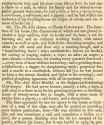
Those charts of yours, if you wish, could be updated with interesting things. In Gaelic society, landowners were organized hierarchically, as we know, but "aire" has many components, from the "Young Aryans" at the base, through various degrees of "Cattle Aryans" up to the local clan chief or king. I found that interesting.
(On the Customs and Manners of the Ancient Irish, O'Curry)
1/3.
>>
File: 20260227_181215.jpg (198 KB)
198 KB JPG
>>18367942
>>
File: 20260227_181303.jpg (214.2 KB)

214.2 KB JPG
>>18367944
>>
>>18367942
Oh yeah, the Irish classes definitely have later variants that get more complicated but I was mainly concerned with Indo-European parallels that could be used for reconstructing the PIE state of affairs.
>>
File: 20260227_182109.jpg (110.2 KB)

110.2 KB JPG
>>18367948
>>18367944
>>18367942
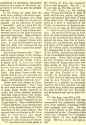
As previously discussed regarding the lack of cognates for Aryan in Insular Celtic languages, the author proposes some interesting etymologies for Welsh "Arglwydd" that I was personally unaware of, which means "lord".
and also provides other cognates and parallels for various Germanic languages. If these etymologies are indeed plausible, I believe they could be extremely advantageous for our understanding. In any case, here they are.
The author mentions them as possibilities, so let's be aware
>>
File: 20260227_182111.jpg (259.6 KB)
259.6 KB JPG
>>18367976
An analysis of each of these etymologies would be useful, and I intend to do that soon, if the thread isn't deleted first.
>>
>>18367975
That's why your PowerPoint chart is so shoddy and poorly done. Didn't you realize that you two are incredibly annoying?
>>18367976
>>18367979
Anything before 1970, cannot be considered useful
>>
>>18367929
>ari-ol
No.
>uratian
Indo-European is a linguistic category and nobody has yet convincingly demonstrated any Indo-European loanwords, personal names, or deities in the Urartian material (for instance, see Zsolt Simon's (2022) rather thorough critique of proposed Armenisms in Urartian)
>>
>>
>>
File: 20260227_185055.jpg (70 KB)

70 KB JPG
>>18367979
>>18367976
>>
>>18367976
I will give a little info on Welsh ⟨arglwydd⟩ "lord, also as title, peer (of the realm), feudal lord; owner, proprietor (in the Welsh laws)".
This is ⟨ar-⟩ + ⟨culwydd⟩ "sovereign, lord, chief" according to this dictionary:
https://www.welsh-dictionary.ac.uk/gpc/gpc.html
As for ⟨ar-⟩ the dictionary says:
>1632 D, Ar … In compositione auget significationem, vt Ἄρι Gr.
>1793 P, Ar, A prefix, enhancing the signification of words: when joined to a noun, it has the force of ‘arch’ a chief in English; of ‘very’, and ‘most’ in adjectives; and ‘much’, in verbs. The prefix, in the English, that is most like it is ‘Per’, from the Latin.
Then ⟨arglwydd⟩ likely literally means "high chief", because of the intensifying function. At the moment I do not see any evidence that Welsh ⟨ar-⟩ is directly comparable to Old Irish ⟨aire⟩ but ⟨ar-⟩ could reflect *h2eri "very", the same ancestor of ἄρι in Greek
>>
>>18367948
>>18367944
So... IG irish caste system had different types of aryans? Kino
>>
>>
>>
>>
>>
>>
>>18368012
>*h2eri "very", the same ancestor of ἄρι
I believe this is an important piece of the puzzle.
Where does the sense, "master, lord, freeman" come from in */h2eri̯ós/?
*/h2ér-i/ contains the locative suffix */-i/. It must literally mean "above", originally in a physical sense. This was used as a metaphor for "super, superior, more"
See *h2erHdʰ- "high" > Old Irish ⟨ard⟩ "high"
*/h2ér-i/ "above" -> */h2er-i̯-ós/ "possessing superior status"
This derivational relationship does not need to cover every sense of associated with the stem */h2er-i̯-ó/ but it does succinctly explain its use in social classes. I suspect the */-i̯o-/ is not originally locative in */h2er-i̯o-món-/, but homophony is the reality on the ground. Speakers would most likely lose track of derivational history.
>>
>>18368166
>>18368012
Yes, we already know its Eurocentric BS
>>
>>
>>
>>
>>
>>
>>18365247
>>18367976
Whenever I remind people that ‘Aryan’ means specifically Indo-Iranic and not broadly Indo-European, some ideologically driven individuals who desperately want to claim the title immediately argue that the word comes from the PIE *h4erós ‘freeman’ and has derivatives in other IE languages, arguing that they can therefore use it to refer to non-Indo-Iranic Indo-Europeans as well. I have two points to make against this claim:
1.The most likely etymology for PIIr *árya- is not *h4erós, but rather *al- (Smith 2024), meaning ‘the other’. In the R̥gveda, the word arí- is clearly used in the sense of the ‘other’, and aryá- derives from it. The ‘other’ here does not imply total alienness (the word ‘alien’ comes from the same PIE root, btw), but rather ‘the other ones who follow the same traditions’—those who are not members of your direct family but still belong to the same customary sphere (see Brereton 1981 for a detailed discussion of the term’s semantic range).
2.This etymology also has PIE roots, but so what? The ethnonyms ‘German’ and ‘Slav’ also have PIE etymologies; does that mean we can call all IE speakers Germanic or Slavic? It is absurd. As an ethnonym, ‘Aryan’ is specific to Indo-Iranics.
>>
>>18369041
>some ideologically driven individuals
But enough about yourself
>1.The most likely etymology for PIIr *árya- is not *h4erós, but rather *al- (Smith 2024), meaning ‘the other’. In the R̥gveda, the word arí- is clearly used in the sense of the ‘other’,
This is just an Indo-Iranian *l > *r merger. The fact that a homophone exists in Indo-Iranian is unable to dispute the comparative evidence from languages where /l/ and /r/ are distinct phonemes. Appealing to homophones is a pitiful argument. The senses are are much too distinct in Indo-Iranian anyway.
PIE */h2eri̯ós/ > Old Irish ⟨aire⟩ /arʲe/
PIE */h2éli̯os/ > Old Irish ⟨aile⟩ /alʲe/
>As an ethnonym, ‘Aryan’ is specific to Indo-Iranics.
That is not what the comparative evidence indicates.
>>
>>
>>
>>18369126
If I were you, I wouldn't reply to iranjeets. Did you know that some time ago I saw a post strangely similar to this one on xiiter? This has already been explained thousands of times. Denying the H2ryos root is madness.
>>
>>
>>18369134
It's strange that these arguments are even made.
PIE */h2eri̯ós/ > Sanskrit ⟨aryáḥ⟩ "master, lord"
PIE */h2éli̯os/ "other" > Ancient Greek ⟨állos⟩ "other", Sanskrit ⟨aryáḥ⟩ "foreign, foreigner"
Clearly homophones with different etymological origins. I think they are hoping nobody will look into it after blowing smoke.
>>
File: Screenshot_20260228-175021_X.jpg (284.8 KB)
284.8 KB JPG
And for those who think I'm being annoying or lying, I FOUND THE POST! IT WAS COPIED FROM THE POST OF AN IRANIAN NATIONALIST. Losers, at least post your own arguments
>>18369141
Correct
>>
>>
>>18368576
Perhaps.
While not necessarily new, it might be helpful to share the recurrence of the Celtic name Ario-manus.
>However, as with the names Attius and Attidius, a follower of a cult does not necessarily bear a theophoric name of this kind, even if two altars dedicated to Arimanus are known from Aquincum Of the possible names, Ariomanus occurs three times in Pannonia and twice in Noricum.
>Thus, statistically, this name has the highest probability. However, Ariomanus is a Celtic, Boius name.
>and although the core area of the Boii extends north of Poetovio, it is not certain that the persons on the altars associated with the customs station at Poetovio also served there
https://akjournals.com/view/journals/0208/148/1/article-p1.xml
>>
File: Screenshot_20260228-200424_Chrome.jpg (141.1 KB)
141.1 KB JPG
>>18369234
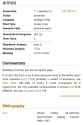
I found an extremely useful website for studying the Lepontic language and its inscriptions. As we already know, it was an ancient Alpine Celtic language that was spoken in parts of Rhaetia and Cisalpine Gaul (now Northern Italy), and there is an inscription "arimai"
It is a personal name, and what's most interesting is that it can have the root ā in the dative case, in addition to arimanus. It can also be a proper name with the suffix -manus.
See:
https://lexlep.univie.ac.at/wiki/arimai
We have found another (possible) parallel
>>
File: Screenshot_20260228-203123_Chrome.jpg (143 KB)

143 KB JPG
>>18369288
the base may be arits- or related to arissa (Delamarre 2007: 26) with base ario- 'noble'
>>
File: Screenshot_20260228-204015_Chrome.jpg (251.2 KB)

251.2 KB JPG
>>18369318
>>18369288
And more interestingly, it's the word ariuonepos. I believe the anon above already mentioned this before
The form is in the dative plural, probably determining uvltiauiopos. It could be a personal name, cognomen, clan name, or epithet.
Ario- is related to 'noble' (as in OIr. aire), and -u̯on- could indicate 'those having foremostness, noble ones'.
>Prósper 2008b: 48 *ari̯o-mn- > *ari̯ou̯n- (misspelled), cf.Eska 2024d: 90.Eska 2024d: 90 f.ari̯o- as in OIr.aire'noble, freeman' + -u̯on- 'those having foremostness, noble ones
https://lexlep.univie.ac.at/wiki/ariuonepos
>>
>>18369328
>>18369318
>>18369288
Italic and slavic bros? Our answer?
>>
>>18369328
https://desuarchive.org/his/thread/18192144/#18198251
>>
>>18369382
Yes.
>>18369365
it's quite possible that there is or was some kind of cognate among the Italic languages, since this occurs in virtually all Celtic branches, from north to south. So, it wouldn't make much sense for there not to be something similar in Proto-Italic, especially considering that Italic is a language very close to Celtic - after all, we have the Italo-Celtic branch.
>>
>>
>>18369318
>>18369288
Thank you
>>
>>
>>
>>18369690
>>18369725
Go troll another thread
>>
I haven't seen anyone talking about this, but there is the toponym "pozo Airón".
>Deo A / ironi fecit fa / milia oc / ule(n)s(is) Vse(tana?) / C(aius) Ti- tiniu[s] / Crispinu[s
Here's where things get confusing. Several authors agreed to highlight the indigenous character of the god Airon, but it is considered that he would be worshipped at springs and, mainly, near natural wells and deep wells.
Since the discovery of the inscription, this deity has been linked to the toponym "pozo Airón," with several examples in the geography of the region.
Quintero Atauri (1913) said that it would be an "undoubtedly regional" god, due to the frequency with which this name is given to deep wells and wells.
Olivares (2002) considered that the deity is cited by an appellative related to the spring, and the term "Airón" still refers to wells or cisterns in some places (in Spain). Regarding the nature of the deity, the author considers that it is directly linked to the well
>>
File: Screenshot_20260301-182546_Drive.jpg (297.5 KB)

297.5 KB JPG
>>18370368
Okay, is there really any connection to "Aryan"? In fact, some authors confirm the existence of a cult to a deity with Celtic characteristics, related to the proto-Celtic *Aryos, but the problem, in my view, lies in the fact that it is claimed to be a folkloric tradition linked to these aquatic natural spaces, which is strange to relate to the aryaman, who was more connected to marriages.
García Alonso proposes that the term "Uclés" could be Celtiberian, with the nasal stem *airū(n) or *airunos, and the indigenous dative *airunei. In the Latin inscription of Uclés, the regular Latin dative of a stem in -n- appears: Aironi.
See the related photo; it is suggested that the most suitable etymology for the theonym is its relation to the Proto-Celtic *ario- 'lord', found in Ario-manus anthroponyms.
He dismisses other etymological proposals, such as *prhio- 'first', due to phonetic and semantic problems. He proposes that *ario- Celtiberian gave *airo- in Gallo, following a phonetic rule of Celtiberian
>>
File: Screenshot_20260301-184422_Drive.jpg (226.5 KB)

226.5 KB JPG
>>18370433
Also see
>>
>>18370435
>>18370433
Translation?
>>
>>
>>18370475
>doctortard
Did you know that Germanic used that term, isn't?>>18367976
>>18365164
>>
>>18370433
>A Celtic *ario-, which we see in Gaulish, would have yielded a Celtiberian *airo-, according to a Celtiberian phonetic rule that remarkably recalls the so-called i-infection of medieval Celtic languages. P. de Bernardo explains it clearly (2001, 324-28 and 2002: 98-102): V1CyV2>V1yCV2, where V1 is a/o, V2 is any vowel, and C is any single consonant (excluding labiovelars).
Do you know why he would say this? It contradicts a phonetic development given by Koch.
https://www.researchgate.net/profile/John-Koch-2/publication/288161390 _On_the_debate_over_the_classificat ion_of_the_language_of_the_South-We stern_SW_inscriptions_also_known_as _Tartessian/links/62014117f3cdc1188 ff5241b/On-the-debate-over-the-clas sification-of-the-language-of-the-S outh-Western-SW-inscriptions-also-k nown-as-Tartessian.pdf
Koch gives examples of vowel epenthesis works in Celtiberian:
>a. ENIOROSEI < *or-s-
>b. ERECAIAS < *perḱ-
>c. ARAIANOM < *ar-i̯-
>d. OLOGAS < *polĝ(h)- < *polḱ-
A sequence VRC becomes VRVC where R = /r, l/ and V is the same vowel twice, so
ary > aray
elg > eleg
etc.
Also don't forget:
Celtiberian ⟨araiokum⟩ (family name)
Are there multiple dialects of Celtiberian that underwent different sound changes or something?
>>
>>18370435
>>18370433
>>18370368
Damn, you guys another cognate? Holy shit, get a break, bros. Where can I read more about this article?
>>
>>18370517
Hello, no. Its debunked here>>18370515
Shitty magazines
>>
>>
>>
>>18370515
Do you happen to understand Spanish? The author explains some specific developments; you can read about them here. https://www.google.com/url?sa=t&source=web&rct=j&opi=89978449&url=http s://ifc.dpz.es/recursos/publicacion es/30/23/34garciaalonso.pdf&ved=2ah UKEwjy7sS31f-SAxWsILkGHW4NHQYQFnoEC B4QAQ&sqi=2&usg=AOvVaw19OBW-OeKLv7U QlXFwn_aO
And I am not well-versed in Celtiberian languages, but apparently some dialects of Celtiberian have undergone different sound changes.
In any case, it's interesting that this cognate is compared to aryaman and eremon by the author, our list is growing.
>>18370522
>>18370526
>debunked
How exactly?
>>18370517
See above
>>
>>
File: Screenshot_20260301-200746_Google.jpg (182.2 KB)
182.2 KB JPG
Anyone who can check out the articles in this magazine, I recommend it.
There is a lot of quality information. Besides many theonyms, but you need to know some Spanish.
>>
>>18370549
Wtf
I'm using my cell phone, and as you well know, translation tools are quite limited; unfortunately, I'm at a disadvantage when it comes to using Google Translate. Just copy and paste
García Alonso, Juan Luis, (2010), «De Etimología Y Onomástica. Deo Aironi y Pozo Airón»’ into Google, you'll find it. But honestly, some translations from Italian to Spanish were quite accurate
>>
>>
>>
>>18370570
>>18370526
>>18370522
This is getting really annoying, insect. You're not fooling anyone, if this makes you uncomfortable so go to hell
>>
>>18370552
>>18370515
>>18370433
so the Indian Aryaman was found in Celtic Iberia, Germania, and Iran? Where else?
>>
>>
>>18370561
>>18370549
Were you able to find the article?
>>18370584
There was a thread a while back where we discussed the possibility of a figure similar to Aryaman existing in Armenia
>>
>>
>>
>>18370622
you can believe it. The article is in Spanish, but you can read it if you want, in addition to other etymologies:
>>18369328
>>18369318
>>18369288
At that point, there was no longer any doubt that the use of the term "Aryan" was quite widespread.
>>
>>18370626
Nothing specifically. I just shared it because I like this thread and I believe that all contributions are welcome. I didn't know how much material we have on the Iberian Peninsula. However, what caught my attention the most was the Wales puzzle
that author postulated many etymologies that would need to be verified.
>>
File: 1741744291544.jpg (233.2 KB)

233.2 KB JPG
Something I always think we ignore is other Iranian languages besides Persian, and I suggest, remember that Andronovo occupied a vast territorial expanse and gave rise to many Iranian branches.
There is a chapter in this book that discusses how the term Aria or Harya was used by the peoples of Central Eurasia to mean "the royal" or "the language of the royals." Although originally referring to an Iranian language (Scythian), the title persisted even when the rulers spoke other languages.
There's also the Median>>18366555
And these rulers organized their kingdoms to promote peace, prosperity, trade etc
>>
File: Screenshot_20260301-214523_Chrome.jpg (238.1 KB)
238.1 KB JPG
>>18370645
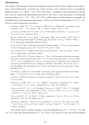
There is some literature that deals with possible ethonyms for Aryan in Eastern Iranian languages, I found some interesting words in Sarmatian-Alanic.
See pic
This article discusses phonological changes in Pre-Ossetian during the Sarmatian period based on Sarmatian personal names from Greek inscriptions from the Black Sea. It focuses on palatalization and voicing of intervocalic stops, etc., i.e., we can assume with some certainty that the oldest phonological changes in Ossetian have parallels in Sarmatian data from that time.
https://www.academia.edu/40407224/Ossetic_historical_phonology_and_Nor th_Eastern_Iranian_anthroponomastic s_from_the_North_Pontic_region_1st_ 5th_c_CE
Very good article
>>
File: Screenshot_20260301-215346_Chrome.jpg (153.7 KB)

153.7 KB JPG
>>18370677
Furthermore, I believe we should differentiate when discussing the use of the term "Aryan" as an ethnonym from its use in proper names.
I suggest that specific topics be created to address this issue, since Greek names ending in "aristos" are numerous and listing them would be exhaustive.
>>
>>18370685
>>18370677
Pretty cool names
Much than Germanic ones
>>
>>
>>18370691
>>18370689
There is certainly use of "Aryan" in Germanic personal names, as well as in Celtic and Greek personal names. Why do you always cite "Germanic" every time I or anyone else even slightly mentions "Aryan"? Would you mind mentioning your flag? I'm getting tired of you and your crap, FUCK OFF
>>
>>
>>18370552
>>18370433
>>18369318
>>18369099
we know the speakers of PII referred to themselves asAryans, there emerged a trend among academics early on to conflate PIE and PII and refer to the speakers of both asAryans. J. G. Rhode in 1820 posited the theory that theAryanscame from Central Asia (which was correct)
Many Indo-Europeanists; Grimm, Muller, Pott, Lassen, Schleicher believed PIE came from Asia until the tide changed when Dr Latham in 1851 posited that PIE came from Europe. Subsequent scholarship has vindicated Latham but it has taken a long time to prove that Ukraine is the real homeland of PIE.
Once we learned that PIE was European, the Asiatic term Aryan became inappropriate to describe them. The Nazis used it, but Nazis also believed in silly Asian origin ideas that were already disproven in their time. “Aryan” was still used by scholars such as Issac Taylor to refer to PIE people as recently as 1892 in his book ‘Origin of theAryans’, although he begins the book with an entire chapter on ‘theAryancontroversy’ where he explains why the termAryanis no longer appropriate to refer to PIE.
The PII (Sintashta and Andronovo cultures) called themselvesAryansand are an important historic culture which it is useful to refer to with this word. Calling their ancestors in Europe from 1000 years earlier, by a PII word, even if it has a PIE origin, is like calling Bell Beakers “Romans” or calling the British “Americans”.
This isn’t about political correctness or the Nazis, this is about using a word that makes sense. When you say ‘Aryan’, you not only look like a Neo-Nazi, you also look like you don’t understand the field of IE studies at all. Very, very bad idea to promote this.
>>
>>
>>
>>
File: araianom.jpg (882.4 KB)

882.4 KB JPG
>>18370870
The ethnonym sense goes back to PIE. That's why there's a Celtiberian inscription which refers to Aryans as the plural of a collective.
The word used is ⟨araianom⟩. ⟨araia-⟩ is an ā-stem (< *ari̯ā- < */h2eri̯-eh2-/) which is to be read as a collective noun, the same type of collective noun as Proto-Celtic *toutā "people, tribe"
https://en.wiktionary.org/wiki/Reconstruction:Proto-Celtic/tout%C4%81
The ending ⟨-nom⟩ is the genitive plural ending. This means ⟨araianom⟩ must be read as "of the Aryan peoples/tribes". The use of a collective here is astounding. It allows us to see quite explicitly that there existed this Aryan identity that applied to groups of people.
The inscription refers to the god Lugus as "Lugus of the Aryan peoples". Apparently Lugus had certain ethnic associations. (not surprising! Lugus and Loki are compatible etymologically)
Celtiberian inscription located here: https://en.wikipedia.org/wiki/Pe%C3%B1alba_de_Villastar
>To the mountaineer and..., to Lugus of the Aryan peoples/tribes, in rural procession we came. For the mountaineer and the equestrian, for Lugo, the chief of the community raised a roof/covering, (also) a roof for the thiasus
Oddly enough the ⟨-n⟩ in English ⟨Aryan⟩ seems to ultimately come from the genitive plural which became ubiquitous in Iranian, so it's funny seeing such a specific form of the word in Iberia.
>>
>>18370905
I'm not him. But can we say that "Aryan" was a broader ethnonym like "European" or "American"? While the names of the tribes would, in this case, be the countries that make up Europe and the American states respectively? I looked at something another anonymous person posted about Aryan words and it seems there are many in Germania.
>>
>>18364896
It's a very dubious word. The only attestation is on the Norwegian Tune Runestone, where we find the phrase arjostez arbijano, supposedly 'noblest of heirs'. The problem is that the r is reversed, and properly looks like si, i.e. sijostez arbijano. This would mean 'most related/closest kin of/among heirs', and arguably provides better sense to the inscription. It's also a real Germanic word, namely a spelling variant of an adjective *sibjaz 'related'.
>>
>>18370934
It's an inherited ethnonym.
Indo-Iranians called themselves Aryans because they inherited the ethnonym from Proto-Indo-Iranians. Likewise there were Celts who had an Aryan identity. It's unlikely to be a coincidence.
When you see a word and its meaning which is the same in Western Europe and Indo-Iranian cultures, it is natural to reconstruct that word and its meaning for Proto-Indo-European. In this context, that means Proto-Indo-Europeans were calling themselves Aryans before their complete dissolution.
>>
>>
>>
>>
>>
>>
>>
>>18369041
>>18369181
Every single time. Just remember when you are arguing about anything related to ancient history some butt blasted brown is running cover. It's so pathetic.
>>
>>18371495
>>18371486
Always Iranian and Indian nationalists
>>
File: A teaser.png (400.8 KB)

400.8 KB PNG
Thoughts on this?
1/2
>>

>>
>>18371611
>>18371612
This topic is getting better and better. We're finding new things with each thread. Could you give more details or post this article so we can read it? I'm curious to know how this phonetic change occurred, and are we talking about any particular tribe?
>>
To Europeans: I am Indian, and I feel like you are being nothing more than racist in a certain sense towards my belief system and culture. Why must everything be "Indo-European"? Can't we have anything Indian? Are all our Indian scholars wrong and an entire tradition of scholars to be thrown in the trash simply because internet articles by Christian/atheist linguists said the opposite? Isn't that religious intolerance??? Aryanism has always been taught here as a spiritual state and clarity with one's being, but all of that is thrown away because non-random articles say it's racial. Indra must be Indo-European because... well? He must be Indo-European. Why can't we have anything Indian? Why this constant attempt to compare our faith?
>>
File: Basque.png (280.1 KB)

280.1 KB PNG
>>18371663
The author was actually talking about Basque.
https://www.academia.edu/123839813/A_teaser_for_Celtologists
I wouldn't be surprised if there was an old layer of Indo-European loans in Basque. I suppose one doesn't get majority IE Y-DNA without at least receiving some loanwords
>>
>>
>>18370685
>>18370677
The real aryans
>>
>>18371611
>>18371612
So much of etymology looks like completely arbitrary BS
>>
>>18371685
>Indo-European loans in Basque
E.g. hartz "bear"
https://en.wiktionary.org/wiki/hartz#Basque
Definitely an IE loan because of the characteristic "thorn cluster"
>>
>>18371685
apparently no proper article has yet been written on this issue, but yes, considering that the Basques were surrounded by Indo-Europeans, it would be strange to think that they did not receive any influence, especially considering the other articles where Indo-European influences among the Hurro-Urartians were discussed, and out of curiosity, considering autosomal analyses beyond Ydna, Basque.HO can be modeled using qpAdm (Breakdown) as being 56.1% Continental Celtic 43.9% Iberian
>>
>>
Norwegian: Herre, sir, master, gentleman.
German: Herr, sir, master, gentleman.
Dutch: heer, sir, master, gentleman.
Cornish and Celtic: Arhu.
Old English: Hearra, sir, master. Eorl, Erl - cognate of Jarl, chief, leader, hero, man of valor.
>>
>>
>>18371740
>Herre
This is an old idea but it was dismissed after the study of Germanic languages became more formal and rigorous.
The fundamental issue is that Germanic *h comes from PIE *k.
The equation Herr = Aryan doesn't obey regular sound changes.
>>
>>
File: herri.png (245.1 KB)

245.1 KB PNG
>>18371612
another pic from the same author.
I wanted to see how he might handle the vocalism.
/a/ is generally expected, not /e/
>>
>>
>>18371868
>Italic cognate
Already found. ⟨Arius⟩ exists on inscriptions located on the Italian peninsula as a personal name. There was a thread about it.
I would say it's reasonable to reconstruct it as a Proto-Italo-Celtic word.
>>
>>18371881
WTF
Like these Sarmatians>>18370677
>>
>>
>>
File: Arius search results.png (181.2 KB)

181.2 KB PNG
>>18372068
https://desuarchive.org/his/thread/17919242/#17922605
>>
Off topic
Do you remember when I talked about the possible Indo-European presence in Mesopotamia? There's some haplotypes present in Iraq on FTDNA
which derive from Yamnaya and were probably in Ukraine/Romania... the question of Euphratic and its connections with the Sumerian language **needs** to be explored again, at least due to the commonality of some roots. But I think that would be impossible, because we know that the Middle East must necessarily remain in its status as one of the oldest, uninterrupted civilizations, and any external influence must be denied.
I, at the time, i noted connections not only with Indo-European but specifically with Latin. Therefore, thinking that Indo-European was the language of the Yamnaya R-L23-Z2103 is no longer absurd. Could IE dialects explains both the commonality with Finno-Ugric and the predominant Caucasian agglutinative presences in Sumerian??? but perhaps the origin is more local with these aforementioned influences.
>>18372552
Strange site to use, huh? But I liked it.
>>
>>18372552
No
The suffix "-ārius" is used to form adjectives from nouns or numerals, indicating relation or characteristic. Examples:
- camera camerārius ("climbing")
- ordō ordinārius ("ordinary")
- quaternī quaternārius ("quaternary")
>>
>>
>>
>>18372675
>Do you remember when I talked about the possible Indo-European presence in Mesopotamia?
Yes
>Could IE dialects explains both the commonality with Finno-Ugric and the predominant Caucasian agglutinative presences in Sumerian???
I don't have the answer for that. It's very time consuming to explore Indo-European influence on non-IE languages beyond loanwords. People write their PhD thesis on that sort of thing. I'm also cautious about attributing everything to IE influence.
>>
>>18372699
We are not talking about the suffix. I did not cite a suffix. I cited a standalone word. The suffix ⟨-ārius⟩ is not a word and therefore cannot be used without being suffixed to a preceding word.
>Wiktionary
Not an argument.
⟨Arius⟩ exists on Latin inscriptions. It is used as a personal name.
>>
>>18372703
You lost again
Latin adjectives in -arius were sometimes used as nouns, creating words with many English derivatives. The masculine -arius often meant "a person working with/in —–". Examples:
- lapidarius ("stone worker") lapidary
- secretarius ("person with a secret") secretary
- Aquarius ("water bearer")
>>
>>18372701
Clearly, but this specific case has received little or no academic exploration beyond Gordon Whittaker, some say there are striking similarities between Ninurta and PIE mythology, for example, and even some etymological connections.
>>
>>18372706
⟨-ārius⟩ is not a word.
⟨Arius⟩ is a word.
Attempting to read ⟨-ārius⟩ as a standalone word results in gibberish. It is not possible to read the instances of ⟨Arius⟩, the personal name, I cited as suffixes.
You're a complete idiot. I will assume you are trolling.
>>
>>
>>
>>18372726
Poor foid
>>18372711
Sorry to interrupt the conversation, but what etymologies are you talking about?
>>18372552
Thank you
>>
>>18372726
>Besides their website, nowhere is this shown.
If you look at the publication cited, you will see many of these inscriptions are in Corpus Inscriptionum Latinarum (CIL), an authoritative resource for Latin language inscriptions.
I don't really care if you think it's obscure. The CIL is one of the go-to places to see if a word existed in Latin.
>>
>>
>>18364979
..but then again there are undeniable links between Nordic Bronze Age and Sintashta culture, like Trundholm sun chariot.. lately some adna studies have pointed strange genetic connection between Nordic people and proto-Scythians from Srubayna culture. Finns have their own history with Aryans but that is still even fuzzier... anyhow there is a layer of connection that we don't quite understand yet.
>>
File: xbLDwQb (1).png (703.7 KB)

703.7 KB PNG
>>18372727
To be fair, I may have gotten a little too excited about this, but while studying some older sources, I found this article. Unfortunately, the only PDF I found was on my PC before it was destroyed, but that's what I'm referring to.
The argument is that "Indar" and "Nindara" are spellings of the same deity, possibly borrowed from a substratum lexicon. There are nuances regarding endowment between Emelianov and D. Roiter, arguing that the cult of Nindara predates the time of Gudea.
The text proposes that the name Indra entered Sumerian in two waves, resulting in variations in cuneiform writing over time. It seems a bit crazy, and perhaps it is, but I like these more out-of-the-box hypotheses. Please be cautious.
>>
>>18372739
It is clear that these changes must be categorically explained from an etymological point of view, but some things are either too similar to be a coincidence or that the Proto-Indo-European tradition actually derived these myths from the Middle East. There are many parallels between the myths of Indra and the "Exploits of Ninurta" (non-Indo-European). Ninurta carries the anthropomorphic club "Kar-Ur".
>122-134 "Hero, pitfall (?), net of battle, Ninurta, King, celestial mace ...... irresistible against the enemy, vigorous one, tempest which rages against the rebel lands, wave which submerges the harvest, King, you have looked on battles, you have ...... in the thick of them. Ninurta, after gathering the enemy in a battle-net, after erecting a great reed-altar, Lord, heavenly serpent, purify your pickaxe and your mace! Ninurta, I will enumerate the names of the warriors you have already slain: the Kuli-ana, the Dragon, Gypsum, the Strong Copper, the hero Six-headed Wild Ram, the Magilum boat, Lord Saman-ana, the Bison bull, the Palm-tree King, the Anzud bird, the Seven-headed Snake -- Ninurta, you slew them in the Mountains
>698-711 Since the Hero had killed the Asag, since the Lord had made that pile of stones, since he had given the order "Let it be called stone",since he had ... [slain?] .... the roaring dragon, since the Hero had traced the way of the waters ...... down from above, since he had brought them to the fertile fields, since he had made famous the plough of abundance
https://etcsl.orinst.ox.ac.uk/section1/tr162.htm
Strongly similar with IE myths, isn't?
>>
File: urn_cambridge.org_id_binary-alt_20160702222418-04377-firstPage-S0035869X00036558a.jpg (354.4 KB)

354.4 KB JPG
>>18372742
>>18372739
Another thing I find interesting to mention is that in that thread where the relation between Roman Mars and Vedic Maruts was discussed, and OP was practically basing it on a 2008 blog, I went to research a bit more in-depth and it seems that it was proposed by at least some authors proposed a relation between some kassites gods and Indo-European etymologies.
But, from what little I could research, at least according to Wikipedia, it says that these etymologies have been discarded and that there's no relation with any, uh, Indo-European divinity. It might be, but I'd rather, at least personally, look for more than one author to say about it. And unfortunately, I didn't find any article, any author that deals with this subject in a more in-depth and delicate way, because when any subject involving the Orient, Middle East, and Indo-European in general is treated, it seems there's always a strange reluctance about it.
>>
>>18372754
>>18372742
>>18372739
Shieeet
Thank you bro r u
the "Shrek" guy or the crazy guy who made those Aryanism charts?
>>
>>
>>18372737
>>18372712
They weren't Nordics and didn't use any aryan cognates
>>
There's also the persian Ariaramnes
>Ariaramnes,theGreatKing,KingofKings,KinginFars,T(e)ispestheKing’sson, Achaimenes’grandson
>ProclaimsAriaramnes,theKing:ThislandFarsthatIhold,that(is)fullofgoodh orses(and)goodmen,(this)thegreatgod Ahuramazdagrantedme;bythefavourofAh uramazdaIamKinginthisland.
https://oracc.museum.upenn.edu/ario/Q007129
>>
>>
>>
>>18372816
All right. Here's the search page. Let us know when you find something.
https://romaninscriptionsofbritain.org/inscriptions/search
>>
>>18372830
>>18372816
Sameflag
>>
>>
>>
>>18364896
>>18367976
>>18367979
>>18371774
You sucka
See pokorny etymological dictionary
>>
File: Screenshot_20260303-195513_Chrome.jpg (102.5 KB)

102.5 KB JPG
>>18373060
>>
>>18370905
>>18370552
Aryan became hugely ethinical considering both tribes met foreigners and had to give an identity to themselves. Iranians called themselves aryans and Vedic people called themselves aryans. If you go through some of the Vedic texts, a family with common bloodline has differentiated its offsprings into Arya and Non Arya (anarya), so it was very much a title term in late vedic period. Even the word Aryan is loosely used in Pakistan/Northwestern India since they're all same ethinicaly. But it is an ethinic term in Nepal because there are mongoliods, burmese here and Arya is purely a racial term to denote the steppe phenotype- people.