Thread #18369956

File: fwhg3goq06341.png (316.5 KB)
316.5 KB PNG
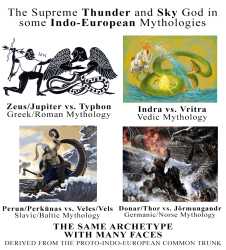
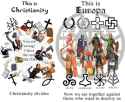
Why did Europeans choose and continue to worship a Jewish god? Why did they abandon their true beliefs?
94 RepliesView Thread
 Showing all 94 replies.
>>
>>18369956
real Christians worship nothing because for the body of Christ to worship anything is sacrilegious. You wish for christianity to be the worship of jews, but it is not, and never will be. Perhaps you will convince some people that they should worship jews, but that is noahidism, and nothing could be further from the truth.
>>
>>
>>
File: 1744269137383687.jpg (96.9 KB)

96.9 KB JPG
>>18369956
In Greece and Rome there was an issue where a lot of the intelligentsia and nobility had lost faith in the traditional myths a long time before.
Philosophy as we know it was born out of religious schisms in Greece regarding the truthfulness of the ancient myths. With those like Xenophanes, Plato, Aristotle, Zeno, etc., taking a perspective that they were mere metaphors or tall tales written by ignorant humans.
Of course there were those that still deeply believed in the Gods, but over time you developed a split in society between those that pursued abstract theological cults like Platonism, Stoicism, or Pythagoreanism, among others, and those that held to more traditional beliefs. With the former group generally being wealthier.
For those that did believe in the Gods, another change happened. An important thing to know is that the Greeks and Romans were fascinated with foreign Gods and were interested in learning about them and adopting worship practices if it seemed beneficial.
They generally believed that all Gods across all cultures were the same deities in a basic sense. So that if you found a new God that seemed powerful, that meant you were learning more truth about your own Gods.
This meant the adoption of cults around Isis, Mithras, the Magna Mater, etc. So it was normalized to believe that foreign deities could be just as 'true' as your own.
Finally, the Greeks and Romans really developed a heavy anxiety over salvation.
This was seen in both the elite and the lower religions. From Proclus's neoplatonism and theurgy to the psychedelics of the Orphic and Dionysian Cults, there was a great fear about salvation and a lot of work put in to find Gods to help you. To find a way out of this mortal world and ascend your spirit to paradise.
Between these you have a lot of groundwork laid for conversion to a powerful foreign salvation cult that was nonetheless basically an intellectual tabula rasa for elite philosophers to intellectually colonize.
>>
>>18369956
Christians will tell you “hurr durr paganism was already on the decline,” but that is a lie. By the time Constantine died, Christians were only less than 10% of the empire’s population and were at best a loud minority (they were also mostly concentrated in the eastern territories). They didn’t become a majority until Theodosius outlawed paganism and made an explicit effort to eradicate it by shutting down temples and forcibly disbanding pagan priesthoods. Even then, pagan beliefs still remained dominant among rural populations well into the early Middle Ages (where do you think the term “pagan” came from?).
Of course, they will continuously harp on about how they “preserved” classical texts while conveniently ignoring that the onset of Christianity is what stopped the preservation of pagan traditions in the first place. Some Christians preserving a couple texts relating to larger traditions isn’t a service to paganism, it’s more like putting a bandaid on a stab-wound that you inflicted. Imagine if I lit your house on fire and burned it to the ground, but went inside and grabbed your television and handed it to you before it got destroyed. Would you get on your knees and thank me? Obviously not. Besides, pagans had already been copying and preserving these texts for centuries and would have continued to do so without Christianity. Christianity was absolutely not necessarily for the preservation of these texts.
>>18370000
Post hand Pablo
>>
>>18370000
Note, that Christianity wasn't unique here in late Roman religion.
The Manichean religion was also extremely successful in converting large amounts of Greeks and Romans, with a preference towards the soldiery.
But it showed up after Christianity and largely ended up on the backfoot against it in the West, and eventually withered and died.
>>
>>
File: 1753985893273072.png (1 MB)

1 MB PNG
>>18370000
>made up bullshit
they were forced to convert or constantine's regime would kill you
this christian fantasy of organically "enlightening" people didn't happen. a ruler usually betray his people for jewish interests
>>
>>
>>
>>18370026
Yes, eventually conversion was through force.
But you wouldn't get any conversions in the first place if there wasn't already an established basis for Greco-Roman interest in foreign cults, interest in salvation cults, and potential skepticism towards their own traditional myths.
The question was why an Indo-European would abandon traditional faith for association with Christianity, not why the Roman Empire as a whole was converted to Christianity. That is a separate question that involves forceful conversions and oppression of the ancient religion. But that was the last step rather than the first.
Jews were not a substantial military, economic, or cultural power in the Late Roman period. Especially not after they were crushed and turned into poverty stricken diaspora.
There was no gain for any Roman to ally with the Jews because the Jews didn't have any power.
Jewish economic power didn't come until the Medieval period and usury legislation.
>>
>>
>>
>>18370029
>>18370032
>admits he was full of shit
>makes up more christcuck headcanon propaganda
unbelievable
>>
>>
>>
File: True Europe.jpg (233.2 KB)
233.2 KB JPG
>>18370045
Cope
>>
>>
File: 1750638648797869.jpg (136.5 KB)

136.5 KB JPG
>>18370065
except the jewish one ehehe
bow to rabbi yeshua and give all your money to peter btw
>>
>>
>>18370000
Plus, Greco-Roman educated classes have been moving towards monotheism before Christianity. Greek Stoic and similar thinkers already believed that either the whole universe is one god, or that some other abstract supreme divine figure exists. Pliny already complained in his Natural History that peasants worship so many gods and wrote that there is probably only one god. Josephus quotes Titus thanking 'God' and not any specific Roman god for victory etc.
The only reason that something like Christianity didn't spread earlier was that the Roman state was strict about public religion. Religious institutions (the imperial cult, the Vestal temple etc.) was a central state institution, so even if the elites didn't believe in those gods anymore, their cult was so intertwined with the state that they couldn't just be replaced easily (kind of like how the British monarchy is so connected with the Church of England). That's also why Christians were persecuted, nobody really cared what they believed in, but not observing state religious rituals was unaccaptable.
It's not surprising that Christianity became big during and after the 3rd century crisis, when the imperial state became weaker, along with the official cult.
>>
>>18370097
Greco-Roman philosophers weren’t “proto-Monotheists.” The divine source they believed in was not a god or supreme being, but the mere form of good itself and it doesn’t have a will. Pagan gods in Greco-Roman philosophy although emanating from it were still separate beings from this divine source and worshipped in their own right, not merely messengers or agents of it like angels are to God in Christianity.
The Neoplatonist concept of the One and the Stoic concept of the Logos are completely different from the Abrahamic concept of God, they are not “monotheist.” If anything, monotheism is incompatible with these philosophies.
If you unironically think that Greco-Roman philosophers were “monotheist,” you’d also have to believe that Hindus are monotheistic since they believe that all their gods are aspects of a single divine source called Brahman.
>>
>>
>>
>>
>>18370102
There are Hindu Monotheists and even Hindu Atheists that believed in an abstract concept of Brahmin (if even that) but rejected the existence of other Gods as metaphors or nonsense otherwise.
The development in Rome of the Gods centralizing around a single abstract figure, wasn't unique to it.
>>
>>
>>
File: images (82).jpg (27.4 KB)

27.4 KB JPG
>>18370291
>>18369956
This guy learned Persian on a ship in 8 months. I think he's smarter than you in every way
>>
>>18370102
I think philosophical pagans make Christians seethe the most. They know the “haha you worship a tree” argument doesn’t work on them, so they’ve tried creating a fictional history where somehow pagan philosophers were “proto-monotheists” and that their philosophies were someone separate from paganism.
>>
>>18369956
>their true beliefs?
Their true beliefs are whatever they choose to believe.
What makes their indigenous polytheistic traditions special or superior to any other traditions?
You're asking a heavily loaded question and your hatred for Christianity is evident, I say this as a non-Christian.
>>
>>
File: White Goddess.jpg (63.8 KB)

63.8 KB JPG
It is time to return to the White Goddess
>>
File: Dancing_Krishna%2C_India%2C_Tanjore%2C_Tamil_Nadu%2C_Chola_dynasty%2C_14th_century%2C_bronze%2C_HAA.jpg (422 KB)

422 KB JPG
Why did Indians abandon their main man Indra to worship a dancing penis rock?
>>
>>
>>
>>
>>18370102
>>18370302
It is easy to make that claim when someone like Plato was actively resentful towards the existence of Homer and Hesiod and other similar sources of very 'earthly' mythology, as opposed to his personal theology and view of the divine.
>>
>>18370412
Plato still believed in and worshipped traditional gods, even if he had a more abstract view of them. To argue that he didn’t actually follow Greco-Roman paganism is a delusion.
Also, later Platonist philosophers would disagree with Plato’s view of traditional myths, arguing that these myths were allegories rather than literal historical truths.
>>
>>18370405
Salvation is from death at the hands of the dark demons of hell is only possibly by doing what the son of the God of gods instructed, the light of God must form the body of God upon the earth in order to ensure they are never destroyed. This requires no worship, and worship is antithetical to the salvation found in Christ because for the body of Christ to worship anything is sacrilege.
>>
>>
>>18370454
He didn’t criticize polytheism, what he actually did was criticize the traditional anthropomorphic view of the gods rather than the idea that there are multiple gods. You’d know that if you actually read the entire fucking text rather than regurgitating what tradcath_conquistador1488 told you on Twitter you deranged ape.
>>
>>18370680
>just make stuff up
>”prove me wrong!” /gay smirk
The first argument at Euthyphro is about how multiple gods cannot be a source of piety because they disagree with each other as to what piousness was. Then he made to Athens, where he was convicted of…. denying the Greek gods and was ordered to drink hemlock as a punishment.
>>
>>
>>
>>18370454
>>18370686
He doesn't reject polytheism.
He rejects appeals to morality that are purely based in concepts of 'piety is doing what the gods like', because of the contradictions within polytheistic pantheons.
Where in that entire essay does Socrates as Plato's mouthpiece deny the existence of the polytheistic pantheon?
>>
File: electric universe - ancient squatter man.png (1.2 MB)
1.2 MB PNG
>>18369956
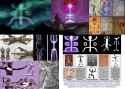
Huh, I wonder if this "thunder wielding man" fighting "serpent" thing has anything to do with those Electric Universe theories and the Ancient Squatter Man on the sky. If someone saw that shit on the skies and some line of galaxies behind it they could easily interpret that as a man fighting a snake .
Electric universe schizophrenia apart the idea of our ancient trying to interpret sky fuckery in human terms is fascinating
>>
File: file.png (1.3 MB)

1.3 MB PNG
>>18370869
>>
File: file.png (493.2 KB)

493.2 KB PNG
>>18370871
Funny how the Norse one has a human and two serpents and the left one on pic related's top right has like two extra limbs that also look like some snak thing behind a man
>>
>>18370869
>>18370871
>>18370873
electric universe is absolutely nutterbutters, but I'll be damned if their vids don't put me to sleep like a tranq dart
>>
>>18369956
Foolish take. The God of Christianity is much closer to the original aryan Deus Pater than any of its degenerations created by polytheism. The Trinity even preserves the memory of indoeuropean trifunctionalism, with the Father being the sovereign, the Son being the warrior-judge and the Holy Spirit being the farmer who cultivates the soul of man.
>>
>>
>>
File: 1750432450354339.jpg (1.6 MB)

1.6 MB JPG
>>18369956
>Why did Europeans choose and continue to worship a Jewish god?
Dishonest question. Christianity is not Judaism-plus-Europeans, but the fulfillment and transformation of the Old Covenant. Christians do not worship the Mosaic Law, the rabbinic conception of God or post-Temple Judaism. They worship Jesus Christ, whom Jews rejected. Calling that “Jewish god” is either ignorance or bad-faith racial framing.
>Why did they abandon their true beliefs?
This assumes Europeans had a single, coherent, “true” pagan belief system, which they didn’t. It was fragmented, local, tribal, and contradictory. It offered no universal moral law, no final eschatology, no redemption from sin, and it was already collapsing internally before Christianity arrived. Christianity replaced decaying cults that could not answer basic metaphysical or moral questions.
The very civilization you retards are nostalgically masturbating over (cathedrals, chivalry, universities, metaphysics) was built by the Catholic Church, not by Thor or Wotan. Cope.
>>
>>
>>18371432
>redemption from sin, and it was already collapsing internally before Christianity arrived. Christianity replaced decaying cults that could not answer basic metaphysical or moral questions.
Pagan cults in Greece and Roman heavily focused around salvation and were very successful.
In fact what made Christianity successful early on was that it fit in with these other salvation cults conceptually.
Please learn a little history before posting on /his/.
>>
>>18371432
How many times will you post your schizophrenic cope?
Jesus and Yahweh were jews. Mary was a jew. This religion come from jews, apostles were jews. Just because jew a rejects jew b, doesn't make him automatically non-jew. You fucking retard.
>>
File: 003905-000.jpg (162.3 KB)

162.3 KB JPG
>>18371437
>Pagan cults in Greece and Rome heavily focused around salvation and were very successful
Misleading cope. Calling that “salvation” in anything like the Christian sense is *dishonest as hell*.
Take the Eleusinian Mysteries:
>salvation equals vague promise of a better shade-existence after death
>no moral regeneration
>no universal ethic
>no victory over sin or death
Or what about Mithraism?
>exclusively male, military cult
>zero universality
>no forgiveness of sins
>no ethical transformation beyond loyalty
>They were very successful
Define "successful".
>Christianity succeeded because it fit in with these salvation cults
Christianity didn’t “fit in”, but blew them the fuck out. It isn’t about cozy myths or endless spiritual loops. It’s about salvation in real history; God acting in the world, not in symbolic cycles. It stands on moral absolutes, not just going through rituals. Right and wrong actually mean something, and no ceremony replaces that. It’s open to everyone, not locked behind secret initiations or elite knowledge. The truth is preached publicly because it’s meant for all. It offers real forgiveness of sins, not just symbolic cleansing. Sin is real, and so is grace that actually fixes the damage. And it promises the resurrection of the body, not some vague, ghostly afterlife cope.
>Please learn a little history before posting on /his/.
I accept your concession.
>>18371446
Following Christ doesn't equal staying Jewish. Christianity isn’t an ethnicity. Get some sense and eat your vegetables.
>>
>>
>>18371449
>Eleusinian Mysteries
These were at least 1000 years old by the time that Christianity was a relevant force in Greco-Roman culture.
This is like comparing Manichaeism to First Temple Judaism and claiming that the latter is a primitive desert cult to a farcical provincial god.
The Greco-Roman world was an ancient one by the time Christianity showed up. With ritual systems older than Judaism that survived into the then-present. Of course the oldest ones, with the sketchy documentation we have, look primitive or lacking in rigorous logical systematization.
The Orphic Rites, the worship of Isis, the cult of Artemis at Ephesus, the rites of the Platonists as described in Proclus's Theurgy all demonstrate a very powerful and dense and deep theology regarding salvation and actionable methods in how to achieve it. Redemption from sins, and ways to live piously to avoid them were important parts of all these salvation cults. And they weren't unique.
These cults have widespread archeological evidence and were discussed as rivals by Christians for centuries after it was established as the Royal Cult. They were considered such challenges that while Judaism was protected by Imperial legislation, these pagan cults were attacked heavily and constantly.
Christianity did not 'blow them the fuck out'.
It was a slow growing movement that was competing mutually with many other salvation cults until Constantine and later Theodosius and Gratian began persecuting pagan rituals.
By the time of Constantine's conversion, Christianity was likely followed by no more than 10% of the population. And that was in very diverse forms that all disagreed with one another as much as they did with the pagan cults. Considering Valentinian Christianity and Roman Proto-Orthodoxy as the same religion is almost impossible by modern standards. Same as considering Marcionism and Jewish Christianity as the same religions. Despite these all being lumped together for that "10%" figure.
>>
>>
>>18371546
>>18371449
Further to assume that Christianity was the only religion that claimed active divine intercession on human matters and that it provided some more concrete examples of this, is just nonsensical.
Traditional Greco-Roman religion was huge on claiming constant active intercession by spirits and in Roman regions it was popular to believe that everyone had a Lares spirit guarding them and their household directly and that locations had Genii that spiritually inhabited them and involved themselves in events and worldly developments.
The Greco-Roman world was a possessed one where the Gods were omnipresent around you and were constantly influencing human interactions in a direct way.
Even the heavily rationalized Platonics and Stoics believed that Gods heavily guided the Earthly world. And that fundamentally this world was a reflection of the Heavenly world.
The idea that people thought what they were doing was mindless ritual rather than active communication with the divine is unjustifiable.
They did not believe what they were doing was just symbolic. They believed in their Gods as much as Christians did.
Not all Late Greco-Roman cults were mystery cults.
As well, the proto-orthodox church had already embraced the later Catholic and Orthodox practices of limiting the laity's access to interpreting religious texts and pushed for its educated clergy to communicate the correct interpretations of the texts.
That wasn't invented in the Middle Ages. The idea that the masses weren't ready to correctly interpret the Biblical texts was common from early on due to how schismatic Christianity was for its first several centuries.
I told you to learn history before posting, and all you did was prove how right I was.
>>
>>
>>
>>
>>
>>
>>18371555
Early Roman religion didn't really have anthropomorphic deities in the first place. Their Gods were more forces of nature than divine people, early on.
But the image of an anthropomorphic deity is an extremely powerful one for ritual and prayer, so the Romans did borrow heavily from Greek imagery.
>>
>>
>>
>>
>>
>>18370000
Nice quads but this is a late Christian piece of propaganda that flies in the face of what both pagans and early Christians said. Early Christian were extremely concerned with genuine religious devotion to the pagan gods, by both commoners and the elites, they fully believed that people not only worshipped them fervently but that there were real divine beings receiving those prayers. They explicitly said that demons were receiving pagans' sacrifices and giving them oracles, e.g. Justin Martyr around 150 AD.
Pagan intellectuals explicitly defended common religious practices. Celsus' book against Christianity was a learned polemic by a Platonist, which defends the reality of the Olympian gods and figures like Heracles. Porphyry of Tyre was called the most learned of all the pagan philosophers by Augustine, and he defended public religion, consulting oracles, and so on.
It's a false idea that there were was a hard dividing line between the stupid masses who believed in the gods and the elites who thought it was all nonsense. In the 2nd century AD you can see Pliny the Younger and Celsus genuinely concerned that Christians not worshipping the gods will lead to disaster as the empire would lose divine favour and social cohesion, which were inextricably intertwined in the "pagan" worldview.
>>
>>
>>18370118
lolno, please read at least an introductory article on the matter bedore spouting off. The more abstract non-dual view of Brahman is that it is beyond all properties and all description, so even calling it "God" would be a misnomer. But within the universe of phenomena, i.e. the reality everyone lives in, God is real and is the closest thing to Brahman. The other gods are equally real and worship of them is required unless you've reached moksha and have moved beyond needing to worship.
>>
>>18371621
My argument wasn't that the Greeks and Romans were depressed pseudo-atheists that 'found God' in Christianity.
The average Greek or Roman was genuinely more devout than most modern Christians, just because of the time period. But they lacked that opposition to outside religious cults and figures that modern Christians have a great anxiety over. Instead, many evaluated new cults on a case-by-case basis and adopted practices from them or joined new cults according to personal discretion and belief in the tenets.
But there absolutely were those that considered most conventional religious practices to be foolish.
Pliny the Elder complains about how the rabble create new gods constantly and that they worship too many gods in general. While he didn't deny the existence of the Gods, he clearly felt disaffected from common religious practice and felt more alignment to a somewhat henotheistic view that borders on monotheism
>For whatever God be, if there be any other God, and wherever he exists, he is all sense, all sight, all hearing, all life, all mind, and all within himself. To believe that there are a number of Gods, derived from the virtues and vices of man, as Chastity, Concord, Understanding, Hope, Honour, Clemency, and Fidelity; or, according to the opinion of Democritus, that there are only two, Punishment and Reward, indicates still greater folly. Human nature, weak and frail as it is, mindful of its own infirmity, has made these divisions, so that every one might have recourse to that which he supposed himself to stand more particularly in need of.
And so on.
This is clearly contrary to Roman practices around their Lares and Genius Loci, and the many, many deities that average people believed existed and ran the cosmos.
>>
>>18371602
>the Norse pantheon was only worshiped for about 400 years
Nope. The religion wasn’t just practiced by the Norse between the 7th to 10th centuries AD, it was practiced by all Germanic peoples since antiquity. The reason it’s commonly referred as Norse paganism instead of Germanic paganism is because by the time their oral traditions were largely written down, the Norse were the last holdout of it. The other Germanic peoples worshiped the same gods in antiquity and the early Middle Ages.
The names of the gods were also rendered differently in those other Germanic languages since that’s how different languages work. For example, “Odin” (Óðinn) is just the Old Norse rendering of his name. His name was rendered in Old English as Wōden and Old High German as Wōdan (the modern German rendering of it is Wotan). They all deprive from his proto-Germanic name reconstructed as *Wōdanaz.
>>
>>
Odin/Woden is not a god. He is an ancestor. He's like Abraham in the Bible. Europans worshiped at forest groves, mountains and oceans with many outright rejecting idols for not being able to contain the enormity of God. The creator God was the Sky Father which is a cognate of Heavenly Father; literally the exact same etymology.
Plato writes of Monad, a universal divine force and that the Greek gods are just different representations of it.
Even Hindus only believed in one creator God and claim that everything else is a piece of that God, yet blinded to their true origin by 'maya'. This is just a misinterpretation of the wording 'came from God' as in created by God, and maintains we are blinded to our creaturely status by sin.
LARPpagans are absolute retards. There was a degree of ancestor worship in every culture but they didn't think their ancestors were the Creator God.
>>
>>18370000
>taking a perspective that they were mere metaphors
Why do you think this is some kind of gotcha against paganism? All religions in general view the more ahistorical elements of their stories as allegories rather than literal truths. You yourselves take the more ahistorical elements of Genesis as symbolic rather than literal historical truths, you don’t really believe that the earth is only 5,786 years old and that we all descend from a single couple, right?
>>
>>
>>18369956
Same reason low caste Indians were attracted to Islam and Buddhism.
It offered the peasantry a way for social advancement beyond the traditional hierarchy. Then when the majority of the peasantry were of the new religion, the elite were compelled to adopt it to better administrate the new order of things
>>
>>
>>
>>
>>
>>
>>18371810
>Odin/Woden is not a god. He is an ancestor. He's like Abraham in the Bible. Europans worshiped at forest groves, mountains and oceans with many outright rejecting idols for not being able to contain the enormity of God.
Never heard of Adam of Bremen alert.
Why jump into a discussion where you don't know your ass from a hole in the ground?
>>
>>18372242
No, he lives on top of the firmament. Heaven is the sky above your head. The earth below you is a flat, four cornered, and on pillars.
You god concept isn't biblical, but from apolgetics, philosophy, and theology.
Your understanding of the Earth, atmosphere, and space has influenced your understanding of your god concept. It had to change, because the evidence conflicted with what people thought. Which is why people say your god concept exists outside of time and space. It's the only refuge from scientific discovery.
>>
>>
File: 1742225571438.jpg (70.3 KB)

70.3 KB JPG
>>18369995
>kvetching
enjoy Hadrian or whatever
>>
one thing to remember is that people in ancient/medieval times believed the gods or God were very real, they were not the cosplaying atheists of today whose religion is just a political vehicle and they don't actually believe any of the supernatural elements of it (applies to both Christians and LARPagans). back then if a monk cut down Wotan's sacred tree, the people took it as a sign that Jesus won because clearly Wotan didn't defend his tree and was not worthy of worship.