Thread #25097984

File: 81tRfsLv5GL._AC_UF1000,1000_QL80_.jpg (153.9 KB)

153.9 KB JPG
Haven't seen one of these in a while, what history books you been readin' lately?
>Thread question:
What historians are actually good storytellers? I'm sick of dry statement of boring facts for 500+ pages, I need a narrative.
162 RepliesView Thread
 Showing all 162 replies.
>>
>>
>>25097984
Gore Vidal's Narratives of Empire series is very enjoyable. His heavy-handed iconoclasm gets annoying at times, and I feel he is overly cynical and anti-American. Still, it's great historical storytelling.
I also just read Country of Vast Designs, about the Mexican-American War. That's also history written more or less like a novel.
>>
the narratives are not usually as entertaining as fiction and don't flow as well either because reality is often either boring or terribly inconvenient, i learnt this after reading that book about the explorer in colonial africa trying to rescue his colleague by journeying through the congo to sudan, i've not read salambo which is hear is good, but i've watched i, claudius which is based on fictional history and liked the acting very much
>>
>>
File: BasicBooks-CoverImage-The-Little-Ice-Age.jpg (66.6 KB)

66.6 KB JPG
>>25097984
I'm currently reading (more like slacking off on reading) The Little Ice Age by Brian Fagan. Here's a summary
>The Little Ice Age tells the story of the turbulent, unpredictable, and often very cold years of modern European history, how this altered climate affected historical events, and what it means for today's global warming. Building on research that has only recently confirmed that the world endured a 500year cold snap, renowned archaeologist Brian Fagan shows how the increasing cold influenced familiar events from Norse exploration to the settlement of North America to the Industrial Revolution. This is a fascinating book for anyone interested in history, climate, and how they interact.
>>
File: j-c-james-c-scott-against-the-grain-16.jpg (152.6 KB)

152.6 KB JPG
>Why did humans abandon hunting and gathering for sedentary communities dependent on livestock and cereal grains, and governed by precursors of today’s states? Most people believe that plant and animal domestication allowed humans, finally, to settle down and form agricultural villages, towns, and states, which made possible civilization, law, public order, and a presumably secure way of living. But archaeological and historical evidence challenges this narrative. The first agrarian states, says James C. Scott, were born of accumulations of domestications: first fire, then plants, livestock, subjects of the state, captives, and finally women in the patriarchal family—all of which can be viewed as a way of gaining control over reproduction. Scott explores why we avoided sedentism and plow agriculture, the advantages of mobile subsistence, the unforeseeable disease epidemics arising from crowding plants, animals, and grain, and why all early states are based on millets and cereal grains and unfree labor. He also discusses the “barbarians” who long evaded state control, as a way of understanding continuing tension between states and nonsubject peoples.
>>
File: bp4kxcnwko3lzgwo7va0.jpg (151.9 KB)

151.9 KB JPG
>In December 1972, Jean McConville, a thirty-eight-year-old mother of ten, was dragged from her Belfast home by masked intruders, her children clinging to her legs. They never saw her again. Her abduction was one of the most notorious episodes of the vicious conflict known as The Troubles. Everyone in the neighborhood knew the I.R.A. was responsible. But in a climate of fear and paranoia, no one would speak of it. In 2003, five years after an accord brought an uneasy peace to Northern Ireland, a set of human bones was discovered on a beach. McConville's children knew it was their mother when they were told a blue safety pin was attached to the dress--with so many kids, she had always kept it handy for diapers or ripped clothes. Patrick Radden Keefe's mesmerizing book on the bitter conflict in Northern Ireland and its aftermath uses the McConville case as a starting point for the tale of a society wracked by a violent guerrilla war, a war whose consequences have never been reckoned with. The brutal violence seared not only people like the McConville children, but also I.R.A. members embittered by a peace that fell far short of the goal of a united Ireland, and left them wondering whether the killings they committed were not justified acts of war, but simple murders. Patrick Radden Keefe writes an intricate narrative about a notorious killing in Northern Ireland and its devastating repercussions.
>>
File: 51+HNHMRfAL._SL1400_.jpg (61.9 KB)

61.9 KB JPG
>Before there was money, there was debt. Every economics textbook says the same thing: Money was invented to replace onerous and complicated barter systems—to relieve ancient people from having to haul their goods to market. The problem with this version of history? There’s not a shred of evidence to support it. Here anthropologist David Graeber presents a stunning reversal of conventional wisdom. He shows that for more than 5,000 years, since the beginnings of the first agrarian empires, humans have used elaborate credit systems to buy and sell goods—that is, long before the invention of coins or cash. It is in this era, Graeber argues, that we also first encounter a society divided into debtors and creditors. Graeber shows that arguments about debt and debt forgiveness have been at the center of political debates from Italy to China, as well as sparking innumerable insurrections. He also brilliantly demonstrates that the language of the ancient works of law and religion (words like “guilt,” “sin,” and “redemption”) derive in large part from ancient debates about debt, and shape even our most basic ideas of right and wrong. We are still fighting these battles today without knowing it. Debt: The First 5,000 Years is a fascinating chronicle of this little known history—as well as how it has defined human history, and what it means for the credit crisis of the present day and the future of our economy.
>>
File: 71jSlYtdWKL._SL1000_.jpg (199.6 KB)

199.6 KB JPG
>How only violence and catastrophes have consistently reduced inequality throughout world history. Are mass violence and catastrophes the only forces that can seriously decrease economic inequality? To judge by thousands of years of history, the answer is yes. Tracing the global history of inequality from the Stone Age to today, Walter Scheidel shows that inequality never dies peacefully. Inequality declines when carnage and disaster strike and increases when peace and stability return. The Great Leveler is the first book to chart the crucial role of violent shocks in reducing inequality over the full sweep of human history around the world. Ever since humans began to farm, herd livestock, and pass on their assets to future generations, economic inequality has been a defining feature of civilization. Over thousands of years, only violent events have significantly lessened inequality. The "Four Horsemen" of leveling—mass-mobilization warfare, transformative revolutions, state collapse, and catastrophic plagues—have repeatedly destroyed the fortunes of the rich. Scheidel identifies and examines these processes, from the crises of the earliest civilizations to the cataclysmic world wars and communist revolutions of the twentieth century. Today, the violence that reduced inequality in the past seems to have diminished, and that is a good thing. But it casts serious doubt on the prospects for a more equal future. An essential contribution to the debate about inequality, The Great Leveler provides important new insights about why inequality is so persistent—and why it is unlikely to decline anytime soon.
>>
File: pepe-laugh-pepe-lol.gif (191.8 KB)

191.8 KB GIF
OP here, still reading the part of the book that covers the First Congo War so far it reads like a comedy of ineptitude on a cosmic scale.
Here is the theme song of the First Congo War:
https://youtu.be/ZnHmskwqCCQ?si=y1FHtvL7IsTrcg6Y
>>
>>
>>25098166
>>25098168
>>25098173
>>25098178
These posts have become a fucking meme at this point.
>>
>>
>>

>>
>>
>>
>>
File: battle cry of freedom.jpg (98.1 KB)

98.1 KB JPG
>>25097984
Just finished picrel, astoundingly good. Best one-volume history of the US Civil War. Compelling, clear, lucid writing too.
>>
File: book.jpg (400.3 KB)

400.3 KB JPG
>>25097984
>>
>>25097984
Question: are there any books on post European colonial societies that aren’t wokeshitter race Marxist propaganda? This is something of actual historical and anthropological significance but the entire academic discipline is obscured by propaganda.
>>
File: IMG_0994.jpg (2.5 MB)

2.5 MB JPG
I found this book a few months ago and it seems interesting but I don’t have the time to read it.
Posting it here so that other anons can be aware of it.
>>
>>
File: crystal.jpg (120.5 KB)

120.5 KB JPG
Recently read this and it was very good
>>
>>25097984
I enjoyed You Must Change Your Life. But it felt trashy reading it like an old newly divorced woman going south and thinking she identified with that high minded Apollo torso bullshit. It's a fucking statue. Calm down.
>>
File: 81PI9TVASUL._SL1500_.jpg (231.7 KB)

231.7 KB JPG
The First to Go West: American Ambition, Bloody Conquest, and the Fateful Journey of Jedediah Smith by Tom Clavin and Bob Drury
>>
>>
>>
>>
File: adnn61.jpg (203.3 KB)

203.3 KB JPG
>>25100290
Academia is captured at this point so not likely
>>
>>
File: Imagepipe_0.jpg (84.3 KB)

84.3 KB JPG
>>25100196
Agreed. You should check out The Civil War: A Narrative by Shelby Foote. It's a similar concept but on steroids. I find Foote to be a much more engaging writer, and that is not intended to disparage McPherson.
>>
>>
File: ottoman.jpg (388.8 KB)

388.8 KB JPG
>>25097984
A Serbian friend of mine told me these books tend towards Ottoman Empire hagiography and I want to find something more critical to balance it out
>>
>>
>>
>>
File: 1765989650657983.jpg (34.7 KB)

34.7 KB JPG
>>25100310
>Second war rolls around
>Former allies during previous war now at each other's throats
>They all still have walkie talkies that they're using to talk to their own men
>Walkies all still have the same frequency so enemies can hear each other's messages while also trying to talk to their own people
>Tutsi soldiers resort to speaking in Pig Latin on open channels in an attempt to communicate with each other
>Enemies spend the rest of the time screaming insults at each other while some dumb coons are saying "Teem su ta eht sag noitats'"
>Some dumbass minister tries to do a double cross and switch sides but forgets the PIN code to his satellite phone and panics
>The PIN code was 123456
>>
File: 916mzhhBA6L._SL1500_.jpg (308.2 KB)
308.2 KB JPG
>>25101736
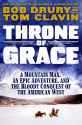
>Previously published under the title Throne of Grace
Apparently the publisher changed the title for the paperback release, the ebook version has the original title.
https://us.macmillan.com/books/9781250878588/thefirsttogowest
>>
Any unusual recs for medieval history in europe? English or french second source or primary like Gregory of Tours or Bede would be nice. I have Thomas Aquinas next to read so if a non theological related books comes up that would be nice to have a little break from it, had Saint Augustine city of god on my desk not long ago either.
>>
>>

>>25098029
Grow up, retard.
>>
>>25097984
Although it is a different subject, it is closer in here than in other active threads. I asked some time ago for books that are written from the perspective of a active participant, of any type, in conflicts or wars in Africa, South America or South-East Asia. At that time the latest read was In the Time of Madness - Richard Lloyd Parry.
I recommend it to anyone - he was boots on the ground, as a journalist and witnessed headhunting, cannibalism and the war in East Timor. He describes the grim reality without involving himself with "taking sides" or any self-censoring. I got recommended in that thread Shake Hands with the Devil by Roméo Dallaire. Such an incredible read, it is insane! If the anon who told me about it lurks in here, thank you bro. He was the Force Commander of the UN's UNAMIR missions to Rwanda when the genocide took place. Boots on the ground as well, no filter, no self-censorship, straight from himself and what he witnessed, just like Parry. No 3rd party accounts or hearsay.
If anyone here has any other titles that fit the above, please do let me know. As for everyone overall, read these two. Parry also has another incredible one, Ghosts of the Tsunami about the tsunami that hit Japan back in 2011. Again, he was there when it happened, he helped dig out the dead children out in the aftermath etc. an amazing account of the incompetence that caused so many children deaths at Ogawa elementary school.
>>
>>25097984
any good recommendations, anyone here read something good on the topic of /his/?
>>25098185
is it any good? i heard the guy is kinda of a ripoff version of Thomas Piketty
>>

>>
>>
File: fire&blood.jpg (257.2 KB)

257.2 KB JPG
>>25097984
T.R. Fehrenbach is a very good storyteller
>>
File: IMG_8352.jpg (462.9 KB)
462.9 KB JPG
>>25102051
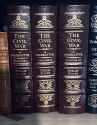
Also available in an Easton Press version.
>>
File: IMG_5111.jpg (200.7 KB)

200.7 KB JPG
>>25102350
>Some dumbass minister tries to do a double cross and switch sides but forgets the PIN code to his satellite phone and panics
>The PIN code was 123456
It’s even more comical than you make it seem.
He forgot it, tried to guess it, FAILED, failed to contact via radio as well, went to a town called BANANA, and had to ask an oil rig engineer with a satellite phone if he could call his boss about the secret military operation he was in.
>>
>>
File: 81sEFMbRrPL._SL1500_.jpg (178.5 KB)

178.5 KB JPG
Michael Howard's The Franco-Prussian War: The German Invasion of France 1870–1871
>In 1870 the German Chancellor Otto von Bismarck ordered the Prussian Army to invade France, inciting one of the most dramatic conflicts in European history. It transformed not only the states-system of the European continent but the whole climate of European moral and political thought. The overwhelming triumph of German military might, evoking general admiration and imitation, introduced an era of power politics, which was to reach its disastrous climax in 1914.
>>
>>25102058
From my TBR list
>1177 BC - Eric Cline
>>25102286
>A Serbian friend of mine told me these books tend towards Ottoman Empire hagiography and I want to find something more critical to balance it out
I'm reading Osman's Dream right now and it doesn't come off as a hagiography at all. Finkel is pretty honest about how destructive Ottoman fratricide was, and the role of the janissaries in the long-term decline of the empire.
>>
>>
File: A_Distant_Mirror.jpg (61.6 KB)

61.6 KB JPG
>>25097984
A Distant Mirror
It would be great had the author not constantly interjected with her personal opinions that boil down to "this guy was a humongous piece of shit". This is why in college classes you are told that you need to separate your biases and personality from whatever you are studying.
>>
File: 717awET1Q+L._SL1360_.jpg (131.7 KB)

131.7 KB JPG
>>25097984
This is basically a transcript of Mike Duncan's Roman history podcast.
>>
>>25103913
I'm not that guy, and I haven't read that book, but I have read Platt's book on the Taiping Rebellion, and was pretty disappointed with it. A good 70/80% of the book about the Taiping Rebellion is sourced from western people at the fringes writing about what was happening.
>>
>>
>>
>>
>>
>>
>>25104488
Then no, Russia could not have likely won as Japan was actually an industrialized nation at that point and had an organized military structure unlike Russia which was so backwards that they practically had serfdom.
>>
>>25104495
You are not understanding, they were literally winning the war. Military analysts and historians mostly agree on that. The Russians just didn't realize it themselves until after they hastily signed the peace deal.
>>
File: 71sG0OUtfdL._AC_UF1000,1000_QL80_.jpg (88.1 KB)

88.1 KB JPG
This book was great for actually showing the damages of colonialism rather than just saying colonialism bad and white people evil. It's about what was going in various areas of the British Empire at the time it reached it's greatest extent in 1923.
Only he goes pretty in depth in explaining what the societies in these places were like before the British came in, the exact policies and actions by the British that intentionally and unintentionally destabilized things, and how shitty life became for the natives as a direct result. I can be pretty chuddy about European imperialism and even I couldn't help but going "oof" at various times.
>>
>>
>>
>>
>>25104407
I found podcast books to be much worse than the podcasts. It doesn’t survive the format transition. On a podcast each little snippet exists unto itself, an episode is an episode. Bound in a book they scream out for a narrative thread, and suddenly you realize podcasters don’t really know how to carry a coherent single narrative, it’s all piecemeal.
>>
>>
>>
>>
File: 815cbqGIBaL._SL1500_.jpg (178.5 KB)

178.5 KB JPG
>"The Nazi Seizure of Power" by William Sheridan Allen examines how the Nazi Party rose to power in a small German town, Northeim, from 1922 to 1945, focusing on the methods used to undermine democracy and establish a dictatorship.
https://www.goodreads.com/book/show/60106026-the-nazi-seizure-of-power
>>
File: rw3.jpg (2.6 MB)

2.6 MB JPG
>>25097984
RIGHT WING BASICS
http://drive.google.com/drive/folders/1pi20Rr9_BxBbMIfcZUTTGslfZTifEiC m
google drive easy to use interface
download the whole blob or pick and choose
.
.
fresh oc the collection was updated woo hoo
>>
>>
>>
File: static-e5d0f3d3-562c-4f21-b913-c49ed17dd194.jpg (181.4 KB)

181.4 KB JPG
>diplomats with too much autonomy and war hawks who own mass media cause death and suffering on an unprecedented scale, suffer little to no consequence: The Book
>>
>>
>>
>>
>>
>>
>>25106587
>CHUDDIES UNITE!
>FILTER OUT ANY POSSIBLE SOUL OR SENSE!
>READ ONLY THIS!
Shalom
"Eugenics" is long discredited. No it isn't merely breeding. For instance, you cannot breed out poor vision or a recessed chin. You must feed your man and woman properly to improve the next generation. Your Zionist handlers know this now, get with the program, you dumb fucks.
>>
File: 71i+YvlXJzL._AC_UF894,1000_QL80_.jpg (79.6 KB)

79.6 KB JPG
I've bought this but havent read it yet.
Any of you guys read it?
>>
File: 81UzrPVYqUL._AC_UF894,1000_QL80_.jpg (120.5 KB)

120.5 KB JPG
>>25100290
>this?
some of V. S. naipauls fiction and travel books. As he was an east, west-indian he was allowed to say things about africans or indians, for example, that white authors were not.
>>
>>
>>
>>
>>
File: firefox_BCdzuAl8qd.png (521.9 KB)

521.9 KB PNG
i'm looking for an epub of pic related, the 1582 or 1782 edition. anyone know where i could find it? i find it easy enough as pdf (like here https://bibliotecadigital.jcyl.es/i18n/catalogo_imagenes/grupo.do?path =10068805) or html, but not epub
the epub i found is for a 1984 edition, and it's translated into modern spanish. but i would rather read the original version, old spanish is very easy to understand if you know modern
>>
>>
>>25107399
https://annas-archive.li/search?index=&page=1&sort=&display=&q=Ruy+Gon z%C3%A1lez+
Look on Anna’s archive and try variations of the authors name or books name.
The 1782 editon is on here but they are .zip files and I have had problems with viruses with those on the past so be careful.
>>
File: Screenshot 2026-02-24 172919.png (1.7 MB)

1.7 MB PNG
>>
>>
File: A1-C0VL+96L._SL1500_.jpg (272.3 KB)

272.3 KB JPG
>>25107392
A History of Greece by J.B. Bury
History of Rome by Michael Grant
>>
>>25107332
I accept your concession
>>25107376
Dishonesty gets you places anyways. Why do you think the Jews are in power in the first place?
>>
>>
File: bom-400.jpg (64.8 KB)

64.8 KB JPG
>>25097984
If you are interested in the history of Argentina, Colombia, the US (especially american interventionism) and SEA
>>
File: destruct1.jpg (3.1 MB)

3.1 MB JPG
>>25107122
why tho?
>>25107151
shalom who?
eugenics works fine for plants and animals and used to work on people too but then medical technology came along and allowed all kinds of dysgenic people to reproduce - this will end badly
>>
>>
>>25108433
Desire of eugenics arrives out of an insecurity regarding the depth of the soul and ones own genetic makeup. Owing to this, It has often been employed by members of the cabal (who are disproportionately Jewish) who learned its value as psychological terror to hypnotize lower classes during the holocaust. The retarded man Epstein and the savage ruling politicians of Israel are good examples.
Material conditions (from nutrition to education) have been proven to increase physical attributes including different measures of cognitive processing with in ones own life and intergenerationally. IQ is the golden calf that eugenicists use, claiming it can't be refined, but the average IQ of the human population has increased by around 20 points in the last 100 years, particularly increasing in societies with better nutrition and more universal education. IQ was created as a test to measure lagging education in French schools, and was originally administered repeatedly to measure gains in students' general ability, but at some point became a perverse and idiotic unit to quantify human value, and has been made accordingly opaque and marketed with lies that ones iq cannot be increased with repeated testing. This is simply not the case.
And if it were the case that scientists found a perfect IQ test that truly measured out a static hereditary processing ability, it would nevertheless remain obvious that it is targeting a measly window in the expanse of intelligence, which itself is only a meager part of consciousness. I have seen IQ proponents sincerely argue that West Africans with minimal education and nutrition who are bi/trilingual across language families are intellectually operating "20 points lower" than literally retarded individuals. I have seen them say "you cannot increase IQ with education", it is a laughably idiotic movement especially in regard to its own pseudoscience.
Humans are now becoming stupider, and it is because of the lack of motivation in society (humans are social creatures, and society has essentially been replaced by globalized algorithmic slop echo chambers since the proliferation of the iPhone and social media). Humans don't have communities, and therefore no reward structure, their intelligence and consciousness atrophies with their meaninglessness, their physiognomies morph into vulgar expressions of their misery and fetishes, we are failing as a species for reasons far more obvious than we would like to acknowledge.
>>
>>
>>
>>
File: dancing-and-smiling-joker-in-colorful-suit-holding-playing-cards-and-stick-in-hands-isolated.jpg (58.7 KB)

58.7 KB JPG
Do any great histories about jesters exist?
>>
>>
File: A1IXzxCqCvL._SL1500_.jpg (488.9 KB)

488.9 KB JPG
>>25107428
that site and similar are blocked by my ISP, it's fucked up. but i checked a while ago in some mirror and i could not find a propertly formatted epub, only pdfs or html versions
i'll recommend pic related since we are at it, it was recommended a while ago in another thread like this. i found it very enjoyable and interesting
>>
>>
File: 9780226640921.jpg (19.8 KB)

19.8 KB JPG
>>25108790
I have this (Havent read it)
>>
>>
>>
>>
>>25108777
People have been selectively breeding and giving their children growth hormones for the Olympics for decades. My point is not that ceilings of physical attributes aren’t changed by genetics, my point is that human consciousness is something that can be endlessly refined, and it’s infinitely more complex than any abstraction we can try to find with genetics. The only people looking for consciousness in abstraction are naturally going to be individuals with no clue as to what consciousness is; who have renounced the ability to refine their own. I’m warning that the very concept of abstracting and qualifying life into genomes will necessitate the annihilation of the soul.
>>
>>25108777
>Uh oh. My backward idealism is being challenged with knowledge. Better whip out the meme words... umm. COPE! Yeah. There everything back to normal.
Breeding is not eugenics. You can literally nurse any and every organism back to health with proper eating habits and food sources. We are all generationally getting dumber, malnourished, deformed, and it is ALL thanks to the poisonous foods and god awful "medicines"
You will not breed it out till you fix the fucking food sources.
>>
>>
>>
>>
>>
File: Hudson - The Collapse of Antiquity.jpg (44.1 KB)
44.1 KB JPG
>>25110976
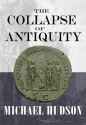
Hudson books
>>
>>
>>
Dan Jones' War of the Roses is a surprisingly accessible read. Most English history is about as dense as Chinese webnovels, needing a fair bit of background knowledge (The 52 sacred lakes of jade dong province mean this, so this person there at that time was a Lancastrian cannibal wizard!) but for all this is lightweight it's great and captures all the appropriate points.
>>
>>
>>25111660
The more academic histories do. It sometimes took me ten minutes per page of some because they'd present some name or location or thing with no context as though it were important context. So I'd stop and look it up. Then they'd never touch on it again.
Funnily enough I've read very pretentious papers on the difference between ritual and sacrifice and the division of prayer that were less wanky than some history books.
>>
>>25111664
I get most of those references historians might make, but every once in a while I'll pick up a book featuring direct quotations from the primary sources with no translation and it grinds me gears every time
>>
>>
>>
File: Ghost Wars Steve Coll.jpg (122 KB)

122 KB JPG
Still reading Ghost Wars. That Diary of a Napoleonic Foot Soldier book might be the next one I read.
>>25101743
Incredibly grim image.
>>
File: Survival in the Killing Fields by Haing S Ngor.png (943.5 KB)

943.5 KB PNG
>"Nothing has shaped my life as much as surviving the Pol Pot regime. I am a survivor of the Cambodian holocaust. That's who I am," says Haing Ngor. And in his memoir, Survival in the Killing Fields, he tells the gripping and frequently terrifying story of his term in the hell created by the communist Khmer Rouge. Like Dith Pran, the Cambodian doctor and interpreter whom Ngor played in an Oscar-winning performance in The Killing Fields, Ngor lived through the atrocities that the 1984 film portrayed. Like Pran, too, Ngor was a doctor by profession, and he experienced firsthand his country's wretched descent, under the Khmer Rouge, into senseless brutality, slavery, squalor, starvation, and disease -- all of which are recounted in sometimes unimaginable horror in Ngor's poignant memoir. Since the original publication of this searing personal chronicle, Haing Ngor's life has ended with his murder, which has never been satisfactorily solved. In an epilogue written especially for this new edition, Ngor's coauthor, Roger Warner, offers a glimpse into this complex, enigmatic man's last years -- years that he lived "like his country: scarred, and incapable of fully healing."
>>
>>
>>25111148
alyssa liu (Chinese-American figure skater who just won a bunch of medals) is a test tube baby who was selected from best embryos and sperm of her parents iirc.
>>25108650
>Humans are now becoming stupider, and it is because of the lack of motivation in society
>we are failing as a species for reasons far more obvious than we would like to acknowledge.
>>25109885
>my point is that human consciousness is something that can be endlessly refined
so why does this sound like (non-genetic based) eugenics? People were unironically calling physical fitness "fascist" and "white supremacist" a few years back (and still are), and that's nothing but being physically healthy. What's the difference in wanting to refine/improve human consciousness/intelligence so that we aren't becoming more stupider?
>>
>>25112083
>What's the difference in wanting to refine/improve human consciousness/intelligence so that we aren't becoming more stupider?
I think the real pertinent thing is to preserve the things that made for the peak of our civilization. Everyone should be given the best possible conditions for education, which just happened to be the case in the late-'90s-'00s.
>>
>>
File: Screenshot from 2026-02-27 08-11-19.png (119.7 KB)

119.7 KB PNG
>>25111964
>In A Table for Fortune, National Book Award-winner William T. Vollmann depicts from the balcony-level of history the last half-century of American politics, war, and life. At once a family drama, bildungsroman, and national epic, this 3,000+ page, four-part novel may be our most ambitious writer's most ambitious novel.
How fucking epic are the new Vollman books gonna be
>>
>>25097984
>>25098029
Carlyle's French Revolution
>>
>>25111959
it's very good if you are interested in late Qing history. Most Chinese today only remember Lin Zexu and Li Hongzhang, but Zuo Zongtang probably did more for the (temporary) survival of the dynasty than the two of them put together. He didn't lose a single conflict that he was the main general in. Without him the Taipings would have stuck around a lot longer and Xinjiang probably would not be part of China today (it would be part of Russia)
>>
>>
File: 81m2+PujtZL._AC_UF1000,1000_QL80_[1].jpg (102.4 KB)
102.4 KB JPG
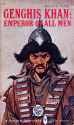
Harold Lamb wrote a bunch of narrative histories of various conquerors, emperors, the Crusades, and Central-East Asia. They aren't academically rigorous but make for good introductions.
>>
>>25108777
This is a different matter considering how politically fueled Olympics are. The gold was good PR to reinforce their own narrative, and you fell for it, losing the chance to recognize anything beyond it. For figure skating, I recommend watching Kamila Valieva.
>>

>>
File: grand strategy empire.jpg (338 KB)

338 KB JPG
>>25097984
How good are these books? I want to get them on Sunday
>>
>>
>>
File: A1K6TZwSRVL._SL1500_.jpg (336.1 KB)

336.1 KB JPG
The Rise and Fall of Ancient Egypt
>>
>>
File: Keys of Egypt.jpg (465 KB)

465 KB JPG
>>25097984
I read this late last year and absolutely loved it. Most of it is a narrative of his life which was pretty eventful. If you're into the history of archeology or just find the idea of rediscovering lost civilizations exciting then this is a must-read for you.
>When Napoleon invaded Egypt in 1798, his troops were astonished to find countless ruins covered with hieroglyphs -- remnants of a language lost in time. Egyptomania spread throughout Europe with their return, and the quest to decipher the hieroglyphs began in earnest, for it was understood that fame and fortune awaited the scholar who succeeded. In rural France, Jean-Francois Champollion, the brilliant son of an impoverished bookseller, became obsessed with breaking the code of the ancient Egyptians. At sixteen years of age he decided that he would dedicate his life to the decipherment of hieroglyphs. Amid political turmoil in France caused by Napoleon's meteoric rise and catastrophic fall, Champollion was hounded, exiled, and even charged with treason, yet he continued to strive for the key to the ancient texts. In 1812, Champollion made the decisive breakthrough, beating his closest rival, English physician Thomas Young, to the prize and becoming the first person to be able to read the ancient Egyptian language in well over a thousand years. The Keys of Egypt is a true story of adventure, obsession, and triumph over extreme adversity.
>>25113248
Nice
>>
File: hiroshima-nagasaki-1[1].jpg (87.1 KB)

87.1 KB JPG
Imperial Japan was epic. But like other greats of the time, it went out bad.
>>
File: 91sGPV1flOL._SL1500_.jpg (277.4 KB)

277.4 KB JPG
War on the Run: The Epic Story of Robert Rogers and the Conquest of America's First Frontier - John F. Ross
>Often hailed as the godfather of today’s elite special forces, Robert Rogers trained and led an unorthodox unit of green provincials, raw woodsmen, farmers, and Indian scouts on “impossible” missions in colonial America that are still the stuff of soldiers’ legend. The child of marginalized Scots-Irish immigrants, Rogers learned to survive in New England’s dark and deadly forests, grasping, as did few others, that a new world required new forms of warfare. John F. Ross not only re-creates Rogers’s life and his spectacular battles with breathtaking immediacy and meticulous accuracy, but brings a new and provocative perspective on Rogers’s unique vision of a unified continent, one that would influence Thomas Jefferson and inspire the Lewis and Clark expedition. Rogers’s principles of unconventional war-making would lay the groundwork for the colonial strategy later used in the War of Independence—and prove so compelling that army rangers still study them today. Robert Rogers, a backwoods founding father, was heroic, admirable, brutal, canny, ambitious, duplicitous, visionary, and much more—like America itself.
>>
>>
>>
File: Sasanian_Empire_621_A.D.jpg (316.8 KB)

316.8 KB JPG
Any good book on the Sassanid Empire?
>>
>>
File: 81Ul1jdfNpL._SL1500_.jpg (223 KB)

223 KB JPG
>"Fateful Lightning: A New History of the Civil War and Reconstruction" is a book by historian Allen C. Guelzo that provides a comprehensive account of the Civil War and its aftermath, covering key events, figures, and the impact on American society. It explores the political, social, and economic developments during this tumultuous period in U.S. history.
>Oxford University Press
>592 pages
>ISBN 978-0199843282
>>
File: mesoamerican literature chart WIP TEMP EDIT.jpg (3.4 MB)

3.4 MB JPG
Mesoamerican history nerd here, as usual I'll shill "When Montezuma Met Cortes"
It's a fascinating historiography and comparison of different accounts of the Cortes expedition/the fall of the Aztec, examining what the biases of each account is and how different tellings contradict one another, and how they have been retold and distorted over time and leveraged for different ideological/national interests
Plus, it gets into a lot of the personal as well as political background of both various Spanish and Aztec historical figures: It's one of the better books I've seen that tackle the political dynamics and motives of other Mesoamerican kings and officials like like Xicomecoatl, Ixtlilxochitl II, Xicotencatl II, etc, which is important as very few sources do this despite the fact their actions and motives played as big a part of how events played out as that of the (more commonly covered) Spanish officials. This is something I get into myself (including some observations even restall doesn't get into, tho moreso in even longer posts not linked here that me/friends have posted on other sites) here: pastebin.com/h18M28BR and arch.b4k.dev/v/thread/640670498/#640679139 and desuarchive.org/his/thread/16781148 /#16781964 and desuarchive.org/k/thread/64434397/# 64469714 + the other posts in that one I link and the two directly preceding it
I don't agree with absolutely every conclusion Restall makes but it and his prior work "7 Myths of the Spanish Conquest", are pretty much mandatory reading for a decent understanding of the topic just to get an idea of how the different primary sources conflict with each other and skew details
Also pic related is WIP reading chart me and some friends are working on. I'll probably end up removing Broken Spears from the Conquest section for Collision of Worlds and/or maybe add a few books on the conquests of West Mexico and the Maya regions since currently this is very Central Mexico/Aztec focused, when in reality there were centuries of campaigns and expeditions against Mesoamerican states in other areas: The last Maya kingdoms didn't fall to 1697
If people want more suggestions let me know
>>

>>
>>
File: 91ioPAK-tFL._SL1500_.jpg (143.6 KB)

143.6 KB JPG
>>
>>
>>25117671
I haven't read it, but I went ahead read the first chapter just now. It's mostly fine, though you can tell it is dated and/or not written by a Mesoamericanist, and there's a few outright errors or notable omissions
EX:
>when going over the deaths of the previous 3 emperors, It doesn't mention that Tizoc was probably assassinated by his own nobility due to his military failures threatening the stability of the empire
>it talks about bows as a key weapon of war when bows were at least to a degree viewed as hunting implements more then weapons of war, the atlatl instead was the projectile weapon associated with refined organized warfare, and
>his description of Aztec warsuits/armor is incorrect, they were padded cloth (or wood/bamboo for helmets and shields) covered in a layer of feather mosaic, the mosaic forming things like the jaguar spot design, they were not typically made from actual pelts/skins of the animals they were themed after, nor were most warsuit designs even animal themed. The idea of jaguar and eagle "orders" is also contended by some
>It says that girls didn't go to schools, but there are sources to the contrary which say they did, so it's a subject of some debate
>Thomas conflates a few different, mostly unrelated, myths, beliefs and gods when he describes Huitzliopotchli fighting the moons and the stars every day and how the world will end
>Ometeotl probably didn't exist, and Thomas tends to err towards specific models of godhood in Aztec religion that some would object to
And so on.
I'd be less concerned about details like that and more concerned about if Thomas conveys the political dynamics on the Mesoamerican side of things with what and why different kings and officials in different city-states did what they did during the conquest: So many books and other sources about the conquest near exclusively focus on the perspectives, motives, background, and politics of the Spanish figures and side of things. For example, does Thomas convey that it is specifically Ixtlilxochitl II of Texcoco and his followers which allied with Cortes, and he did so because he previously lost a succession dispute where the Mexica backed a different candidate for the Texcoca throne? Does he explain that the Cholula massacre and sack of that city may have been motiivated in part by the fact that Cholula had recently switched from being a Tlaxcalteca ally to a Mexica one and the Tlaxcalteca used the sack as an excuse to put the city back within their sphere of political influence? Does he repeat the common misconception that Mexica subjects sided with Cortes due to resenting Mexica rule, or does he explain how the hands off hegemonic political model the Mexica had left subject states with their own identity, agency, and ambitions and this enabled opportunistic defection, side switching etc, like what we see with Cortes?
Those are the kinds of details and insight that makes Restall's work in "When Montezuma..." so good, in my opinion.
>>
>>25118285
Okay thank you!
Thomas tries to put the mexica's perspective in as I see it, he says that Tlaxcala was following its own political agenda by allying with Cortes, as did others. He says that the other states resented the Mexica rule but also that it was not because their demands for tribute was predatory of their thirst for captive. He may not as well versed in Mexica internal political as you say, but I have no idea if those analysis were available when he wrote the book.
I don't remember him saying that bows were a favored instrument of war of the Mexicas, as he often talks subsequently of their use of the atlatl and that most of their damage inflicted on the castillians were done by rocks.
Are you an amateur on the subject or is it a professional interest?
>>
File: 61AuR0P1+AL._AC_UF1000,1000_QL80_.jpg (69.2 KB)

69.2 KB JPG
>>25118332
How is picrel Aztecanon?
>>
>>
>>25115592
https://www.goodreads.com/book/show/3450544-decline-and-fall-of-the-sa sanian-empire