Thread #25112385

File: uuoron5ysf011.jpg (96.5 KB)
96.5 KB JPG
Who was he writing for? Who was the target audience of War and Peace?
26 RepliesView Thread
 Showing all 26 replies.
>>
>>
>>25112399
I thought so, which is odd because this leads to my suspicion that Dutton and Woodley were onto something with their intelligence book. I can't find a normie thay would even slog through Anna, yet alone W&P
>>
>>
>>
>>
other nobles in my opinion. war and peace originally came about as the first in a trilogy about the decemberists, which was a noble movement born out of the napoleonic wars. if i had to guess he wanted the try and express the sentiment of the movement in a way that other nobles would connect to and maybe they would become more open to treating their fellow man better
>>
>>
>>
>>
He wrote it for me :)
On a serious note though, everything he wrote has a ton of value in it, even the stupid stuff like "What is Art?". He never tries to bullshit you in any manner, and just tells you what he honestly thinks, and writes it in a way that is simple to understand, even if what he is talking about is complex. It's much more refreshing reading someone like that, even if I disagree with what he is saying.
>>
>>25112385
the russian reading public, so mostly educated nobility. maybe some scholars of the day, I guess. boundaries were more porous then. but I can't imagine the long historical analysis interludes to be targeted toward anyone other than academics. shoutout my boy Pierre
>>
>>25112385
Not me, he wrote Anna Karenina for me however because I for the life of me can’t understand women, it didn’t help in any way though it was a masterpiece.
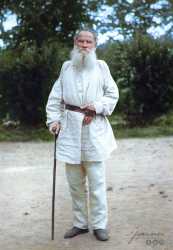
Can I just point out, look how fucking dapper this fellow was even as a bald 80 year old.
>>
>>
>>25112408
>which is odd because this leads to my suspicion that Dutton and Woodley were onto something with their intelligence book
The Flynn effect only started failing in the 1970s or so though, the Russian peasantry would have been retarded at large and they demonstrated as much by falling for communism rather than taking after Tolstoy's mystic Christianity
>>
>>25114756
Not everything, but his general point of art requiring a utilitarian function I agree with. In an age of AI it’s kind of impossible not to agree with that if we want to preserve the integrity of art and artists.
>>
>>
>>25112408
He writes fairly accessibly. Books used to be mass entertainment and people were eager to consume more of the same in the same way people are eager to binge very long netflix shows now. Very long novels aimed at a popular audience were not uncommon (count of monte cristo springs to mind).
>>
>>
>>
>>
His slaves, for sure.
>Leo Tolstoy inherited about 330 male serfs (along with their families) at his estate, Yasnaya Polyana, in the 1840s. In the Russian system, serfs were usually counted as “male souls” for taxation purposes, so the total number of people living under his ownership (including women and children) would have been significantly higher — likely well over 1,000 individuals.
>>
>>
>>25115661
He wrote a story about this called The Devil and his wife only discovered it after he died; it ends with the narrator either killing himself or killing the serf he has adultery with (rare story with 2 endings)
>>
>>