Thread #16899914


Hurewicz space edition
ITT: discuss mathematics
Previous: >>16876118
312 RepliesView Thread
 Showing all 312 replies.
>>
>The Bonnet problem asks when just a bit of information is enough to uniquely identify a whole surface.
>For the first time, mathematicians have found an example of a compact doughnutlike surface (as seen above) that shares its local geometric information with another surface, despite having a completely different global structure.
https://www.quantamagazine.org/two-twisty-shapes-resolve-a-centuries-o ld-topology-puzzle-20260120/
>>
File: 1615827357023.png (102.7 KB)

102.7 KB PNG
>>16899933
>quanta magazine
gtfoh
t. actual math researcher
>>
>>
File: cs.jpg (90.2 KB)

90.2 KB JPG
>Černý conjecture
Can /sci/ solve this open problem?
https://www.wikipedia.org/wiki/Synchronizing_word#Lenght
>>
>>
>>
File: G_SJez4bIAAN-5y.jpg (173.9 KB)
173.9 KB JPG
What's your favorite counter example
>>
>>16899990
It'd be cool if /mg/ had some sort of running open problem that we could agree to casually collaborate on. Something with minimal technical overhead (i.e. probably combinatorics) and which isn't particularly well-known (unlike this one, apparently) so there's a modest chance of success. Like a random one of Erdős's conjectures or something.
>>
File: PolarConvexity.gif (2.6 MB)

2.6 MB GIF
>>16900392
>>
>>
>>16900392
You are missing this definition, a necessary condition for any polygon:
https://en.wikipedia.org/wiki/Polygonal_chain
>>
>>
>>16900512
>>16900618
Yeah that's the entire point.
It looks correct at first glance then boom a pathological shape/function that ruins your theory.
Another example is the weierstrass function, the dirichlet function, the vitali set, etc
>>
>>
>>
>>16900721
>It looks correct at first glance then boom a pathological shape/function that ruins your theory.
>Another example is the weierstrass function
>the dirichlet function
>the vitali set
Those where great advances in their respective theories, if anything they helped rule out old theories or ways of thinking. Euclid's elements may have some faulty concepts, (i dont know which ones beyond missing axioms) but nowadays there is a level of precision almost similar to that of programming languages, which fail to compile due to even the slightest syntactic inaccuracy
>>
>>16900745
>>16900798
Bro it's not that complicated. Forget about the square pic, it's just an example
I just wanted to learn about other examples of pathological mathematical objects which negate very intuitive and obvious implications/statements.
It's like the trolling version of mathematics. You have good theory of something? Here is the most contrived absurd object to prove you wrong.
>>
>>
>>
>>16900809
>I just wanted to learn about other examples of pathological mathematical objects which negate very intuitive and obvious implications/statements.
>It's like the trolling version of mathematics. You have good theory of something? Here is the most contrived absurd object to prove you wrong.
Counterexamples in Calculus - Sergiy Klymchuk
CounterExamples: From Elementary Calculus to the Beginnings of Analysis - Bourchtein, Andrei; Bourchtein, Ludmila
Counterexamples in Analysis - Bernard R. Gelbaum, John M. H. Olmsted
Counterexamples in Topology - Lynn Arthur Steen, J. Arthur Seebach Jr
Counterexamples in Probability and Real Analysis - Gary L. Wise, Eric B. Hall
Counterexamples in Measure and Integration - René Schilling, Franziska Kühn
>>
>>
>>
How can I prove that there exists a subspace of a infinite dimensional vector space which is not closed?
I tried taking two convergent sequences and proving that their sum does not converge within the subspace, but that ain't working
>>
>>
>>
>>
>>
File: problem for math general.png (37.3 KB)
37.3 KB PNG
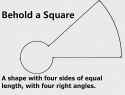
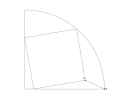
In picrelated you have a quarter piece of a unit circle. Inside there is a square. One vertex of the square is on one side of the quarter piece, the other vertex on the other side and a third one on the arc.
What is the minimum length of the distance AB?
>>
>>16899914
I think Wildberger is getting into my head. Lately I can't shake the feeling that nothing I do is "real" enough, whatever that means. It's making me question my decision to devote my life to math. Please, bros, tell me math is discovered not invented.
>>
>>
>>
>>
>>16901611
Wildberger shouldn't be the only "philosopher" whose views you consider, there are other finitists like Doron Zeilberger and of course dozens of platonists and dozens of nominalists/formalists and other positions, all of them with interesting written views. Even better, read some of the philosophical or autobiographical texts by Grothendieck (or at least a biographical work), some people find strenght on his quasi divine prose. Also, read the masters: Riemann, Cantor, Dedekind von Neumann, Gödel etc. may convince you in their own words about what they did and its importance
>>
>>
>>16899914
Is it over I'd you're a ~30yo who dropped out of high school who wants to pursue mathematics? I'm doing khan academy rn and I'm only at arithmetic with fractions and can't help but feel perpetually retarded like I'll never catch up.
>>
>>
>>
File: eclipse_pepe.jpg (56.1 KB)

56.1 KB JPG
>>16899914
H=i,j∑Pij(ci†cj+cj†ci)−σmap
>>
File: Smn(Trnt) .png (25.9 KB)
25.9 KB PNG
>>16901377
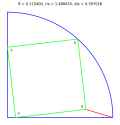
0 <= θ <= π/2
P = s*(Sin[θ], 0)
Q = s*(Cos[θ] + Sin[θ], Sin[θ])
R = s*(Cos[θ], Cos[θ] + Sin[θ])
S = s*(0, Cos[θ])
Cos[θ]^2 + (Cos[θ] + Sin[θ])^2 = (r/s)^2
(d/s)^2
= (Cos[θ] + Sin[θ] – r/s)^2 + Sin[θ]^2
= (Cos[θ] + Sin[θ] – Sqrt[Cos[θ]^2 + (Cos[θ] + Sin[θ])^2])^2 + Sin[θ]^2
θ ≈ 0.1154000604
r/s ≈ 1.4884550172
d/s ≈ 0.3970256621
θ = 0
r/s = √2
d/s = √2 – 1
>>
>>16901377
Consider the three solutions to the cubic x^3 - 5x^2 - 5x -1 = 0. The two smallest are associated with local maximums, and the largest x = 5.87936
> = 1/3 (5 + 40/(251 + 3 i sqrt(111))^(1/3) + (251 + 3 i sqrt(111))^(1/3)) (wolfram alpha)
is associated with the minimum. Call 1+x = a
Let b = sqrt(1 / [x^2 + a^2] ). Then the minimum length is equal to b^2(1 + a^2) - 2ba + 1 = 0.0697166932857. The maximum formulas are a lil diff with negatives in diff areas
It's just algebra and calculus, no special tricks I saw
>>
>>
>>
File: animation.gif (3.3 MB)
3.3 MB GIF
>>16901377
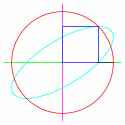
360 frames
15 seconds
24 frames per second
θ = k/180*Pi
s = 7
r = s*Sqrt[Cos[θ]^2 + (Cos[θ] + Sin[θ])^2]
line segment 1:
vertices: (–2*s, 0) and (2*s, 0)
edgecolor: (0, 1, 0, 1)
line segment 2:
vertices: (0, –2*s) and (0, 2*s)
edgecolor: (1, 0, 1, 1)
ellipse:
equation: s^2 – y^2 = (x – y)^2
edgecolor: (0, 1, 1, 1)
circle:
equation: x^2 + y^2 = r^2
edgecolor: (1, 0, 0, 1)
square:
vertices:
s*(Sin[θ], 0)
s*(Cos[θ] + Sin[θ], Sin[θ])
s*(Cos[θ], Cos[θ] + Sin[θ])
s*(0, Cos[θ])
edgecolor: (0, 0, 1, 1)
line segment 3:
vertices: s*(Cos[θ] + Sin[θ], Sin[θ]) and (r, 0)
edgecolor: (0, 0, 0, 1)
display:
|x| <= 1.01*(Sqrt[5] + 1)/2*s
ditto for y
>>
File: Alphakek.jpg (302.4 KB)

302.4 KB JPG
https://chan.alphakek.ai/sci/res/8.html
>>
>>
>>16901377
>>16903825
according to wolfram alpha, the exact answer given my init instructions is the root of 5x^6 - 38x^4 + 60x^2 - 4 near x = 0.264039. Or the root of 5x^3 - 38x^4 + 60x - 4 then square your answer to a number near .26
>>
>>
>>16903899
I should say that most of the problems with the Quanta article come from the arxiv preprint being retarded
https://www.quantamagazine.org/physicists-take-the-imaginary-numbers-o ut-of-quantum-mechanics-20251107/
https://arxiv.org/abs/2504.02808
>>
File: Screenshot_20260202-131749-433.png (83.6 KB)
83.6 KB PNG
https://people.math.ethz.ch/~salamon/PREPRINTS/FERMAT.pdf
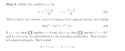
Can somebody explain to me the reasoning behind the u and v equations?
I can see they make perfect algebraic sense but why halve the addition and substraction of x and y?
How does one reach such equations?
Also, if there is a more detailed transcription of Eulers proof for n3 I'd appreciate it.
>>
>>16904220
>they satisfy u+v=x, u-v=x
That's the key. The author doesn't say it, but
[math]u+v=x[/math]
[math]u-v=y[/math]
is a system of equations you can solve by taking x and y as constants, this what you start from to obtain eq. 18.
>>
>>16904220
>why halve the addition and substraction of x and y?
You don't know what taking two numbers, adding them and dividing by two means?
You don't know what taking two numbers, subtracting them and dividing by two means?
Draw a number line. Choose two points x and y. What number represents u? What number represents v?
>the reasoning behind the u and v equations?
Well he uses the variable change for the rest of the proof, so the reason why he did the swap lies in there.
>Step 4. u is even and v is odd.
So, he proves in step 4 that u is even and v is odd. But this can't possibly be true, since (7+3)/2 = 5 and (7-3)/2 = 4, and this will be true for any chosen pair of odd numbers. So right off the bat we have a contradiction.
>>
>>
>>
>>
>>
>>16904220
>Can somebody explain to me the reasoning behind the u and v equations?
Because you can factor the LHS of [math] x^3+y^3=-z^3 [/math] into [math] (x+y)(x^2-xy+y^2) [/math], and the general idea is that [math] x+y [/math] and [math] x^2-xy+y^2 [/math] are coprime or near-coprime, so if their product is a cube then they must individually be cubes or close to cubes. So it's natural to make a change of variables to simplify these two factors. [math] u=\frac{x+y}{2} [/math] is just the first factor; division by 2 implicitly includes a parity condition, since you already know [math] x+y [/math] is even, so may as well.
As for [math] v=\frac{x-y}{2} [/math], that then just makes [math] x^2-xy+y^2=u^2+3v^2 [/math] work out nicely; in particular it decouples the variables so there's no cross-term. Again, division by 2 implicitly works in the parity condition.
This is a common substitution in general for these sorts of diophantine equations, particularly when you know two values have the same parity.
>>
>>16904329
LLMs simply aren't at the point where they can make novel mathematical insights. This paper is basically just figuring out which conjectures are the lowest of low-hanging fruit, which evidently nobody cared enough about to even think about. The paper pretty much acknowledges this, too:
>One reason why it seems to be happening so frequently with AI-generated work on Erdős problems is that the solutions are so simple that they would not attract attention if they originated from humans. For instance, Erdős-1089 is answered by an offhand remark in a 1981 paper [BB81], where the authors seemed unaware that they had resolved an Erdős problem.
>In fact, for all of the AI-generated solutions which have not yet been located in the literature, we find it highly plausible that they were also discovered before by humans years ago (perhaps implicitly, as special cases of more general theorems), but were never published because they were not considered important enough.
>>
>>
>>16904373
Yes, kind of.
That being said I am also a math researcher and I've been dealing with some existential dread as a result of AI.
Like most mathematicians, my skill at carefully cultivating arguments is something that I take deep, deep pride in. To see machines be able to replicate some of this ability is... disconcerting.
But I know that this is a deep, dense fog: the truth will eventually shine through. Someone will have an insight akin to Godel at the start of the 20th century, relating to the ontological and epstemic basis of mathematical truth.
>>
>>16904373
Forgot to mention: I am >>16904456
and not >>16904347
>>
>>
>>16904459
I do combinatorics/probability... so the exact sort of stuff Erdos did.
I don't know much about Galois theory. My school has allowed me to get pretty close to doing a PhD without doing any courses in abstract algebra. I need to self-study it.
>>
>>
>>16904456
Tb h I think this is going to be a very important year because reinforcement learning for math and programming will be scaled up significantly
We will see how far they can push those systems and there will be gains - be will also see if there's a ceiling and if they're missing something fundamental
Or they'll close the loop and it's over
>>
File: WeierstrassFunction.svg.png (80.5 KB)
80.5 KB PNG
>>16900392
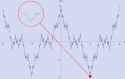
Your bad example aside, the concept of fractal geometry began as a perfomative contradiction to the assumption that all continuous curves are differentiable.
A fuckton of proofs had to be re-evaluated because of pic related.
>>
>>16904456
>>16904470
I think we're just about at the plateau for LLMs' mathematical ability barring some really major breakthrough which who knows when it'll happen. There's really not that much good quality written material on most research-level topics to build semantic connections through unsupervised learning, and RL is a very limited way of inducing novel connections because you're ultimately still only training it on "solved" problems (it's not like, say, coding, where the emphasis is mostly on being a workhorse with a repertoire of standard tools rather than being genuinely creative). Maybe I'm wrong, time will tell, but I just don't see LLMs achieving even "good graduate student" levels without some fundamental new understanding in NLP representations.
>>
>>16904293
>What number represents u?
A point in the middle of x and y ?
>What number represents v?
The distance to that middle point ?
Sorry, that still feels too far for me. How is choosing those two values specifically infered from a number reduction attempt?
>>16904333
>This is a common substitution in general for these sorts of diophantine equations, particularly when you know two values have the same parity.
I want to know more about these.
Any good book on Diophantine equations you would recommend?
>>
>>16904466
Hahaha I haven't read any of his papers, interestingly enough. Most of my knowledge of what he did came through the seminal text by Alon and Spencer called The Probabilistic Method. I'd recommend reading it if you've got some familiarity with graph theory/combinatorics.
You can learn about his life through The Man who Knew Infinity.
>>
>>
>>16904499
>Any good book on Diophantine equations you would recommend?
Unfortunately it's not really my field so I don't have a huge amount of experience with the textbooks. If you want elementary approaches to Diophantine equations, I'd imagine you're best off looking for either something from early last century or (probably more readable) something Olympiad-focused. A quick google gave me this:
https://mathematicalolympiads.wordpress.com/wp-content/uploads/2012/08 /an_introduction_to_diophantine_equ ations__a_problem_based_approach.pd f
which seems pretty good.
>>
>>
>>
>>
File: animation.gif (3.3 MB)

3.3 MB GIF
>>16903665
ellipse: r^2 – x^2 = (x – y)^2
circle: x^2 + y^2 = r^2
>>
>>
File: download.gif (4.1 KB)

4.1 KB GIF
>>16901377
Input without braces and most commas:
(y – x)^2 + x^2 – r^2 = 0
(y – 0)/(x – r) = D[(y – x)^2 + x^2 – r^2, y]/D[(y – x)^2 + x^2 – r^2, x]
d = Sqrt[(x – r)^2 + (y – 0)^2]
r = 1
Solution 2 of 4 without commas:
d ≈ 0.2640391889203771424
r = 1
x ≈ 0.76019682008823566578
y ≈ 0.1105039736386732746
URL:
https://www.wolframalpha.com/input?i=%7B%28y+-+x%29%5E2+%2B+x%5E2+-+r% 5E2+%3D%3D+0%2C+%28y+-+0%29%2F%28x+ -+r%29+%3D%3D+D%5B%28y+-+x%29%5E2+% 2B+x%5E2+-+r%5E2%2C+y%5D%2FD%5B%28y +-+x%29%5E2+%2B+x%5E2+-+r%5E2%2C+x% 5D%2C+d+%3D%3D+Sqrt%5B%28x+-+r%29%5 E2+%2B+%28y+-+0%29%5E2%5D%2C+r+%3D% 3D+1%7D
>>
File: heptagon.png (26.4 KB)

26.4 KB PNG
What is the maximum area of a rectangle which exists inside of a regular heptagon of unit area?
>>
>>16905156
semi-half assed math gave me that given a unit side, the area would be (csc^2((3 π)/14) (4 + csc(π/14) (4 + csc((3 π)/14)))^2 tan(π/7))/(16 (8 + 8 cot(π/7) cot((3 π)/14))) = 2.28719.
So divide that by the polygon formula for 7
>>
>>16898099
>>16900751
>>16901197
Are you still around? What do you think of this exposition? Maybe the references can help you
>Complex analysis: a brief tour into higher dimensions. R. Michael Range. Am. Math. Mon. 110, No. 2, 89-108 (2003).
>>
File: download.gif (4 KB)

4 KB GIF
>>16905100
A = (x, y)
B = (r, 0)
> (y – x)^2 + x^2 – r^2 = 0
orbit of A
> (y – 0)/(x – r) = D[(y – x)^2 + x^2 – r^2, y]/D[(y – x)^2 + x^2 – r^2, x]
slope of line AB = slope of line perpendicular to orbit
> d = Sqrt[(x – r)^2 + (y – 0)^2]
distance between A and B
> r = 1
given radius
> d ≈ 0.2640391889203771424
15/2*d^2 = 19 – 4*√34*Cos[(a – π)/3]
a = ArcCos[2461/(1088*√34)]
>>
>>16905156
you can get a first estimate by considering the circumcircle and incircle. doing some (not semi half-assed) math, you get the bound 1+cos(2π/7) = 1.62... ≤ A ≤ 2. here we've taken the circumradius R = 1 which is why i get a result different from the other answer.
>>
>>16905290
i think setting a radius (circumcircle as i've done above or incircle) to 1 is probably a better idea as it avoids having to worry about the 7-gon area. you could also set the 7-gon area to 1 but that's hard to work with.
>>
File: 1770325389674789.jpg (54.3 KB)

54.3 KB JPG
>'First course in topology' notes
>section on homeomorphisms
>"these functions are the analogues of bijective linear transformations for vector spaces, (...) diffeomorphisms between manifolds, etc
>>
File: 1670396397503545.jpg (253.8 KB)

253.8 KB JPG
>>
>>
I'm trying to find the maximum of the Shannon entropy using a Lagrange multiplier, and I'm having trouble with this part of the proof
[eqn]\frac{\partial}{\partial p_i }(\lambda \sum_{p_i = 1}^k p_i - 1) = \lambda[/eqn].
Why isn't the answer [eqn]k\lambda[/eqn]
>>
>>
>>
>>
>>
>>16906474
>>16906564
it's not \frac{\partial}{\partial p_i}, it's \frac{\partial}{\partial p_J}
>>
>>
>>16906573
No guy, it's a real difference. You're doing stuff like \int_0^t f(t) dt when it's supposed to be int_0^t f(t') dt'. The t' is supposed to disappear! t is not the same as t'
p_i is some number, but the number i is the index for what type of p you're referring to. Let k equal some constant, say 5. What would the expanded sum be?
It would be like p_1 + p_2 + p_3 + p_4 + p_5. The i is used with the \sum to contract those 5 objects and write it in a smaller and more readable way. If you expand the sum, then what the hell does \partial / \partial p_i mean? All the i's are gone when expanded! That's cause the thing is written wrong. It should be some partiial with respect to either p_1, OR p_2, OR p_3, or p_4, or p_5. Which one is the choice of the writer, so call it p_J instead.
And when you do the summation, what the hell does p_i = 1 mean? Does that mean p_1 + p_2 + p_3 + p_4 + p_5 where each term equals one? You aren't changing p_i, you're changing i!
If you struggle with more stuff like this, first make sure that you're copying what the book or vid or lecturer is writing exactly, and then expand it out fully, making sure it all makes sense each step of the way.
>>
Was Paul R. Halmos the original >>>/sci/mg/ forerunner?
>>16906627
>>16906630
>>
So pythagorean theorem length element dl, area element dA, and volume element dV all come from determinants of square matrices, involving the fact that they are rotationally independent, etc, essentially they respect the 2-norm. Is there any function similar to the determinant associated with any other type of norm? Sounds kinda useless but I wouldn't be surprised if some sort of taxicab volume exists.
>>
>>16906671
>Sounds kinda useless but I wouldn't be surprised if some sort of taxicab volume exists.
No, the standard volume measure on [math] \mathbb{R}^d [/math] is unique up to scaling once you assume some basic desirable properties (Borel, translation invariant, finite on compact subsets, etc). This is uniqueness of the Haar measure; in fact, this uniqueness then proves that it's also rotationally invariant, since composing the Haar measure with a rotation gives another Haar measure.
The connection between volume measure -> rotational symmetry -> L2 norm says more about the latter (it has an inner product, and hence a larger isometry group) than the former.
>>
>>16906628
I see what you mean. Thanks for the explanation.
>And when you do the summation, what the hell does p_i = 1 mean?
Yeah I originally meant to write i = 1. That was a careless mistake.
>If you struggle with more stuff like this, first make sure that you're copying what the book or vid or lecturer is writing exactly, and then expand it out fully, making sure it all makes sense each step of the way.
The textbook that I'm working through completely glosses over computing the partial derivative of the summation as I've written above, so I wanted to work it out myself. Having not used what I learned form calculus in years, I'd say I'm pretty rusty.
>>
>>16899914
Is the yoneda lemma basically saying that however a morphism actually works is irrelevant, the only thing that's relevant is how other objects map into an object?
An object is fully determined by the way other objects map into it.
For example, if you have an inital object 0 and an object 1, and there's a morphism from 0 to 1, then the 1 object is fully determined by that morphism. So you don't really even care about the object, you just care about how other objects map into it.
Furthermore, if there are multiple morphisms into an object, then those morphisms have some (unique?) shared structure, which is 'encoded' by the morphisms between them.
>>
File: bollyn dot com .gif (8.3 KB)
8.3 KB GIF
>>
>>
>>
>>
>>16907865
Now that you say that I see the problem with my question.
No what I mean is, let's say I want to show NOT(A and B) <=> NOT A or NOT B.
I create a whole truth table, I see ok the truth/false values for each case are the same for both expression, therefore they are equivalent, and I showed that NOT(A and B) <=> NOT A or NOT B.
So my question is for the specific case where [NOT(A and B)] is false, and [NOT A or NOT B] is false. Is the equivalence also false, or is it true because both are false and thus the same?
>>
>>
>>
>>
>>16907944
>or is vector calculus first-year for you
yes
>do you not consider gradient/curl/divergence to be generalisations of derivatives?
No. it's not as rigorous or general.
how do you take a derivative in a function space?
>>
>>
>>16908036
>>16908042
I think by "[integral] in a function space" he's thinking of Riemann–Stieltjes integrals, in which case the closest thing to a derivative analog would be the Radon-Nikodym derivative. But I don't think I've ever seen Riemann-Stieltjes integrals done seriously in anything that would be a mandatory undergrad course, so I'm not sure. I guess it's possible.
Also,
>gradient/curl/divergence isn't rigorous
what
>>
File: 1435715325695.jpg (17.2 KB)

17.2 KB JPG
>>16906493
If that's true then why are you on a Mongolian human sacrifice studies forum?
>>
>>16908055
>ut I don't think I've ever seen Riemann-Stieltjes integrals done seriously in anything that would be a mandatory undergrad course, so I'm not sure. I guess it's possible.
ok. lebesgue integrals are standard curriculum taught to every math majors.
and if you are learning lebesgue measure then you are also about measure spaces in general and integrals on these spaces wrt measure.
integrals, integrals, integrals. nothing on derivatives.
>>gradient/curl/divergence isn't rigorous
>what
Not general or rigorous enoug, at least the way i learned it.
there was some shit about open sets, delta balls and jordan something but that's it
>>
>>16908071
If your program is actually rigorously constructing sigma algebras and measures and Lebesgue integration from first principles in a required undergrad course then I don't know, that's not usual, that stuff is usually reserved for first year graduate analysis.
But if you've seen partial derivatives defined as limits (which I'd hope you have) then you've seen gradients, etc. in pretty much full rigor, I don't know what you would find non-rigorous about it.
>>
>>16908086
Idk wym by "first principles" but in probability theory you spend a lot of time only doing set stuff. Granted that's not a required course.
what I'm trying to say is that i have an intuition of what integration is in any space or domain.
For derivatives my intuition and understanding has made no progress beyond the fresher's vector calculus.
It's odd that integration appears so often in math but derivatives are far rarer
>>
>>
"In three dimensions, the kissing number is 12, but the correct value was much more difficult to establish than in dimensions one and two. It is easy to arrange 12 spheres so that each touches a central sphere, with a lot of space left over, and it is not obvious that there is no way to pack in a 13th sphere. (In fact, there is so much extra space that any two of the 12 outer spheres can exchange places through a continuous movement without any of the outer spheres losing contact with the center one.) This was the subject of a famous disagreement between mathematicians Isaac Newton and David Gregory. Newton correctly thought that the limit was 12; Gregory thought that a 13th could fit."
>>
File: in 3 dimensions .gif (2.9 KB)

2.9 KB GIF
>>16909381
https://www.wolframalpha.com/input?i=1%2F%282+%283+ArcSec%5B3%5D+-+Pi% 29%29+%3C+k%2F%284+Pi%29+%3C+1%2F%2 82+Pi+%281+-+Cos%5BArcCsc%5B2%5D%5D %29%29
>>
>>16909140
> For derivatives my intuition and understanding has made no progress beyond the fresher's vector calculus.
That's because derivatives are a much simpler construct. There are tons of functions which can be integrated that are not meaningfully differentiable.
If you want more interesting notions of derivatives, you really want differential forms from diff geo/smooth manifolds. Then you can get into more interesting ideas like exterior and covariant derivatives.
>>
>>16909369
You can extract this data with pdfxmeta
https://github.com/Krasjet/pdf.tocgen
>>
File: 1755916854495653.png (11.6 KB)

11.6 KB PNG
>>16908002
got it, thanks
>>
File: lionel-herkabe-1152266092.jpg (129.5 KB)

129.5 KB JPG
>>16906493
>t.
Have fun being an unsufferable autist, I guess.
>>
>>16909140
>It's odd that integration appears so often in math but derivatives are far rarer
Derivatives can very interesting in highly rigorous and sophisticated contexts. See:
>Fréchet derivative =/= Gateaux derivative.
Two common ways to understand derivatives not always agree in the context of normed spaces (mostly used for function spaces).
>Lebesgue differentiation theorem
"Almost-everywhere" analogue of the fundamental theorem of calculus for Lebesgue integrable functions.
>Differential geometry
Diffeomorphisms (which are differentiable functions with differentiable inverse) allows for a deep study of the geometrical properties of very intricate spaces that would be otherwise impossible to study. Diffeomorphism groups also lead to interesting connections to algebra.
The 'multivariable' inverse function theorem is a key result for modern geometry, but for most (unmotivated) undergrads it will comes off as a curiosity, or simply as a tool to prove the (equivalent) implicit function theorem which is then used for calculation purposes only.
>>
File: equestrian suspicion.jpg (11.8 KB)
11.8 KB JPG
>>16909564
I see no pattern.
Does logic have 'order'?
>>
>>16904456
I'm not a math researcher I'm just a GS-1520 loser and still consider myself lucky for it, but I only see AI as a big google search at best, its pretty worthless and makes itself evident when I want to go home or have a deadline and am feeling lazy but have to actually think, and then I get hungry and ruin my cut. Not sure there has ever been a serious math guy with abs.
Anyways came in here to say, I'm doing the Hopkins ACM masters for 7 courses now and am disillusioned, all humans are idiots and there is no hyper math daimyo, we are all petty ronin.
>>
File: triangles in heptagon problem.png (45.9 KB)
45.9 KB PNG
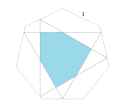
Two equilateral triangles are inside a regular heptagon so that all the vertices of the triangles are on the perimeter. The heptagon has unit sides.
One triangle has one side which is parallel to one side of the heptagon. The other triangle is the same except rotated 90 degrees counter-clockwise.
What is the exact surface area of the blue shaded region?
>>
>>
>>
>>
>>16912771
yeah I do. I studied applied math in uni but I was naturally very good at programming so the role I always performed in group projects etc was always the programming. I knew enough theory to pass the tests but I always felt unsatisfied with my maths after uni.
>>
>>
>>16912761
>>16912778
Try Vladimir Arnold's Trivium
>[...] we must specify not a list of theorems, but a collection of problems which students should be able to solve. [...] The compilation of model problems is a laborious job, but I think it must be done. As an attempt I give below a list of one hundred problems forming a mathematical minimum for a physics/applied math student.
https://www.physics.montana.edu/avorontsov/teaching/problemoftheweek/d ocuments/Arnold-Trivium-1991.pdf
>>
>>16913493
Thanks anon, I'm struggling with some of these so it does go to show that I'm below the 'mathematical minimum'. And what makes this great is I always have a reference test for myself now.
>>16913012
thanks anon, downloaded and looking at it.
>>
File: Hgh(Lncln) .png (32.3 KB)
32.3 KB PNG
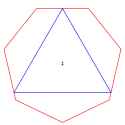
>>16912274
m = Pi/7
r = Csc[m]/2
P(v) = –r*(Sin[v*m], Cos[v*m])
red circle: x^2 + y^2 = (1/100)^2
red polygon: P(0), P(2), P(4), P(6), P(8), P(10), P(12)
t = Sqrt[3] + 3*Tan[m/2]
z = –r*Cos[m]*(Sqrt[3] – 2*Sec[m/2] + Tan[m/2])/t
n = Pi/3
s = r^2*Csc[3*m/2]*Sqrt[39 – 48*Cos[m] – 18*Sin[m/2] + 42*Sin[3*m/2]]/2/Sqrt[3]/t
Q(v) = –s*(Sin[v*n], z/s – Cos[v*n])
blue circle: x^2 + (y + z)^2 = (1/100)^2
blue polygon: Q(0), Q(2), Q(4)
>>
>>
>>
>>
File: G_8yuSCbEAAf6lt.png (31.2 KB)

31.2 KB PNG
>>16915386
shit man I hope you got the 300k starting to keep the meme alive
>>
I was just thinking that if you just add infinity to both sides of the equation then the other terms are so small compared to infinity that they become negligible so everything just becomes infinity=infinity and I think that could be really useful for simplifying calculations
>>
[math]V^{*\otimes k} \cong \operatorname{Hom}(V,\cdots,V;\mathbb{K})[/math] by an isomorphism [math]\psi^k[/math]. How does [math]\bigoplus_{k=0}^{\infty}\psi^ k[/math] respects the tensor algebra multiplication and is an algebra isomorphism?
>>
>>
>>
>>
>>
File: 1694572125452088.gif (1.4 MB)

1.4 MB GIF
Pretty sure my professor thinks I'm retarded because I do cross products by calculating them as quaternion multiplication. I just find those things easier to work with than vectors. Is there anything I can do to fix this or am I doomed? Master's student btw
>>
>>
>>16916932
I read this and was confused for a moment. Then I remember there exist retards like you who think "number theory" doesn't mean sheaves, Picard curves and L-functions but instead means "HURR HURR NUMBERS LOL".
>>
>>16917010
You should be familiar with about 2 or 3 ways of doing something, even to the extent that you can demonstrate that this yields the same result. Cross-compatibility, as I would say.
I'm curious. How do you do cross products with quarternions?
>>
>>16917121
Take vectors <a,b,c> and <x,y,z> and represent them as the quaternions 0+ai+bj+ck and 0+xi+yj+zk
The quaternion you get by multiplying these two together has their dot product as its real part (albeit negative) and their cross product as its nonreal part
>>
>>16917010
>>16917200
>multiplying 0+ai+bj+ck and 0+xi+yj+zk
>professor thinks I'm retarded
No he doesn't. It's the same math in the same amount of time. Who cares how you visualize it when they're basically the same. It's only dumb if you also calculate the real part just to toss it after
>>
>>16899914
guys , I don't want to add problems here but can you please tell me your idea on this video.
I really need it , its really important.
https://www.youtube.com/watch?v=JWaukcx-upg
>>
>>
[eqn]\boxed{ ~\\\ ~~~~~~~~~~~~~~~~~~~~~~~~~~~~\mathbb{WARNING} \\\ ~ \\\ ~~~~~~~\mathfrak{This \ \ \ meme \ \ \ contains \ \ \ content \\\ ~~~~~~~~~~that \ \ \ may \ \ \ trigger \ \ \ autists. \\\ ~ \\\ } ~~~~\mathcal{MATURE \ \ AUDIENCES \ \ ONLY ~~~~~ \\\ } }[/eqn]
>>
>learn arithmetic
>learn algebra
>everything else in math is just referencing formula and tables while applying arithmetic and algebra
it's that simple but mathematicians would have you believe that they're doing wizardry
>>
>>16917539
That is quite possibly the most impressively retarded take on mathematics I have ever heard. This sounds like what someone who has never actually applied themselves and tried to do mathematics thinks is involved.
>>
>>
>>16917539
>>16917410
Its this referinching the video anon.
>>
File: perfectoidspaces.jpg (734.4 KB)

734.4 KB JPG
>>16917541
>>16917543
What did you say?
>>
>>
>>16917547
You are so fucking ignorant about modern mathematics it's unreal. Mathematics is not about numbers, arithmetic or equations anymore, that was like 4 centuries ago. Nowadays we have the Langlands program, infinity categories, sheaf cohomology, Hopf algebras, etc. all of which far transcends your barely-there understanding of the subject.
>>
>>16917543
I'm not a mathematician. I'm an electrical engineer. I don't need to fool you to earn a better salary for my work. Nobody needs to be fooled into believing "math is hard." You are simply ignorant of what mathematics actually has to offer.
As an example, real analysis very often turns into finding ways to approximate quite complicated functions or relationships by infinite series. The "challenging" part of the problem is not carrying out the arithmetic operations in a sum. It is producing an algebraically tractable representation of whatever function/mapping/relationship is of interest.
>>

>>16917546
>Tate
He is truly the philosophy king-warrior of our era.
>>
>>16917574
John Tate, you fucking retard. Tate is a relatively common surname.
https://forebears.io/surnames/tate
>>
>>
File: 1760287231659301.jpg (118.2 KB)

118.2 KB JPG
Does the partition principle imply excluded middle?
>>
>>
>>
>>
>>
File: images-22.jpg (29.9 KB)
29.9 KB JPG
>>16917554
>An actually good post.
Kinda jumpscared me, ngl.
>>
>>16917541
>>16917547
>>16917574
>>16917740
>>16917941
This is why brainlets should not be allowed anywhere near mathematics.
>>
>>16917944
I meant to quote >>16917539 for the first post instead it was >>16917541.
>>
>>
>>
>>
>>16917551
Ok but this isn't really math. Real math is adding numbers, solving equations and finding absolute truths. Practical shit. Calculus, differential equations, lin alg. But as soon as you introduce shit like fields and rings and algebraic anything it becomes nonsense.
>heres a set of all polynomial functions now lets perform some esoteric analysis on.
>>
>>
>>
>>
AFCIA is free as a PDF online. If you read it then I guess that's one step towards understanding mathematics as well as I do. But until then, you don't want serious discussion. You're just a novice who wants praise. Now I have a paper to attend to.
>>
File: 1673312718562204.png (21.4 KB)

21.4 KB PNG
>>16917970
>as soon as you introduce... algebraic anything it becomes nonsense
>lin alg is cool though
>>
File: intelligence.mp4 (3.8 MB)

3.8 MB MP4
>>16917959
>Frontier models are not yet performing these tasks at a level comparable to their ability to answer well-posed questions that are accessible to known techniques. I think there is no indication that their doing so is impossible, and some evidence that it is possible.
it's possible via the same mechanism that getting the zeros of an algebraic function from rolling dice is possible, it's just better than completely random guesses.
which is to say, it's completely useless at a research level unless a human is the one checking the output, and the human in that system is the only part of it doing anything "intelligent."
still useful as a semi-random search through existing ideas, and a way to come up with potential starting points for real research, but the further you stray from the published data (i.e. the entire point of research), the closer to random output you get.
it's been really disappointing to see tech companies satisfied with scaling this architecture when these billions could have been spent on research into, y'know... actually emulating intelligence instead of statistically approximating its output. it's become abundantly clear in everything but marketing and hype that the two are not even remotely equivalent - even the most genius biological mathematician needs less information than LLMs by dozens of orders of magnitude to come up with new ideas in mathematics (and at a fraction of the thermodynamic cost).
i want to see scalable intelligence emulation architecture that can do at least nematode-level real-time learning in my lifetime, dammit. we had perceptrons in the fucking 1950s.
>>
>>16917908
There are incorrect proofs of Euclid's fifth postulate, the fundamental theorem of algebra, the four color theorem, and Jordan curve theorem. Some of these are of historical interest. Maybe the Jacobian conjecture is interesting because it is a fairly elementary problem and still unsolved
>>
>>
>>
>>
>>16917959
He seems pretty sensible so I'm a bit confused as to where his sudden optimism comes from. The First Proof results are basically in line with the higher end of his prior expectations but with a couple major asterisks, and even in the most generous reading is more a demonstration of consistency rather than ability to push on.
>>
File: 1746395641579639.png (13.9 KB)

13.9 KB PNG
I had push it to the limit on repeat the entire time I learned limits
>>
>>
>>16918885
AI is the future of mathematics. No single human can comprehend all fields of mathematics at the same time, let alone recall every formula and table in existence from memory. For AI? Not a problem. They can also work 24/7 without ever taking a break or getting distracted, at speeds orders of magnitudes faster than the most autistic savant to ever exist.
>>
>>16918893
I'm an arithmetic geometer, IQ tested somewhere north of 140. I can tell you AI will never be able to put a dent in my fucking work let alone my job, boy. Keep rotting your brain with sycophantic chatbots while I write papers. Better yet, be an adult and realize AI is a steaming pile of shit.
>>
>>
>>
>>
>>16918896
Guess what likes to make noise about a subject it knows absolutely nothing about? A corpo fanboy like you. Nigger.
>>16918898
Anti-LLM psychosis? Yeah I'm the "muh ai kys" serialposter but that doesn't mean your made up neologism is accurate. I'm perfectly sound of mind unlike the niggerdroidballlickers like you who spam this board with their fucking bottom of the barrel garbage.
>>
>>16918899
I'm fucking sick of it. You retarded tourists will leave when this craze blows over and the money incinerators like Anthropic and OAI are finally sent packing.
Mark my words.
You were never citizens of my country regardless. You just wanna be called smart while doing nothing.
>>
>>
>>
>>
>>
>>
>>
>>
>>
>>
People like Euclid and Euler are only famous because they were lucky enough to be born at a time when there were still basic problems left to be solved. They spent their entire lives trying to grasp concepts that a modern 2nd grader is expected to know. To get famous nowadays you have to solve problems that probably don't even have solutions in the first place.
>>
>>16919514
Yeah, their brilliance is greatly overstated. Most modern maths professors wouldn't have struggled solving any of the problems Euler faced in the 1700s. Though back then, maths was seen as a fruitless hobby with no academic future reserved for only the strangest of people. Doesn't help that much of the population were devout Christians either.
>>
>>
>>
File: 1753828999325413.png (34.9 KB)

34.9 KB PNG
>heh, you solved that problem? well, I just memorized your solution so that makes me just as smart as you
>>
>>
>>
>>
>>
File: 17719900675906551641451696295464.jpg (2.2 MB)

2.2 MB JPG
https://80.lv/articles/see-how-you-can-animate-basic-run-cycle gimme maths that can either do cycles like footage one or whole sequence like footage two or even idles or linking between any to another. Also making a characterization like limps, happy,etc
Like, I feel I can, but, I also know, I won't be correct so...why not have some math, from, anyone better?
Basically a simple equation to rely on rather than, shooting out of false confidences
>>
>>
>>
>>16920058
Don't be too hard on the math newbies. It can be a little unintuitive where the "2x" shows up in the plot for "(x^2)+2x" if your teacher was focused on hammering formulas into your head and didn't touch on the things that actually make this stuff obvious like tangency lines.
>>
>>
>>16920061
My biggest problem with math in public school was that the teachers just threw number soup at you and didn't even make an effort to properly categorize things, probably because they themselves had no idea what they were doing. They just repeated the word polynomial like clowns even when dealing with stuff like exponential functions and rational functions.
>>
>>16920065
Standardized testing (in America at least as I have no idea how it is elsewhere) is kinda a double edged sword in that way. Every public school is given a list of things their students will be tested on and their funding explicitly depends on how well students do on that test. So every student has the quadratic formula burned into their subconscious forever and hardly a single one can tell you why it works, much less derive it from first principles.
Goodheart's Law in full effect.
>>
>>16920065
I'm sympathetic to primary school teachers. You need kids to pass their standardized tests (which is how you're judged as a teacher) and a lot of kids that age simply don't have the attention span to really properly understand what they're doing, so the most efficient use of time is often just presenting things in as memorizable a format as possible.
You see a lot of "oh, if I had been taught like XYZ I would've done well" or "if this had been explained like ABC I would've understood it" by adults with hindsight, but the XYZABC trigger can be totally different for every student, and teachers simply don't have class time to exhaustively probe.
>>
File: 1745833395188475.jpg (49.3 KB)

49.3 KB JPG
I never did my math homework in school and I would ace the tests but still barely get by with a c
>>
>>
File: 17719976800778391136344429423160.jpg (2.4 MB)
2.4 MB JPG
How do physics or math in animation works to suggest realism, much like that in opensim or procedural generations
>>
File: 1741012174915611.png (17.7 KB)

17.7 KB PNG
>>16913493
it's the first problem and I'm already lost, what freehand graph is he referring to
>>
>>
File: emojibra.png (103.5 KB)

103.5 KB PNG
should math modernize and start replacing ugly letters and culturally appropriated greek symbols with cute emojis to make the field more accessible to women and marginalized peoples?
>>
>>
>>
>>
>>
>>
File: 1747897478964159.png (77.1 KB)
77.1 KB PNG
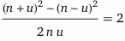
((n+1)^2 - (n-1)^2) / 2n = 2
>>
File: nanny nanny .gif (1.7 KB)
1.7 KB GIF
>>16920146
>>
>>
File: optimal packing.png (1.3 KB)
1.3 KB PNG
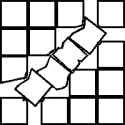
Why are mathematicians so stupid? The "optimal" packing of 17 squares is 4.68 they said. Look! I packed 18 in a 4.44 square!!
>Muh lampshade arrived broken :(
Shut up! The profits we'll make shipping larger inventory will outperform any losses due to unsatisfied customers.
>>
>>
File: 1769490670256869.jpg (77.5 KB)
77.5 KB JPG
>>16920233
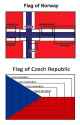
The brains in this one have been blessed beyond ordinary. Cave Johnson would like you to come in for an interview
>>
>>
>>
>>
File: 1769490670256869.jpg (100 KB)

100 KB JPG
>>16920237
Fixed it
>>
>>
>>
>>
>>16920241
>>16920244
Or actually, no. You forgot to fix the Czech flag.
>>
>>16920243
>>16920245
Just the Sin, Cos, and Tan of a right angle triangle. That's all you need to know. All the others you can look up in a table like any sensible person.
If you build things in life that have angles it's handy to be able to know how to do that.
>>
>>
>>16920243
>>16920249
you can also just stick with memorising one identity, Euler's, and use it to derive all of the others without needing to carry around any reference books
>>
File: 1756221462626862.jpg (41.5 KB)

41.5 KB JPG
>every time you have to solve a problem you just derive centuries of identities on the spot
>>
>>
>>
>>
>>
>>
File: 170-kb-png-angry-pink-wojak-11563399195ryigybu2uf.png (436.4 KB)

436.4 KB PNG
Please make the next edition
"The Man Who Stole Infinity" edition
Or plagiarism edition
Or jews stealing work from goyim edition
https://www.quantamagazine.org/the-man-who-stole-infinity-20260225/
>>
>>
Dear /mg/
With much dismay I am writing you this evening. With love. I know we have always been cruel to one another but I do love you sincerely. After a marathon I am left exhausted, and as I laid down to go to sleep I thought of you. Math is a love of mine and so is science. To be uneducated in something so dearly wish you could perform feels like being blind and seeing the infinitely vast emptiness of darkness, making out objects with only your hands, feeling around and plugging things together with no hope of truly being able to see. How I wish I could do math. I wish I could do physics. I look at the moon and the stars and realize I haven’t yet learned their rotation. To know so much but know so little. In a plea for education, I must resign.
Signed, anon.
>>
I'm going over a proof of Sanov's theorem. On the right-hand side of the inequality, I have
[eqn]\frac{1}{n}log(\frac{1}{(n+1)^k}) - D(q \parallel p)[/eqn]
Why does the former term simplify to zero? If it's because we're taking the limit of n to infinity then shouldn't the left-hand side of the equation also simplify to zero since it, too, contains a product of the inverse of n?
>>
>>
File: 1759072102851843.jpg (56.1 KB)
56.1 KB JPG
>>16920677
Start by learning the foundations.
>>
>>
>>
>>16920677
>nothing left to do for the rest of my life so I thought I'd learn math to pass the time
Unironically Euclid's element.
You basically have no chance in modern math. So might as well learn the old math and start researching this niche area, it's visually untouched since, like, 16th century.
>>
>>
>>
>>
>>
>>
>>
File: 1767000273715506.png (959.5 KB)

959.5 KB PNG
What am I in for?
>>
>>
File: 1763217347532736.png (357.4 KB)
357.4 KB PNG
>>16920758
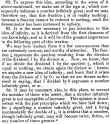
20 pages in and he's already bringing out the 1/infinity.
>>
File: 1766150474059085.png (137.6 KB)
137.6 KB PNG
>>16920805
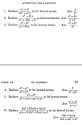
How are these questions for a chapter that just introduced fractions like it's your first time even hearing of the concept? The denominator in 6 especially is kind of convoluted unless you've already done a lot of factoring and can just recognize it.
>>
>>16920843
since it's an algebra book my assumption would be that his intent was you'd sit there for 20 minutes trying stuff until something worked and in the process internalize the concepts from the preceeding chapters
>>
>>16901674
If you can grasp the concepts of Algebra I and II then your hardest task would be surpassing pre calculus
That is mainly the hardest prerequisites to math, you can grasp Calculus (most used math for engineering) easier than precalculus
>>
>>

>>
File: chatjippity.png (7.4 KB)

7.4 KB PNG
>>16920914
Common core strikes again.
>>
>>16920316
>Teachers of elementary mathematics in the U.S.A. frequently complain that all calculus books are bad. That is a case to point. Calculus books are bad because there is no such subject as calculus; it is not a subject because it is many subjects. What we call calculus nowadays is the union of a dab of logic and set theory, some axiomatic theory of complete ordered fields, analytic geometry and topology, the latter in both the “general” sense (limits and continuous functions) and the algebraic sense (orientation), real-variable theory properly so called (differentiation), the combinatoric symbol manipulation called formal integration, the first steps of low-dimensional measure theory, some differential geometry, the first steps of the classical analysis of the trigonometric, exponential, and logarithmic functions, and, depending on the space available and the personal inclinations of the author, some cook-book differential equations, elementary mechanics, and a small assortment of applied mathematics. Any one of these is hard to write a good book on; the mixture is impossible.
—Paul R. Halmos, How to write mathematics, Enseign. Math. (2) 16 (1970).
>>
>>
>>16920677
Start with the pajeets (Khan Academy). This is from the official /sci/™ guide:
>If you totally forgot everything or are a beginner, it is recommended you do the interactive exercises on Khan Academy because they are really helpful tools to quickly refresh your school knowledge up until calculus. You should do all the chapters up to Precalculus, that is: Early Math, Arithmetic, Pre-Algebra, Basic Geometry, Algebra I, Geometry, Algebra II, Trigonometry, Probability and Statistics. You don't need to listen to every video, but you should cover each exercise once to check if you understand it. Once you finish the Precalculus module, you can continue with your first book.
https://4chan-science.fandom.com/wiki/Mathematics
>>
>>16920074
>>16920078
Many calculus and even physics textbooks teach how to sketch the graph of the derivative of some random but nice curve, but i've never seen the same done for the integral
>>
Can one of you autists come up with an improvement on this algorithm? It's an extremely important problem. I am merely a CS brainlet. I will actually write the algorithm in code if I think it will work.
https://www.youtube.com/watch?v=JQYyAWVkhbc
>>
>>
>>
>>
>>
>>
>>
>>16921127
Either you don't or you ask around with real people. I avoid this type of books for this reason. If you really *really* need to read from the book, find another one on the same subject that has a solution manual. If undergraduate, you most certainly find books on problems sets for every subject.
>>
>>
>>
>>
>>
>>
>>
>>
>>
>>
>>
>>
>>
>>
>>
>>
File: 1752681265911410.png (101.8 KB)

101.8 KB PNG
>modern textbook defines a polynomial
euler died for this
>>
>>
>>
File: 1756641667621222.jpg (176.5 KB)

176.5 KB JPG
>>16921614
>in the next section he starts talking about global warming