Thread #16916080

File: images.jpg (8.9 KB)

8.9 KB JPG
I want to learn real analysis. my philosophy prof told me that it would be almost analogous to or even essentially the same as certain theories of logic. Any good books/textbooks? A thread (reddit or here) would be nice as well
49 RepliesView Thread
 Showing all 49 replies.
>>
File: IMG_4800.jpg (79.4 KB)

79.4 KB JPG
>>16916080
Understanding Analysis by Stephen Abbott is my favorite text. Completely GOATed. Highly recommend. It’s clear and interesting and illuminating. Very well written.
>>
>>16916080
It would be analogous but no essentially the same as logic. Real analysis is a theory, like number theory, linear algebra or synthetic geometry. Logic is the study of what all such theories have in common. That being said, real analysis can teach you the manipulation of logical quantifiers, which is the what many entry level courses of logic aim to teach at the very least. But logicians go far beyond this, they engage in metalogical endeavours: for example, what can be and cannot be proven given a theory or a family of theories. I suggest Elementary Analysis: the Theory of Calculus, by K. A. Ross. The problem is this and Abbott's and almost every other textbook assumes you already know calculus methods and that you had had an Introduction to Proofs course. But an Introduction to Proofs course would be tantamount to a good logic course
>>
>>
File: images (17).jpg (7.2 KB)

7.2 KB JPG
>>16916080
Why would anyone want to learn that crap? Honest question, what's the point of real analysis?
>>
>>16916215
The point of real analysis is being able to understand even higher mathematical theories like complex analysis, fourier analysis, probability theory and statistics, functional analysis, etc. It's a pyramid scheme
>>
>>
File: IMG_4164.jpg (24.5 KB)

24.5 KB JPG
>>16916215
Hahaha found the dumbass
>>
>>16916080
I liked the book by Terrance Tao. But I'm an autist and I like my math books in that
>Proposition
>Proof
>Remark
>Corollary
Loop, where everything's labelled and shit. I also did a bit of the Zorich one, as well as an older book by Zaring. What's interesting to me is how different the texts approach the subject. Tao starts from Peano axioms. Zorich is just like "yeah so the real numbers are a field". And the Zaring book just goes right into open sets and the topology stuff and then moves backwards to the limits/Cauchy sequence stuff.
>>
>>16916313
No, you don't. You're just muddying the waters by incorporating unnecessary overhead.
>probability theory
Combinatorics
>fourier analysis
epicycles built from complex polynomials, so algebra in its rawest form
>functional analysis, complex analysis
Formal power series. In fact, this is how both fields began. If you take the principle of least action to be true, it's an inescapable conclusion that formal power series correctly describe the world around us from the macroscopic scale down to atoms. Sure, you can argue that formal power series cannot describe unworldly things, but that's a feature, not a bug. Gibberish is gibberish, why would anyone study that?
>>
>>
>>
>>
>>16916370
What can you tell me about Forster? It's the only one that has never been translated into English. It seems that the author doesn't define the Riemann integral via Darboux sums like most american authors, but using step functions like in Tom Apostol's Calculus.
>>
File: IMG_4163.jpg (112.7 KB)

112.7 KB JPG
>>16916350
Data science, machine learning, physics, economics/econometrics, and so much more. Get tf off of this board you low IQ piece of filth.
>>
>>16916080
>my philosophy prof told me that it would be almost analogous to or even essentially the same as certain theories of logic
Analysis is about as far away in math from logic as you can get.
Logic is about saying when something is true or not. Analysis is about saying if something is close to another thing.
>>
>>16916348
Nta, but you're dumb as a bag of rocks if you think probability theory is just combinatorics. Combinatorial probability is only a small subset of probability theory when the fundamental probability space is discrete.
Also, you don't understand anything about Fourier analysis. This isn't particularly surprising, considering you consider it to be a subset of algebra (when it is just about the most "analysis" of "analysis" topics).
>>
>>16916350
All of probability theory, statistics, differential equations (which, by definition also entails control theory, communications systems and signal processing). All of physics, and every major engineering discipline. Literally everything except computer science (and even then, it can be useful if you're working on computational geometry or networking theory).
>>
>>
>>16916080
As mentioned by >>16916088 Abbott is pretty great as an introduction. Elementary Analysis by Kenneth Ross is also great.
It's a bit of a different style, but I absolutely love Undergraduate Analysis by Serge Lang. I feel like it strikes an incredible balance of being comprehensive while accessible for a "first pass" at analysis.
>>
>>
>>16916769
>>16916768
>>16916737
You've never seriously practiced anything of the things you listed lol, larpers. You'd know real analysis is not required to fully understand these domains. Take your schizo babble elsewhere. You realize you're drinking from the same well and circle jerking, right?
>>
File: IMG_4841.jpg (294.5 KB)

294.5 KB JPG
>>16916891
Please kys. You don’t know us. You don’t understand mathematics either.
>>
>>16916080
the only analysis worth studying is non-standard analysis
>>16916313
you don't need real analysis for any of that crap
>>
>>
Ok, we need to address the disparity of opinions by stating clearly what each of us meant by "real analysis". I hope it will not be a surprise that many of us have incompatible conceptions of the subject. For me, any theorem that makes direct or indirect use of the completeness property of the real number system, a.k.a. the supremum property or axiom, is a real analysis result. Clearly, applied mathematics can reach very deep results without going beyond rational numbers thanks to the aid of computers. And i admit that most abstractions that go beyond rational numbers are uncomfortable (case in point, the real numbers themselves) but there is no better guide to the numerical use of rational numbers in nature than the next step of abstraction encompassed by the complete, ordered field.
>>
>>16916891
I've published multiple first author papers focusing on signal processing and signal detection. There are some parts of the field you can understand without real analysis and complex analysis, and many of the older generation of researchers focus on becoming very versatile with solely linear algebra and vector calculus.
If you want to make real research contributions to anything that involves more than linear functions on independent Gaussians, you'll need some basic real analysis. Especially if you are leveraging asymptotic convergence properties. You don't need to have done every single problem in Papa Rudin, but you need to be comfortable with basic set manipulations, and the more applied parts of Lebesgue integration.
>>
>>16917117
How would you recommend people understand martingales or non-i.i.d. stochastic processes without some basic real analysis? What about probability or statistics on manifolds? A lot of different fields use directional statistics and have to deal with random variables distributed on spheres. Do you know where those distributions come from? Real analysis and differential geometry.
>>
File: 67074995-773811053.jpg (160 KB)
160 KB JPG
>>16916339
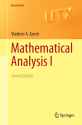
Zorich seems to be exactly what I am looking for based on what people say and from working with it a bit.
But I'm terrified of having no way to have my solutions checked. How do I avoid self-study pitfalls and bad habits?
Are there any exercise sets or books I could supplement it with?
> anon proofs are different you don't want solutions
Even seeing different approaches from your own after struggling for a while can help a lot with learning anything.
People who say "why would you ever" typically went through a course already and had someone correct, give feedback and provide sample solutions too...
>>
>>16917487
> How do I avoid self-study pitfalls and bad habits?
You don't worry about them and just accept that you'll make mistakes along the way. That's part of the learning process, and really can't be helped.
Premature optimization isn't just for programming. Don't worry so much about having your self-study being "perfect" that you spend more time worrying about studying than actually studying.
>>
File: 1760313589251896.jpg (84.4 KB)
84.4 KB JPG
>>16917487
>>16917490
What the other anon said. As long as you work through the text and spend enough time working on the problems you will improve.
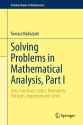
But I also think that studying alternate solutions is extremely beneficial. Pic related is OK. I recommend first studying and working with Zorich and afterwards going through problems and solutions of the same topic.
People tend to say that studying analysis or proof based linear algebra is "freestyle". That is true when compared to the HS plug and chug style of math/arithmetic. But even in topics like analysis there are only so many patterns that you will keep encountering and by practicing and studying them you will add them to your toolbox.
>>
File: 1765604211206870.gif (3.8 MB)

3.8 MB GIF
>>16916339
>>16917487
>>16917490
Is Zorich a good option if I did not really have full exposure to Calculus previously, but have worked through something like book of proof?
If I understand correctly it teaches Analysis the "Russian/European" way which means computations but also still proof based.
>>
>>16917650
The problem with zorich is they kept improving the original russian text, but the English translation doesn't reflect the latest improvements of the original text.
It's not really a big deal. But still just know you are basically getting an inferior version of the text.
I honestly think a short terse introduction like Baby Rudin is what most hobbyist and students need. Those multi-volumes Analysis books are overkill imo. You just need to cover the essentials of mathematical analysis quickly and move forward to stuff you are interested in.
>>
>>16917660
> they kept improving the original russian text
Is that actually the case?
I just looked at the book and the second edition from Springer (2016) is based on the 6th edition (2012) from the original.
And taking a quick, auto-translated look at the webpages linked from the authors wikipedia page[1][2] that appears to be the newest version in russian as well?
[1]: https://www.mathnet.ru/php/person.phtml?option_lang=rus&personid=8958
[2]: https://web.archive.org/web/20131202233604/http://www.math.msu.su/vzor
>>
>>
>>
I seriously hope you baby rudin autists are trolling. Real analysis is all about pathological situations. Infinite Bullshit. Unmeasurable Sets. Strange topologies. Name one theorem from rudin that speaks to you. You can't. It's a collection of facts that nobody cares about because they don't apply in real life. They make you study it in order to deal with pathological situations in other fields that nobody encounters, but everyone hates it except autists who don't contribute to anything.
>>
>>
>>
>>16920112
The existence of the square root function speaks to me. Normal calculus books never proved that for every positive number y there exists another x such that x^2=y, they simply showed there can't be a rational number q such that q^2=2 without explaining how could there be such a thing as sqrt(2) if it isn't a quotient of integers.
>>
>>16916891
>You'd know real analysis is not required to fully understand these domains.
0/8, there are parts of Fourier analysis that are more algebraic and use representation theory, but you can never fully understand the topic without a solid real analysis background.
>>16917765
Why and where would you even learn about them in non-standard analysis? 99% of the literature in probability uses real analysis to arrive at results and it works perfectly fine. Non-standard analysis provides nothing over real analysis and just complicates matters since noone uses it.
>>
>>16917487
>Are there any exercise sets or books I could supplement it with?
I'm also a pussy who likes having his hand held throughout math with lots of solved exercises to work with, so a while ago i went out of my way to find material that covered all the shit i was lacking in:
https://litter.catbox.moe/gy7p07gk8afi3t16.7z
Contains:
https://pastebin.com/FBKkPRW4
I assume one is capable enough to determine for themselves what's relevant and what isn't.
>>
>>
>>
>>
>>
>>
>>16920112
You read my mind. I wonder how people achieve these levels of brainwashing. Nothing in real analysis makes sense and should make sense if your foundations presuppose infinite sets. Congrats, you’ve built a house on quicksand. If only the fragility of it all stopped there, but no, the furniture itself are card castles. Half the field of real analysis is essentially proof by contradiction lol.
>X doesn’t exist
>find some contradiction
>therefore X exists
This is why in standard curriculum they never begin with logic and immediately with rudimentary set theory and properties of the reals, because you can’t build the field without leaps of faith the size of Grand Canyon. The majority of posters here were never properly introduced to the subject. They’d probably not touch it with a 10 foot pole if it were the case.